
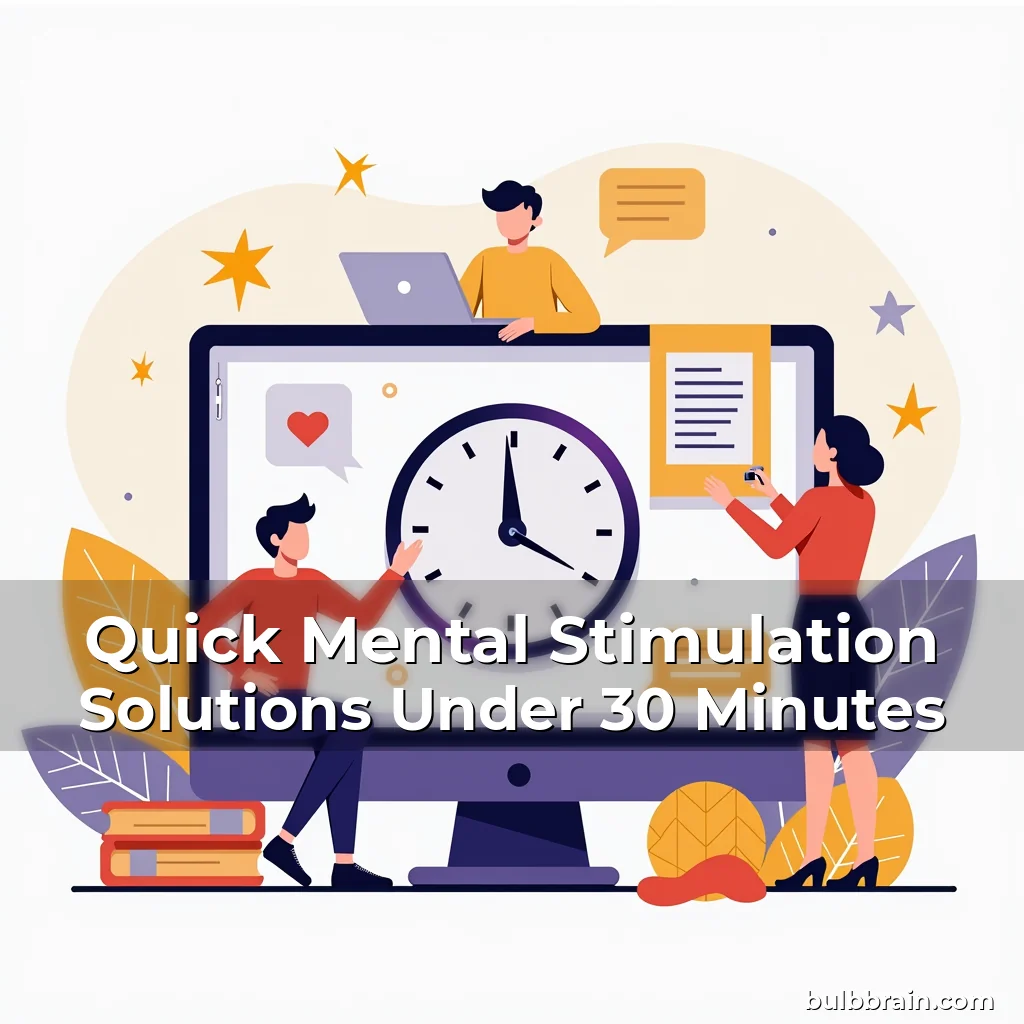
Quick Mental Stimulation Solutions Under 30 Minutes
In today’s fast-paced world, finding time for mental exercises can feel overwhelming. However, there are countless ways to boost cognitive function within a limited timeframe. This guide explores effective methods that fit seamlessly into your daily routine.
Mental stimulation doesn’t require hours of commitment. With creativity and intentionality, you can enhance brain health during brief moments throughout your day. Let’s dive into practical strategies that deliver meaningful results quickly.
The Science Behind Quick Brain Boosts
Cognitive neuroscience reveals that even short periods of mental engagement trigger significant neural activity. When we challenge our brains with novel tasks, synaptic connections strengthen across various regions.
This phenomenon is known as neuroplasticity—the brain’s ability to reorganize itself by forming new neural connections. These changes occur regardless of whether the task takes minutes or hours, making brevity an asset rather than a limitation.
- Synaptic pruning: Short but intense mental challenges help eliminate weak neural pathways while reinforcing useful ones.
- Dopamine release: Engaging puzzles or learning something new triggers dopamine production, which enhances motivation and focus.
Studies show that individuals who engage in regular micro-learning sessions experience improved memory retention compared to those relying solely on long study blocks. The key lies in consistency over duration.
Researchers at Harvard University found that participants who completed ten-minute problem-solving tasks five times weekly showed measurable improvements in executive functioning after three months. This demonstrates how quality trumps quantity when stimulating the mind effectively.
Strategies for Instant Cognitive Engagement
Simple yet powerful techniques exist that transform ordinary activities into brain-boosting experiences. By incorporating these practices, you can turn everyday routines into opportunities for mental growth.
One such method involves transforming household chores into mindfulness exercises. Instead of multitasking through cleaning, focus entirely on each movement—notice textures under your hands, sounds around you, and sensations from your muscles.
This mindful approach not only increases awareness but also engages multiple sensory areas of the brain simultaneously. It creates a rich mental environment where different neural networks interact constructively.
Another strategy is using music as a tool for mental activation. Listening to complex compositions—especially classical or jazz—stimulates pattern recognition abilities in the auditory cortex.
Research indicates that people exposed to intricate musical structures demonstrate enhanced spatial-temporal reasoning skills. Try analyzing chord progressions or noticing rhythmic patterns as you listen.
Leveraging Technology for Mental Fitness
Smartphones contain powerful tools that can serve as portable brain-training devices when used intentionally. Apps designed specifically for cognitive enhancement offer targeted workouts for different mental faculties.
Some popular options include Lumosity, Peak, and Elevate—each offering scientifically-backed exercises tailored to improve attention span, processing speed, and working memory capacity.
However, it’s crucial to use technology mindfully. Limit screen time to dedicated intervals rather than allowing constant distractions that fragment concentration.
Create a digital detox schedule where you allocate specific windows for app-based mental training. This structured approach prevents burnout and ensures focused engagement with each exercise session.
Moreover, consider combining traditional methods with digital tools. For example, use a language learning app alongside physical flashcards to reinforce vocabulary acquisition through multiple modalities.
Creative Thinking Exercises That Fit Your Schedule
Engaging in creative pursuits provides excellent mental stimulation without requiring extensive time commitments. Even brief bursts of artistic expression can significantly impact cognitive flexibility.
Try sketching random objects from your surroundings using only your non-dominant hand. This forces your brain to adapt its usual motor patterns while encouraging observational skills.
You might discover unexpected perspectives when viewing familiar items through a different lens. Such exercises promote divergent thinking—a critical component of innovation and problem-solving.
Writing stream-of-consciousness narratives offers another quick way to stimulate imagination. Set a timer for fifteen minutes and write continuously without stopping or editing your thoughts.
This practice helps break habitual thought patterns and strengthens prefrontal cortex connectivity responsible for self-regulation and insight generation.
Nutrition and Physical Activity for Enhanced Cognition
A well-nourished body supports optimal brain function, making dietary choices essential components of any mental fitness regimen. Certain nutrients have been shown to enhance neurotransmitter synthesis and protect against oxidative stress.
Foods rich in omega-3 fatty acids, antioxidants, and B-vitamins provide foundational support for cognitive processes. Incorporating blueberries, salmon, nuts, and leafy greens into meals promotes sustained mental clarity.
Regular physical activity complements nutritional benefits by increasing blood flow to the brain and promoting neurogenesis—the creation of new neurons. Just thirty minutes of moderate exercise can elevate mood and sharpen focus.
Try integrating short workout sessions between work tasks. A brisk walk around the block or some chair yoga stretches can refresh both body and mind effectively within minimal time frames.
Building Daily Routines Around Micro-Learning
Consistency plays a vital role in achieving lasting cognitive improvements. Establishing small habits that integrate naturally into existing routines makes maintenance easier over time.
For instance, dedicate the first five minutes of your morning commute to listening to educational podcasts instead of music. Choose topics aligned with personal interests or professional development goals.
Similarly, replace idle scrolling on social media with brief reading sessions before bed. Select articles or books related to fields you wish to explore further professionally or personally.
These tiny shifts accumulate rapidly, creating substantial knowledge gains through consistent exposure rather than sporadic deep dives into subject matter.
Track progress through simple journal entries noting what was learned each day. Reflecting briefly reinforces information retention and identifies areas needing deeper exploration later.
The Role of Sleep in Cognitive Renewal
Prioritizing sleep isn’t merely about rest—it’s fundamental for consolidating memories and clearing metabolic waste from the brain. Quality sleep enables efficient information processing and emotional regulation.
During REM cycles, the brain organizes newly acquired knowledge by strengthening relevant neural connections while discarding irrelevant data. This process is crucial for effective learning outcomes.
To optimize sleep quality, maintain consistent bedtime schedules and create calming pre-sleep rituals. Avoid screens at least an hour before retiring since blue light disrupts melatonin production.
Consider implementing relaxation techniques like progressive muscle relaxation or guided visualization to transition smoothly into restful sleep states. These practices reduce anxiety levels and promote deeper sleep stages.
Conclusion
Integrating mental stimulation into daily life requires thoughtful planning and intentional execution. Small yet consistent efforts yield remarkable results over time when applied systematically.
Remember that every moment spent challenging your mind contributes positively towards long-term cognitive vitality. Embrace these quick solutions enthusiastically and watch your intellectual capabilities flourish progressively.
“`<|End of response|>“`

news is a contributor at BulbBrain. We are committed to providing well-researched, accurate, and valuable content to our readers.
You May Also Like

About news
Passionate about learning, cognitive science, and helping people unlock their full potential.