
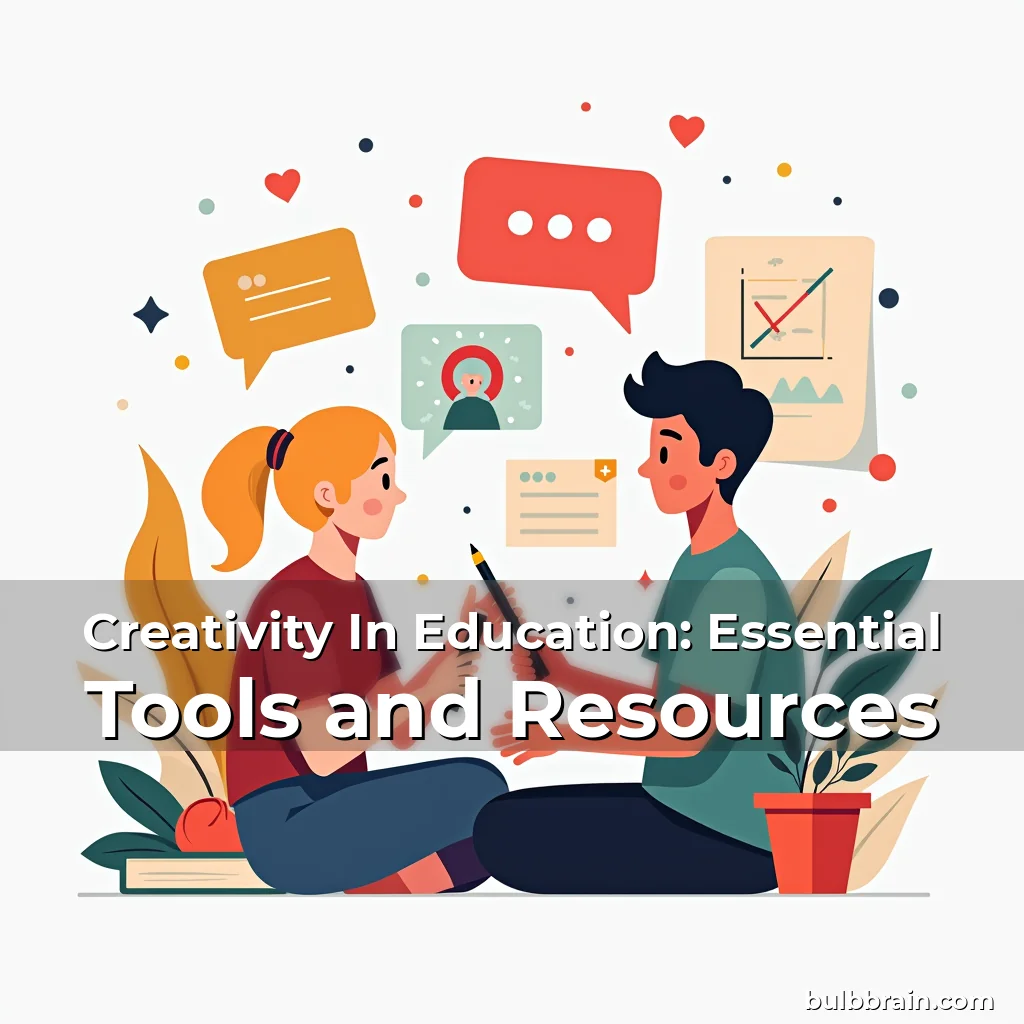
Creativity In Education: Essential Tools and Resources
In the rapidly evolving landscape of modern education, fostering creativity among students has become increasingly vital. As traditional teaching methodologies face scrutiny, innovative approaches to learning are gaining prominence. This shift emphasizes the development of critical thinking skills alongside subject knowledge.
The integration of creativity in educational settings enhances student engagement and prepares them for real-world problem-solving scenarios. By exploring new techniques such as project-based learning, collaborative activities, and technology-driven instruction, educators play a pivotal role in nurturing imaginative minds.
Fostering Creativity Through Innovative Teaching Methods
Educators worldwide are recognizing the transformative power of creative pedagogy. Traditional rote memorization practices often fail to inspire innovation or independent thought among learners. Instead, progressive methods prioritize exploration over repetition.
A growing number of teachers adopt inquiry-based learning models that encourage curiosity-driven discovery. These frameworks allow students to take ownership of their learning journeys through guided investigations rather than passive absorption of information.
- Project-Based Learning: Students engage deeply with real-world problems requiring multi-disciplinary solutions. This approach cultivates both creativity and practical application of knowledge across subjects.
- Cross-Curricular Integration: Merging different academic areas enables holistic understanding. A math lesson might incorporate artistic expression to demonstrate geometric principles visually.
Classroom environments benefit immensely from flexible seating arrangements that promote collaboration. When desks form clusters instead of rows, spontaneous discussions flourish, leading to richer exchanges of ideas.
Tech-integrated classrooms provide access to interactive platforms that spark imagination. Digital storytelling software allows pupils to craft narratives incorporating multimedia elements, merging literacy with technical proficiency seamlessly.
Leveraging Technology for Creative Exploration
Digital tools offer unprecedented opportunities for creative expression in educational contexts. From virtual reality simulations to coding applications, technology serves as a catalyst for innovation in learning spaces.
Edtech platforms facilitate personalized learning experiences tailored to individual strengths and interests. Adaptive algorithms adjust content difficulty dynamically, ensuring sustained engagement through optimal challenge levels.
Impact Studies on Tech-Enhanced Creativity
Research indicates that integrating technology increases motivation and deepens conceptual understanding among diverse learner populations. A study published in the Journal of Educational Psychology found significant improvements in student achievement when digital manipulatives were incorporated into STEM curricula.
Moreover, gamification elements embedded in educational apps foster intrinsic motivation by transforming complex tasks into rewarding quests. Students report heightened enjoyment during lessons featuring competitive leaderboards and instant feedback mechanisms.
Building Culturally Responsive Creative Classrooms
Educational institutions must consider cultural relevance when cultivating creativity. Incorporating multicultural perspectives ensures that all students see themselves reflected in classroom materials and activities.
Diverse representation in literature selections and historical accounts broadens worldviews while validating personal identities. Multilingual resources further support English language learners who contribute unique viewpoints shaped by global experiences.
Student-led initiatives celebrating heritage months foster inclusivity organically. Such programs allow youth to share traditions through performances, art installations, or culinary demonstrations, creating vibrant communal learning experiences.
Teachers receive professional development focused on anti-bias training to recognize unconscious prejudices affecting creative assessments. This awareness prevents misinterpretation of unconventional expressions as disruptive behavior rather than indicators of out-of-the-box thinking.
Cultivating Critical Thinking Alongside Creativity
Holistic education requires balanced development of both analytical and imaginative abilities. While creativity fuels novel idea generation, critical thinking ensures effective evaluation of potential solutions.
Socratic seminars provide structured environments where students articulate thoughts coherently while responding constructively to peers’ arguments. This dialogue strengthens communication skills crucial for collaborative problem-solving.
Rhetorical questioning techniques help students examine assumptions underlying their creative projects. Asking ‘Why did you choose this color?’ prompts deeper reflection compared to simple approval-based responses.
Mind mapping exercises visualize connections between disparate concepts, revealing unexpected relationships that inform innovative approaches. These spatial representations aid comprehension before translating ideas into tangible products.
Nurturing Creativity Through Extracurricular Engagement
After-school programs serve as incubators for creative talents outside formal coursework boundaries. Drama clubs, robotics teams, and visual arts studios provide specialized outlets for self-expression.
Schools partner with local artists and scientists offering workshops that bridge theory with practice. Guest speakers sharing career paths related to creative industries demystify possible futures for young minds.
Competitions and exhibitions showcase student work publicly, building confidence through recognition of effort and ingenuity. Public presentations refine presentation skills simultaneously enhancing self-efficacy beliefs about creative capacities.
Virtual participation options expand accessibility for students unable to attend physical events due to mobility issues or geographic constraints. Online galleries and streaming platforms democratize visibility regardless of location limitations.
Measuring and Assessing Creative Growth
Evaluating creativity presents distinct challenges compared to standard academic metrics. Traditional tests measuring recall do not accurately reflect generative thinking capabilities.
Performance-based assessments involve observing how students apply theoretical concepts innovatively during hands-on tasks. Rubrics assess criteria such as originality, complexity of thought processes, and adaptability under changing conditions.
Peer review systems enable constructive criticism that mirrors professional creative fields’ collaborative nature. Structured guidelines prevent overly harsh evaluations while maintaining developmental goals.
Digital portfolios track progress longitudinally showing evolution of creative styles over time. Multimedia elements capture multidimensional growth beyond static written records alone.
Overcoming Barriers to Creative Development
Despite its benefits, implementing creative education faces systemic obstacles. Standardized testing pressures often conflict with open-ended exploratory learning objectives.
Lack of teacher training frequently results in inadequate implementation of creative strategies. Professional development must address common misconceptions regarding the value of creativity versus test preparation.
Budgetary constraints limit access to quality resources for creative exploration. Schools serving disadvantaged communities require targeted funding allocations to bridge resource gaps equitably.
Parental expectations aligned with conventional success measures sometimes discourage experimental learning approaches perceived as less rigorous. Community outreach efforts clarify the long-term advantages of fostering creative competencies.
Future Trends in Creative Education
Emerging technologies continue reshaping possibilities for creative learning environments. Artificial intelligence assistants now personalize creative writing prompts according to individual writing styles.
Immersive augmented reality experiences transform abstract scientific theories into tactile encounters. Virtual labs safely simulate high-risk experiments enabling creative hypothesis testing without physical dangers.
Data analytics monitor real-time engagement patterns identifying moments when creative interventions yield highest returns. Predictive modeling anticipates barriers preventing full realization of creative potential allowing preemptive support strategies.
Cross-institutional collaborations create networks of creative practitioners exchanging best practices globally. Open-source platforms democratize access to cutting-edge creative instructional materials freely sharable amongst educators worldwide.
Conclusion
Creative education represents a paradigm shift toward empowering students as active agents of knowledge creation rather than mere recipients of transmitted wisdom. By embracing inventive methodologies and supportive ecosystems, we cultivate generations capable of tackling tomorrow’s unprecedented challenges with originality and resilience.
To embrace the future of education meaningfully, stakeholders must commit resources toward embedding creativity at the core of curriculum design. Prioritizing imaginative growth positions individuals optimally to innovate effectively within ever-evolving societal landscapes.
<|End of HTML Article|>

news is a contributor at BulbBrain. We are committed to providing well-researched, accurate, and valuable content to our readers.
You May Also Like
About news
Passionate about learning, cognitive science, and helping people unlock their full potential.