
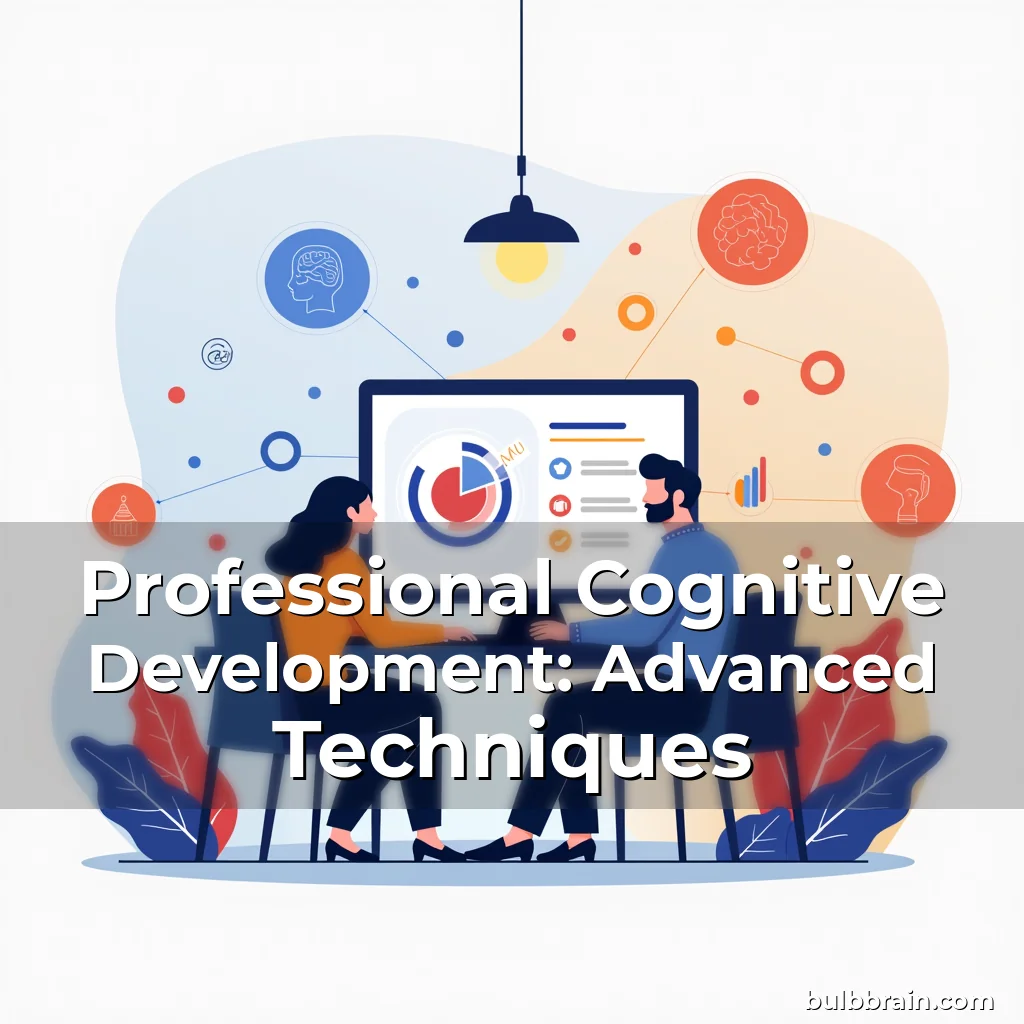
Unlocking Human Potential: Professional Strategies for Cognitive Advancement
Cognitive development is not merely about growing smarter—it’s about refining the mind’s ability to adapt, innovate, and thrive in an increasingly complex world. For professionals, students, and lifelong learners, mastering cognitive development unlocks unparalleled opportunities to enhance decision-making, creativity, and resilience.
This article explores cutting-edge techniques, neuroscientific principles, and real-world applications tailored to elevate cognitive function. Whether you’re seeking to sharpen your analytical prowess or build mental stamina, the insights shared here will empower you to take control of your intellectual evolution.
The Neuroscience Behind Cognitive Growth
At the core of cognitive development lies the brain’s remarkable capacity for change—a phenomenon known as neuroplasticity. Unlike rigid machinery, the human brain constantly rewires itself through experiences, learning, and environmental stimuli. This dynamic process allows neurons to form new connections, strengthen existing ones, or even reorganize pathways when damaged.
Neuroplasticity is not limited to childhood; adults retain the ability to reshape their brains throughout life. Research shows that activities such as meditation, physical exercise, and skill acquisition trigger synaptic pruning and myelination, optimizing neural efficiency. Understanding this science empowers individuals to design routines that align with biological mechanisms for peak performance.
Environmental factors play a pivotal role in shaping cognitive trajectories. Exposure to enriched environments—with access to books, puzzles, social interactions, and novel challenges—has been linked to enhanced gray matter density in regions associated with memory and problem-solving. Conversely, sedentary lifestyles and monotonous routines may hinder cognitive flexibility over time.
- Genetic predispositions: While genes influence baseline cognitive potential, lifestyle choices often determine how far an individual can push those limits.
- Early intervention: Studies suggest that targeted cognitive stimulation during critical developmental windows can yield lasting improvements in adult intelligence.
Daily Practices That Transform Mental Agility
Incorporating structured habits into daily life can significantly accelerate cognitive development. One proven method involves deliberate practice—focused, goal-oriented repetition aimed at improving specific skills rather than passive exposure to information. Musicians, athletes, and chess players exemplify this approach, achieving mastery through hours of refined effort.
A 2019 study published in *Nature* demonstrated that individuals who engaged in three 20-minute sessions of dual-task training weekly showed measurable gains in working memory after six months. These exercises involved simultaneously solving math problems while tracking moving objects, challenging the brain to multitask efficiently.
Sleep, often undervalued, serves as the cornerstone of cognitive restoration. During deep sleep stages, the brain clears metabolic waste products and consolidates memories. Adults requiring less than seven hours of rest nightly experience impaired judgment, slower reaction times, and reduced creative insight, according to Harvard Medical School research.
To maximize cognitive gains, consider implementing micro-learning bursts—short, intense study periods spaced strategically throughout the day. This technique leverages the spacing effect, where information retention improves when material is reviewed periodically instead of crammed in single sessions.
Leveraging Technology for Cognitive Enhancement
Modern tools offer unprecedented avenues for cognitive development, though discernment is crucial. Brain-training apps like Lumosity and Peak claim to boost memory and processing speed through gamified exercises. However, critics argue that these platforms provide minimal transferable benefits outside their narrow domains unless paired with broader cognitive workouts.
Augmented reality (AR) and virtual reality (VR) represent frontier technologies transforming cognitive education. Medical schools now employ VR simulations to train surgeons’ spatial awareness and hand-eye coordination, mimicking high-stakes scenarios safely. Similarly, AR-based language immersion programs enable users to learn vocabulary contextually, enhancing recall rates by up to 40% compared to traditional flashcards.
The Double-Edged Sword of Digital Distractions
While technology facilitates learning, it also introduces cognitive overhead. Constant notifications, endless scrolling, and algorithmic feeds fragment attention spans, reducing sustained focus. A Stanford University report found that heavy smartphone users exhibited lower concentrations and poorer task-switching abilities than non-users.
Combatting digital fatigue requires intentional boundaries. Designate “tech-free” zones during meals or relaxation periods, and utilize app blockers to limit social media access during productive hours. By curbing superficial engagement, the mind recovers bandwidth for deeper, meaningful cognitive pursuits.
Fostering Social Intelligence Through Cognitive Interaction
Cognitive development thrives on social engagement, as interpersonal exchanges challenge perspective-taking, emotional regulation, and verbal fluency. Engaging in debates, group projects, or mentorship relationships compels the brain to synthesize diverse viewpoints and refine communication clarity—an invisible workout for higher-order thinking skills.
A longitudinal study involving corporate executives revealed that leaders who participated in regular peer feedback sessions displayed sharper strategic acumen and faster decision-making capabilities over five years. The act of articulating ideas aloud activates distinct neural networks responsible for abstract reasoning and self-reflection.
Vocalizing thoughts strengthens metacognition—the ability to monitor and adjust one’s own thinking processes. When explaining solutions to others, individuals uncover gaps in their understanding, prompting further investigation. This mirrors the Socratic method used in elite academic institutions worldwide.
To harness this power, seek out communities centered around your interests. Online forums, local clubs, and professional associations create ecosystems where cognitive growth occurs organically through collaboration and mutual support.
Nutrition’s Role in Building a Sharp Mind
No discussion of cognitive development would be complete without addressing the symbiotic relationship between diet and brain health. Omega-3 fatty acids, antioxidants, and B vitamins serve as molecular fuel for neural activity. Deficiencies in these nutrients correlate strongly with declining memory and increased risk of neurological disorders later in life.
The Mediterranean Diet, rich in fish, leafy greens, nuts, and olive oil, has repeatedly shown protective effects against age-related cognitive decline. Flavonoids in blueberries and dark chocolate promote blood flow to the hippocampus, potentially boosting long-term memory formation. Meanwhile, adequate hydration ensures optimal neurotransmitter synthesis and cognitive alertness.
Conversely, diets high in processed sugars and trans fats impair insulin sensitivity, leading to inflammation and neuronal damage. Chronic consumption of such foods has been linked to accelerated telomere shortening—a biological marker of cellular aging—and diminished executive functioning scores in adolescents and adults alike.
Incorporate nutrient-dense superfoods into daily meals. Walnuts, chia seeds, and turmeric contain compounds that reduce oxidative stress in the brain. Pairing protein sources like eggs or lean meats with complex carbohydrates sustains steady energy levels, preventing midday crashes that derail productivity.
Mindfulness and Stress Reduction Techniques
Chronic stress hijacks the prefrontal cortex, the seat of rational thought, substituting it with amygdala-driven responses rooted in fear. Prolonged activation of the fight-or-flight mechanism shrinks gray matter volume and weakens connectivity between brain regions governing emotion and logic. Mindfulness interventions counteract this degradation effectively.
Meditation enhances attention span by cultivating present-moment awareness. Neuroimaging scans reveal that consistent practitioners exhibit thicker cortical layers in areas controlling focus, empathy, and self-regulation. Even eight weeks of daily meditation can increase hippocampal size, reversing early signs of dementia in clinical trials.
Breathwork techniques such as box breathing (inhale-four-count, hold-four-count, exhale-four-count, pause-four-count) activate the parasympathetic nervous system, lowering cortisol levels rapidly. Combining this with progressive muscle relaxation offers a holistic strategy for managing anxiety-induced cognitive fog.
Integrate mindful movement into your routine. Yoga poses like child’s pose or tree pose require balance and concentration, reinforcing neural pathways associated with attention. Tai Chi, with its slow, deliberate motions, similarly sharpens proprioception and mental clarity through synchronized body-mind engagement.
Designing a Personalized Cognitive Training Regimen
There exists no universal formula for cognitive optimization; success hinges on tailoring approaches to individual goals, strengths, and constraints. Begin by identifying priority domains: Is your objective enhancing logical reasoning, linguistic proficiency, or visuospatial skills? Clarifying objectives enables precise targeting of training modalities.
Track progress systematically using standardized assessments. Platforms like Khan Academy and Coursera offer free diagnostics that pinpoint weaknesses in mathematical aptitude or verbal comprehension. Repeating these evaluations monthly quantifies improvement and highlights plateaus needing alternative strategies.
Variety prevents stagnation by stimulating diverse neural circuits. Rotate between reading dense texts, coding challenges, musical instrument practice, and public speaking engagements to maintain cognitive versatility. Cross-training minds much like cross-training bodies yields robust, adaptable intelligences capable of tackling multifaceted problems.
Account for cognitive load when structuring routines. Distribute demanding tasks across different days to allow recovery time. For example, alternate between rigorous analytical work and creative brainstorming sessions to prevent mental burnout and sustain motivation.
Conclusion
Cognitive development is an ongoing journey fueled by curiosity, discipline, and conscious choice. From leveraging neuroscience to designing personalized regimens, the path forward brims with possibilities for anyone committed to unlocking their full mental potential.
Begin today by selecting one actionable step—from incorporating mindfulness into your morning ritual to joining a local book club. Remember, every small commitment compounds into transformative results over time. Your brain’s capacity for growth knows no bounds—you only need the right strategies to set it free.

news is a contributor at BulbBrain. We are committed to providing well-researched, accurate, and valuable content to our readers.
You May Also Like



About news
Passionate about learning, cognitive science, and helping people unlock their full potential.