
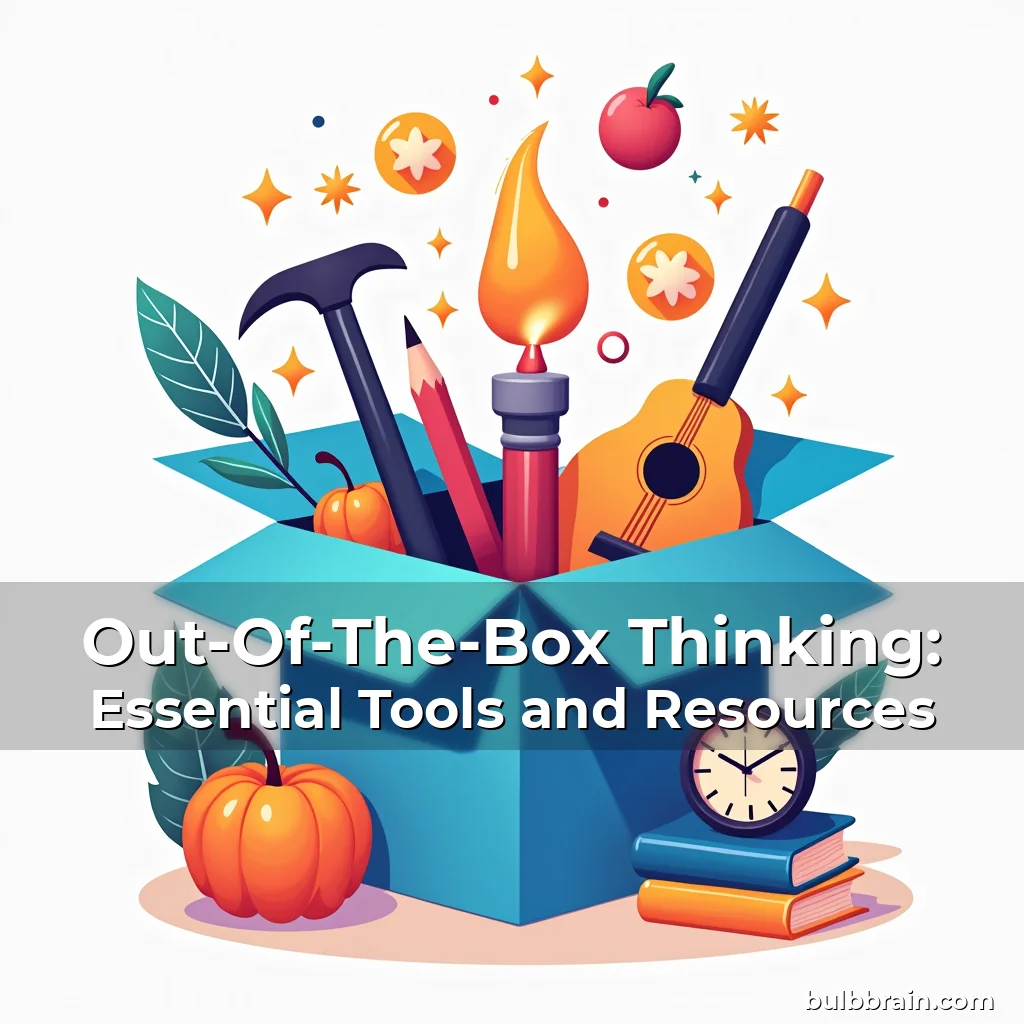
Out-Of-The-Box Thinking: Essential Tools and Resources
In an era defined by rapid technological advancement and shifting market dynamics, out-of-the-box thinking has become a critical differentiator for individuals and organizations alike. This cognitive approach challenges conventional wisdom and embraces unconventional solutions to complex problems.
The power of creative problem-solving lies not only in generating novel ideas but also in implementing them effectively within practical constraints. As we explore this concept further, you’ll discover how innovative thinkers leverage diverse tools and strategies to break free from traditional limitations.
The Cognitive Foundations of Creative Problem-Solving
Creative thinking begins with understanding the neural mechanisms that underpin innovation. Research indicates that divergent thinking—the ability to generate numerous potential solutions—is closely linked to brain regions associated with imagination and insight.
Different personality types exhibit varying degrees of creativity. For example, introverts often display deep analytical skills while extroverts may excel at brainstorming sessions through social interaction. Recognizing these differences can enhance team collaboration efforts.
A key component of creative problem-solving is the capacity to reframe perspectives. This involves viewing situations from alternative angles, which often leads to unexpected yet effective resolutions.
Studies show that people who engage regularly in activities requiring mental flexibility—such as puzzles or learning new languages—are better equipped to think creatively when faced with challenging scenarios.
Tools That Foster Unconventional Thought Patterns
To cultivate innovative thinking, various tools have been developed over time. Mind mapping techniques help visualize connections between seemingly unrelated concepts, making it easier to identify novel patterns.
Design thinking methodologies provide structured approaches to innovation by emphasizing empathy, experimentation, and iteration in solution development processes.
SCAMPER is a particularly useful technique where each letter represents a strategy for modifying existing products or services:
- Substitute: Replace components with alternatives
- Combine: Merge elements from different sources
- Amplify: Increase certain features significantly
- Modify: Alter aspects to create something new
- Put to another use: Repurpose items for different functions
- Eliminate: Remove unnecessary parts
- Reverse: Consider opposite approaches
These frameworks are especially beneficial when working across disciplines since they encourage cross-pollination of ideas from varied fields.
Journaling exercises serve as powerful tools for documenting thoughts and tracking progress toward original solutions. Regular practice helps maintain momentum during periods of intense creative exploration.
Overcoming Mental Blocks Through Strategic Techniques
Even highly skilled innovators encounter obstacles that hinder their ability to think freshly. Common barriers include fear of failure, confirmation bias, and over-reliance on familiar routines.
One effective method for overcoming these blocks is adopting deliberate practices aimed at disrupting habitual thought patterns. Engaging in random walks or changing daily environments can stimulate fresh perspectives.
Time management strategies play a crucial role too; setting aside dedicated intervals specifically for imaginative work prevents burnout while maintaining focus on high-value tasks.
Encouraging open dialogue among colleagues fosters an atmosphere conducive to sharing unconventional ideas without judgment. This collaborative spirit enhances overall organizational creativity levels.
Fostering Innovation Within Organizations
Companies seeking sustained growth must prioritize cultivating cultures that support risk-taking behaviors. Establishing clear channels for idea submission ensures employees feel valued contributors rather than passive observers.
Leadership plays a pivotal role in shaping such environments. By modeling curiosity and embracing mistakes as part of the learning process, managers inspire teams to pursue bold initiatives confidently.
Implementing reward systems based on contribution quality—not just quantity—reinforces desired behavioral patterns among staff members. Recognition programs should highlight both successful implementations and promising concepts still in development stages.
Creating physical spaces designed for spontaneous interactions increases opportunities for serendipitous discoveries that might otherwise remain undiscovered within formal meeting structures alone.
Case Studies Demonstrating Practical Applications
Several real-world examples illustrate how out-of-the-box thinking transforms theoretical concepts into tangible outcomes. The development of Post-it Notes originated from a failed adhesive experiment that unexpectedly led to an entirely new product category.
Swiss watchmaker Rolex revolutionized luxury timepiece manufacturing by integrating precision engineering principles typically found in aerospace industries. This interdisciplinary approach set industry standards for accuracy and durability.
Google’s 20% policy allowing engineers to spend part of their workweek exploring personal projects resulted in groundbreaking innovations like Gmail and Google Maps. These successes underscore the value of allocating resources toward experimental endeavors.
IDEO, renowned design firm, employs human-centered design methods that emphasize direct observation of users’ unmet needs before proposing any technological interventions. Their approach consistently yields solutions aligned with actual consumer requirements.
Technological Innovations Enhancing Creative Processes
Advancements in artificial intelligence now assist creators by analyzing vast datasets to uncover hidden correlations. AI-powered platforms suggest unexpected combinations that humans might overlook due to limited cognitive bandwidths.
Virtual reality environments enable designers to test conceptual models safely without financial investment risks. Immersive simulations allow for iterative improvements until optimal results emerge naturally through trial-and-error cycles.
Collaboration software facilitates global teamwork by synchronizing contributions from geographically dispersed participants. Real-time editing capabilities ensure seamless integration of diverse viewpoints regardless of location differences.
Data visualization tools transform abstract information into digestible formats that spark intuitive understanding. Graphical representations make complex relationships more accessible even to non-expert audiences.
Nurturing Creativity Across Generational Differences
Digital natives accustomed to instant gratification require tailored approaches compared to older generations used to slower feedback loops. Gamified learning modules prove particularly effective in capturing attention spans typical among younger demographics.
Intergenerational mentorship programs bridge knowledge gaps while fostering mutual respect between differing age groups. Such collaborations frequently yield hybrid solutions combining mature experience with contemporary digital fluency.
Adapting communication styles according to audience preferences enhances message reception rates dramatically. Visual storytelling techniques resonate strongly with visually oriented learners irrespective of chronological age.
Workplace policies accommodating flexible schedules benefit caregivers across all life stages, thereby broadening participation in creative pursuits beyond traditional full-time employment models.
Measuring Progress Toward Innovative Thinking Goals
Establishing quantifiable metrics enables accurate assessment of individual and organizational growth trajectories related to creativity enhancement efforts. Tracking frequency of novel suggestions submitted provides baseline data points for future comparisons.
Analyzing implementation success rates reveals which types of proposals achieve practical viability most consistently. Cross-referencing these figures against resource allocation decisions informs strategic adjustments moving forward.
Conducting periodic skill assessments measures evolving competencies required for modern problem-solving contexts. Identifying emerging strengths allows targeted reinforcement of those areas through specialized training programs.
Gathering qualitative feedback alongside numerical indicators creates holistic portraits of developmental journeys undertaken by aspiring innovators navigating ever-changing landscapes characterized by constant transformation.
Conclusion
This exploration has highlighted essential aspects of developing and applying out-of-the-box thinking across various domains. From foundational cognitive theories to cutting-edge technological applications, multiple pathways exist toward achieving exceptional levels of innovation capability.
By strategically employing recommended tools and remaining vigilant against common pitfalls, individuals and organizations can systematically build capacities necessary for thriving amidst continuous change. Embracing uncertainty becomes less intimidating once appropriate safeguards accompany calculated risks taken deliberately towards meaningful objectives.

news is a contributor at BulbBrain. We are committed to providing well-researched, accurate, and valuable content to our readers.
You May Also Like
About news
Passionate about learning, cognitive science, and helping people unlock their full potential.