
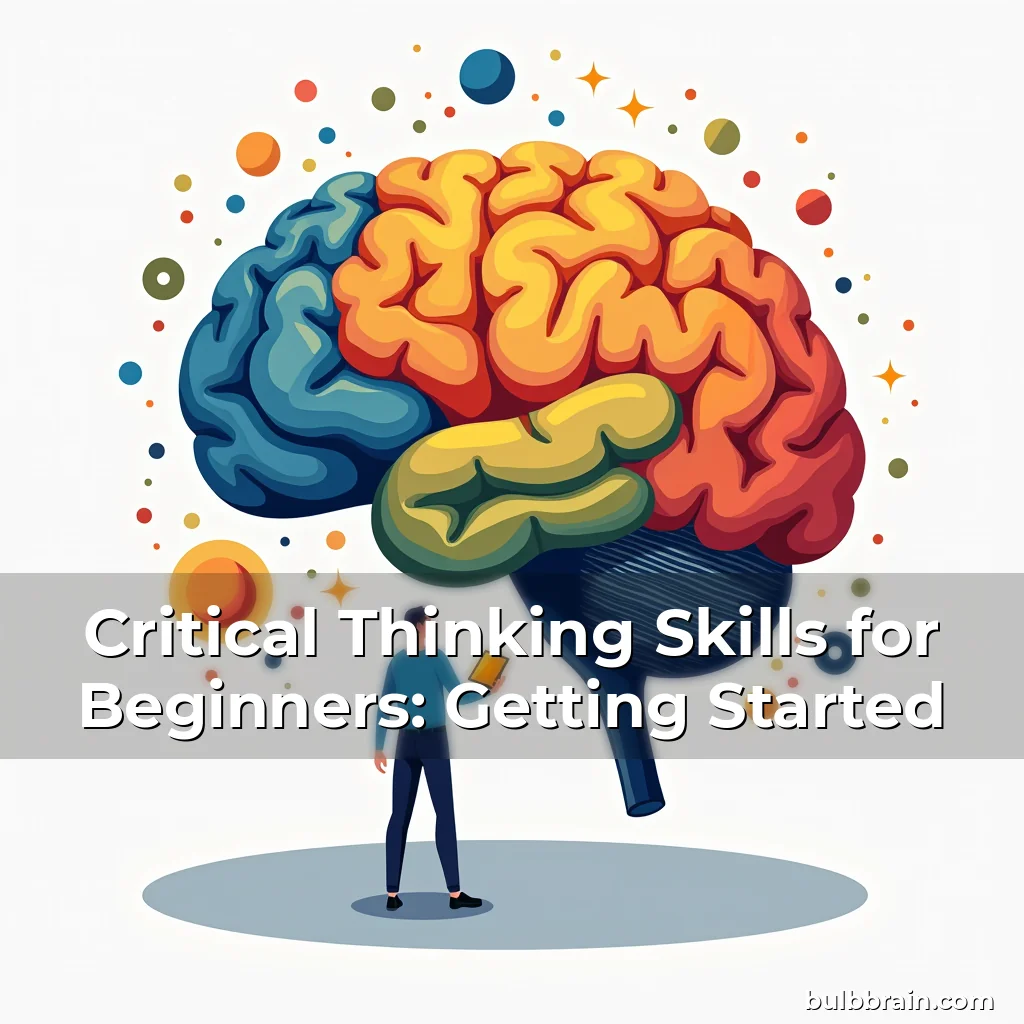
Critical Thinking Skills for Beginners: Unleashing Your Inner Detective
In an age where information floods our screens every minute, mastering critical thinking isn’t just beneficial—it’s essential. Whether you’re solving everyday problems or navigating complex decisions, the ability to analyze facts, question assumptions, and evaluate evidence sets apart those who thrive from those who merely survive.
This guide will walk you through the fundamentals of critical thinking, offering actionable strategies, real-life examples, and expert insights. By the end, you’ll understand not only *what* critical thinking is but also *how* to cultivate it in your daily life—and why it matters more than ever in today’s fast-paced world.
Understanding Critical Thinking: More Than Just Being Smart
Critical thinking is often mistaken for intelligence alone, but it goes far beyond raw smarts. At its core, it’s a deliberate, reflective approach to processing information. This involves analyzing data objectively, identifying logical fallacies, and making reasoned judgments based on available evidence.
The goal isn’t to find “the right answer” but to engage deeply with ideas, challenge preconceptions, and consider alternative viewpoints. Think of it as a detective’s mindset: constantly gathering clues, cross-referencing them, and piecing together a coherent picture of reality.
- Analyzing information: Breaking down complex topics into smaller components to understand relationships and patterns.
- Evaluating credibility: Assessing the reliability of sources and distinguishing fact from opinion or bias.
- Solving problems creatively: Using logic and imagination to devise effective solutions when faced with challenges.
Why Critical Thinking Matters in Modern Life
We live in a society inundated with conflicting narratives, misinformation, and oversimplified conclusions. From political discourse to social media trends, critical thinking acts as a shield against manipulation and poor decision-making.
Studies show that people with strong critical thinking skills are less likely to fall prey to fake news or conspiracy theories. They’re also better equipped to make informed choices about health, finance, and career paths—decisions that shape their lives profoundly.
The Hidden Cost of Ignoring Critical Thinking
A 2022 report by the World Economic Forum highlighted that nearly 60% of adults struggle to distinguish credible news from propaganda. This inability to think critically leads to polarized societies, misguided policies, and even public health crises.
Consider the spread of anti-vaccine sentiment during the pandemic. Many individuals relied on anecdotal stories rather than peer-reviewed science, resulting in preventable illnesses and deaths. Here, critical thinking wasn’t just useful—it was lifesaving.
Common Pitfalls That Hinder Critical Thought
Even well-intentioned individuals face roadblocks when trying to think critically. One major obstacle is confirmation bias—the tendency to seek out information that reinforces existing beliefs while ignoring contradictory evidence.
Emotional reactivity is another barrier. When we feel strongly about a topic, our brains prioritize speed over accuracy, leading us to jump to conclusions instead of examining all angles carefully.
- Overconfidence: Believing you already know everything can stifle growth and prevent you from learning new perspectives.
- Lack of patience: Rushing to judgment often results in flawed decisions, especially in high-pressure situations.
- Poor information literacy: Without knowing how to assess sources, you risk relying on unverified claims or biased opinions.
Bridging the Gap: How to Begin Developing Critical Thinking Skills
If you’ve never focused on improving your critical thinking before, don’t worry—you’re not alone. Like any skill, it requires consistent effort and practice. A great starting point is to ask yourself simple yet powerful questions whenever presented with new information.
Ask: *“Who
Create filters for incoming information. Follow verified experts, subscribe to newsletters curated by professionals, and use browser extensions that flag potential misinformation. These small actions compound over time, building a fortress of reliable knowledge.
Digital Literacy as a Critical Skill in the 21st Century
Being digitally literate doesn’t mean mastering coding or advanced software; it means understanding how digital platforms operate and how they influence our perceptions. Learn basic SEO principles, recognize clickbait tactics, and understand algorithmic biases that may skew your view of the world.
Tools like Google Scholar or PubMed allow access to peer-reviewed research, providing a higher standard of credibility compared to random blog posts or forums. Prioritize quality over quantity in your consumption habits.
Fostering Critical Thinking in Everyday Decision-Making
Critical thinking isn’t confined to classrooms or boardrooms—it applies to everything from choosing a phone plan to deciding whether to trust a friend’s advice. Approach routine decisions with the same rigor you’d apply to major life choices.
When shopping for groceries, for example, look past flashy packaging and read nutritional labels. Compare prices per unit weight, check ingredient lists, and consider long-term health impacts instead of focusing solely on immediate satisfaction.
Using Reflection to Improve Future Choices
Reflective practice strengthens critical thinking by allowing you to review past decisions and learn from them. After making a choice—whether it was buying a product, accepting a job offer, or handling a conflict—ask yourself: *Did I gather enough information? Could I have considered other options? What went well, and what didn’t?*
Keeping a decision log helps track this process systematically. Over time, you’ll notice recurring themes in your successes and setbacks, guiding future behavior without repeating old mistakes.
The Social Impact of Cultivating Strong Critical Thinking Habits
Your individual journey towards stronger critical thinking ripples outward, influencing family conversations, workplace dynamics, and even broader cultural norms. When you model thoughtful engagement with ideas, others around you are inspired to do the same.
Communities rich in critical thinkers tend to foster innovation, resolve conflicts constructively, and resist divisive rhetoric. Consider joining local discussion groups or participating in online forums where respectful debate thrives.
Encouraging Critical Thinking Across Generations
Teach younger generations how to think critically by modeling good practices yourself. Share your own experiences with learning from errors, emphasizing that mistakes are natural parts of growing smarter.
Support schools and organizations that promote inquiry-based learning. Advocate for curricula that emphasize problem-solving, ethical reasoning, and scientific method rather than passive memorization.
Conclusion
Critical thinking is not a static trait but a dynamic set of skills that grow sharper with use. By adopting mindful questioning, challenging assumptions, and continuously seeking knowledge, anyone can elevate their capacity for clear, rational decision-making.
Begin today by applying one strategy discussed in this article. Whether it’s asking deeper questions or reflecting on recent choices, each step brings you closer to becoming a more discerning thinker—one capable of navigating complexity with confidence and clarity.

news is a contributor at BulbBrain. We are committed to providing well-researched, accurate, and valuable content to our readers.
You May Also Like

About news
Passionate about learning, cognitive science, and helping people unlock their full potential.