
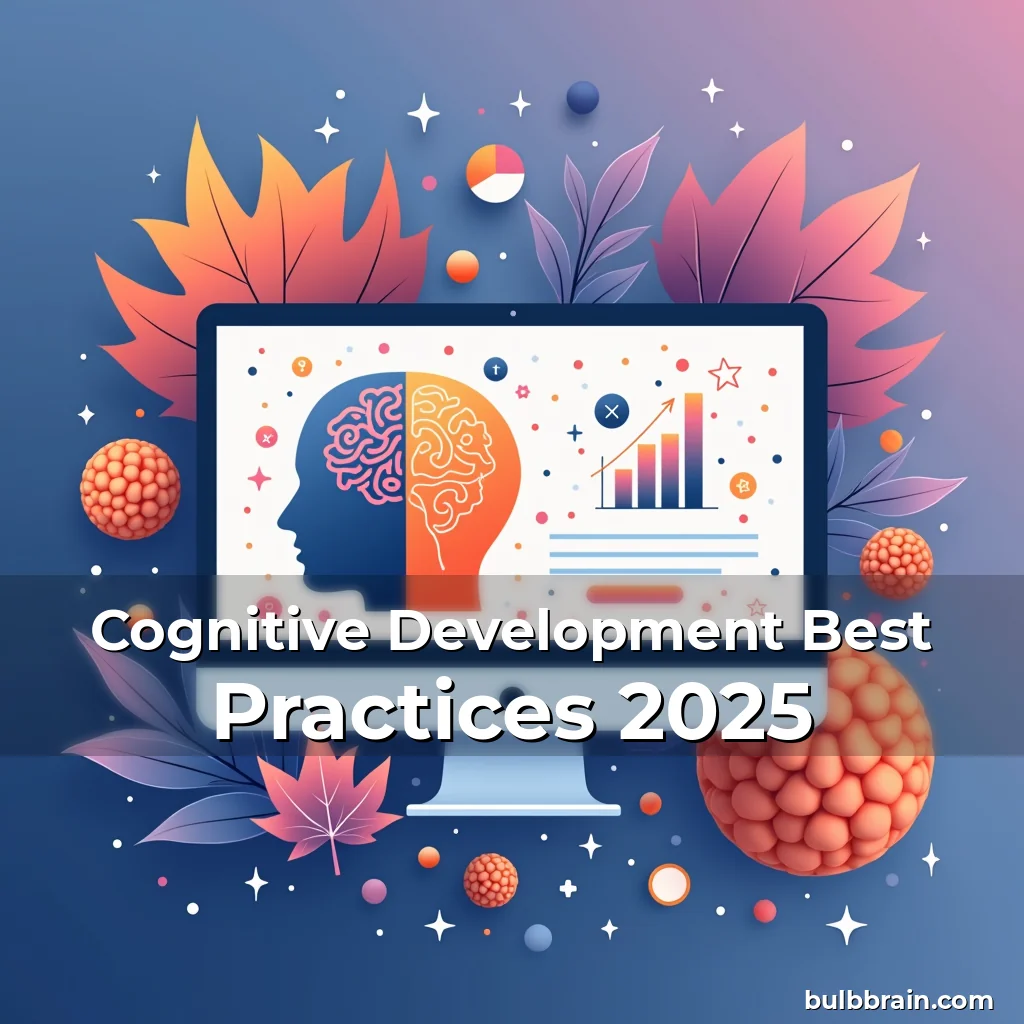
Cognitive Development Best Practices 2025
In today’s rapidly evolving world, understanding and nurturing cognitive development is essential for individuals across all age groups. From infants to adults, cognitive growth influences how we learn, solve problems, and interact with our environment.
This guide explores cutting-edge strategies and evidence-based practices designed to optimize mental capabilities. Whether you’re a parent seeking ways to support your child’s intellectual growth or someone looking to maintain sharp cognitive function, this resource offers invaluable insights tailored for 2025 and beyond.
The Foundations of Cognitive Growth
Cognitive development refers to the process by which humans acquire, organize, and apply knowledge. This complex journey begins in infancy and continues through adulthood, shaped by both biological and environmental factors.
Neuroscientific research reveals that early experiences play a crucial role in building neural pathways responsible for higher-order thinking skills. These foundational connections form the basis for language acquisition, logical reasoning, and problem-solving abilities.
Differentiation occurs gradually as children progress through distinct developmental stages characterized by unique cognitive milestones. Jean Piaget’s theory highlights four primary phases: sensorimotor, preoperational, concrete operational, and formal operational periods.
- Sensorimotor Stage: Infants develop object permanence through direct interaction with their surroundings
- Preoperational Stage: Children begin symbolic thinking but struggle with conservation concepts
- Concrete Operational Stage: Logical thinking emerges around age 7-11, though limited to tangible objects
- Formal Operational Stage: Adolescents gain capacity for abstract reasoning and hypothetical thinking
Modern Approaches to Enhancing Mental Capabilities
Contemporary research emphasizes multidimensional strategies for promoting cognitive growth. A holistic approach considers genetic predispositions alongside environmental enrichment opportunities.
Educators and neuroscientists increasingly advocate for active learning environments that encourage exploration and discovery rather than passive absorption of information.
Technology integration plays a significant role in modern pedagogy. Interactive digital tools provide immersive experiences that stimulate various cognitive functions simultaneously.
Scientific Evidence Supporting Active Learning
Studies show that hands-on activities lead to better retention rates compared to traditional teaching methods. One experiment demonstrated improved spatial reasoning after participants engaged in manipulative tasks versus reading about same concepts.
Active learning principles align with brain plasticity mechanisms. When students are actively involved in constructing knowledge, synaptic connections strengthen through repeated engagement with material.
Nutritional Influences on Brain Development
Adequate nutrition serves as a fundamental pillar supporting healthy cognitive development throughout life. Essential nutrients influence neurotransmitter production and myelination processes vital for efficient neuronal communication.
Prenatal dietary patterns significantly affect fetal brain architecture. Deficiencies in certain micronutrients during pregnancy correlate with increased risk of developmental delays later in life.
Ongoing nutritional intake remains equally important postnatally. Omega-3 fatty acids found in fish oil have been shown to enhance working memory performance in school-aged children.
Vitamin D deficiency has emerged as a growing concern among youth populations. Research indicates its role in modulating inflammation levels associated with neurodevelopmental disorders.
- Iron supplementation improves attention spans in iron-deficient children
- B-vitamins contribute to mood regulation linked with cognitive efficiency
- Zinc deficiency may impair executive functioning capacities
Environmental Enrichment Strategies
Stimulating environments foster optimal cognitive development through enriched sensory experiences. Exposing children to varied stimuli promotes flexible thinking and creative problem solving.
Multisensory learning techniques integrate auditory, visual, tactile, and kinesthetic modalities. This approach caters to diverse learning preferences while reinforcing conceptual understanding.
Play-based learning remains a cornerstone of effective education. Unstructured imaginative play encourages pretend scenarios that exercise divergent thinking skills.
Exposure to multicultural experiences broadens perspectives and enhances metacognitive awareness. Language immersion programs demonstrate accelerated cognitive flexibility gains.
Impact of Screen Time on Developing Minds
Research suggests moderate screen time can offer cognitive benefits when used purposefully. Educational apps targeting math fluency or vocabulary expansion show measurable improvements in academic achievement.
However excessive media consumption correlates with reduced attention span and decreased face-to-face social interaction. Passive viewing lacks the interactive elements necessary for deep processing of information.
Experts recommend balancing digital engagement with offline activities. Structured parental involvement helps transform screen time into meaningful learning experiences.
Interactive storytelling platforms represent promising innovations. Combining narrative structures with branching decision-making paths engages higher-level cognitive processes effectively.
Emotional Intelligence and Cognitive Functioning
Emerging evidence establishes strong links between emotional intelligence and cognitive performance metrics. Self-awareness and emotion regulation abilities contribute to better decision-making outcomes.
Children who receive social-emotional learning instruction demonstrate enhanced academic success. Emotional literacy training improves classroom behavior and peer relationships.
Stress management techniques positively impact cognitive reserves. Mindfulness practices increase gray matter density in regions associated with memory consolidation.
Positive emotional states facilitate more efficient information processing. Dopamine release during rewarding experiences strengthens memory encoding mechanisms.
Lifelong Cognitive Maintenance Techniques
While peak cognitive development typically concludes adolescence, maintaining mental acuity requires deliberate practice throughout adulthood. Engaging in mentally stimulating activities preserves neural connectivity networks.
Regular physical exercise boosts brain-derived neurotrophic factor (BDNF) levels, which supports neuron survival and synaptic plasticity. Aerobic activity particularly stimulates hippocampal growth.
Cognitive reserve theory explains why intellectually active older adults often exhibit delayed onset of dementia symptoms. Lifelong learning contributes to compensatory mechanisms against neurodegenerative diseases.
Quality sleep remains crucial for memory consolidation processes. Deep sleep cycles facilitate transfer of new information from short-term to long-term storage compartments.
Tech Integration for Cognitive Enhancement
Artificial intelligence applications offer personalized learning experiences adapted to individual cognitive profiles. Adaptive algorithms adjust difficulty levels dynamically based on real-time performance data.
Virtual reality simulations create immersive learning environments that mimic real-world situations safely. Medical trainees benefit from VR exposure to surgical procedures requiring precise motor coordination.
Augmented reality overlays provide contextual information enhancing situational awareness. Field workers utilize AR glasses receiving location-specific guidance during complex tasks.
Mobile applications track daily cognitive health indicators through gamified assessments. These tools enable users to monitor changes over time and identify potential decline areas promptly.
Future Trends in Cognitive Science
Rapid technological advances promise transformative breakthroughs in cognitive enhancement methodologies. Neural interface technologies could revolutionize how we interact with information systems.
Genomic research identifies genetic markers associated with particular cognitive traits. Personalized medicine approaches may tailor interventions based on individual DNA profiles.
Quantum computing potential opens avenues for unprecedented analysis of complex cognitive patterns. Simulations will allow researchers to test hypotheses previously considered computationally infeasible.
Ethical considerations remain paramount as these innovations emerge. Balancing technological advancement with privacy concerns presents ongoing challenges for developers and policymakers alike.
Conclusion
Cognitive development encompasses a dynamic interplay between innate potentials and external influences shaping human thought processes. By embracing scientifically validated strategies, individuals can maximize their cognitive capabilities throughout life.
To cultivate optimal mental agility, prioritize balanced nutrition, enriching environments, and continuous learning opportunities. Stay informed about emerging research to refine personal development plans continuously.

news is a contributor at BulbBrain. We are committed to providing well-researched, accurate, and valuable content to our readers.
You May Also Like
About news
Passionate about learning, cognitive science, and helping people unlock their full potential.