
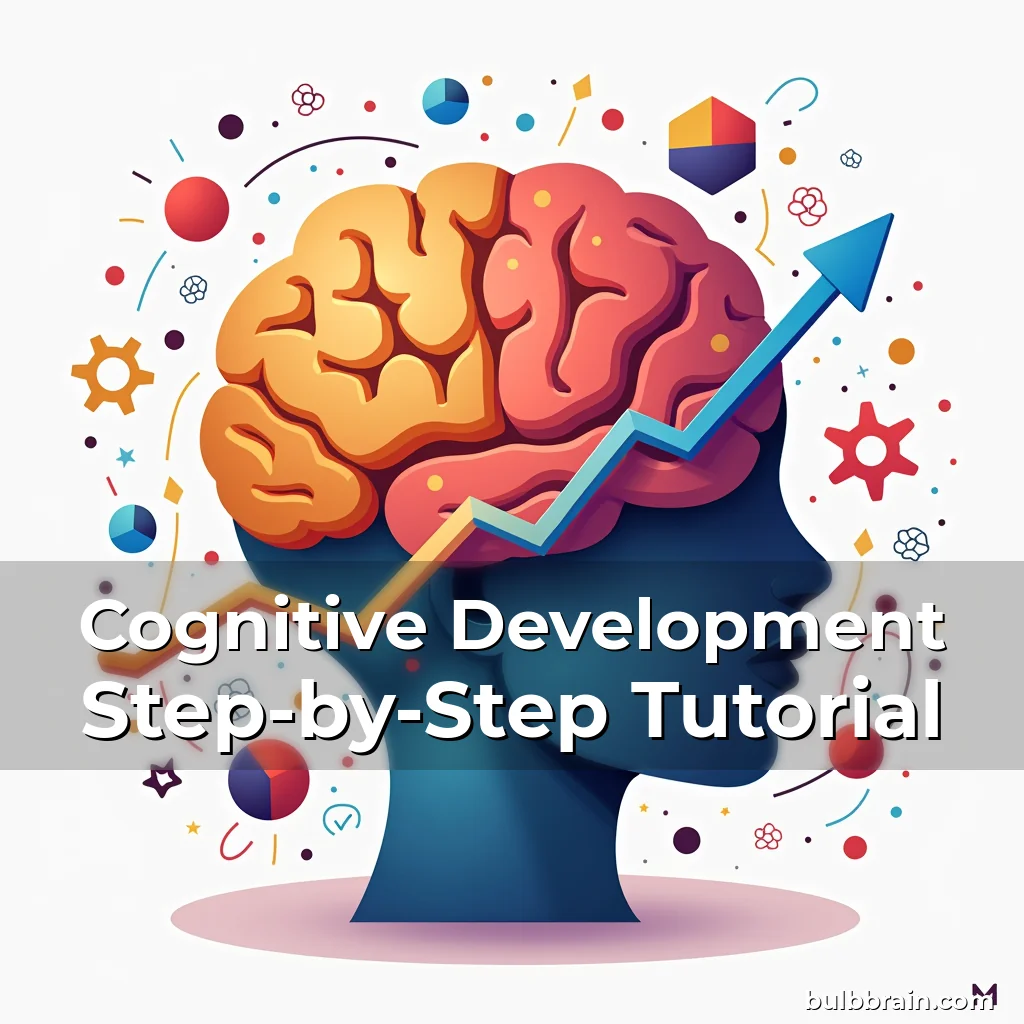
The Journey of Cognitive Growth: Understanding How Our Minds Evolve Through Life
In every stage of life, our minds undergo remarkable transformations that shape how we think, learn, and interact with the world around us. This intricate process, known as cognitive development, is not merely an academic concept but a fundamental aspect of human experience.
From infancy to old age, the evolution of our mental capabilities follows distinct patterns influenced by both biological factors and environmental interactions. These developmental stages reveal fascinating insights into what makes each individual unique while highlighting universal truths about human cognition.
Foundations of Cognitive Development Theory
Pioneering psychologists have long sought to understand the mechanisms behind cognitive growth through various theoretical frameworks. Jean Piaget’s groundbreaking work remains one of the most influential models explaining how children acquire knowledge and develop logical thought processes over time.
Piaget proposed four key stages that describe the progression from simple sensory-based understanding to complex abstract reasoning. His theory emphasized active learning through exploration and interaction rather than passive absorption of information.
Each stage builds upon previous experiences while introducing new cognitive abilities such as object permanence, symbolic representation, and conservation principles. However, modern research has shown that these transitions are often more fluid and context-dependent than initially theorized.
The preoperational stage exemplifies this complexity, where young children begin using symbols and language but still struggle with logical operations like classification or reversibility. This period lays crucial groundwork for later intellectual advancements.
While Piaget’s framework provides foundational insights, contemporary approaches incorporate neurological findings that emphasize brain plasticity and the role of social environments in shaping cognitive capacities across the lifespan.
- Biological Foundations: Neural connections form rapidly during early childhood, establishing the basic architecture for future cognitive functions.
- Social Learning: Interactions with caregivers and peers significantly influence cognitive growth through modeling, feedback, and collaborative problem-solving opportunities.
- Cultural Influences: Educational systems, societal values, and technological access can either enhance or constrain cognitive development trajectories depending on their implementation.
These multidimensional perspectives highlight the need for holistic approaches when examining cognitive maturation, recognizing that no single factor determines intellectual advancement alone.
Stages of Cognitive Evolution Across Lifespan
Cognitive development unfolds through several distinct phases that reflect increasing sophistication in mental processing capabilities. While traditionally associated with childhood, these changes continue well into adulthood and even senescence.
Infancy marks the beginning of conscious awareness, characterized by rapid neural network formation and sensorimotor exploration. During this phase, infants primarily rely on direct physical interaction with objects to build conceptual foundations.
The toddler years introduce symbolic play as a critical milestone, enabling children to represent ideas beyond immediate reality. This transition sets the stage for more advanced abstract thinking later in development.
Early childhood witnesses significant strides in language acquisition, memory retention, and pattern recognition skills. As vocabulary expands, so does the ability to categorize information systematically.
Middle childhood brings enhanced logical reasoning abilities, allowing individuals to grasp mathematical concepts and engage in hypothetical thinking scenarios effectively.
Adolescence presents a unique challenge due to heightened emotional intensity combined with emerging metacognitive awareness. Teenagers navigate identity formation alongside developing executive function skills essential for independent decision-making.
Young adulthood typically signifies peak cognitive performance levels, particularly in areas requiring sustained attention, working memory capacity, and flexible problem-solving strategies.
Older adults may experience subtle declines in certain cognitive domains yet retain vast reservoirs of accumulated wisdom and expertise gained through lifelong experiences.
This continuous spectrum underscores the importance of maintaining mental engagement throughout different life stages to optimize cognitive health outcomes.
Neurobiological Underpinnings of Mental Maturation
At its core, cognitive development relies heavily on neuroplasticity—the brain’s remarkable ability to reorganize itself by forming new neuronal connections throughout life. This adaptability enables ongoing learning and skill refinement at any age.
Dendritic branching increases dramatically during early childhood, creating expansive networks necessary for efficient information processing. Simultaneously, myelination enhances signal transmission speeds within established pathways.
Frontal lobe maturation plays a pivotal role in refining higher-order cognitive functions such as impulse control, planning, and moral reasoning capabilities. This region continues developing until late adolescence or early adulthood.
Hormonal fluctuations during puberty contribute to dramatic shifts in mood regulation and risk-taking behaviors, which in turn impact cognitive flexibility and creativity expression levels.
The emergence of default mode network activity supports introspective thinking patterns vital for self-reflection and personal insight generation processes.
Age-related changes involve gradual synaptic pruning that optimizes existing circuits while reducing unnecessary neural connections. This natural selection process contributes to increased efficiency despite potential decreases in raw processing power.
Environmental enrichment consistently stimulates neurogenesis—new neuron production—which counters some effects of aging on cognitive faculties when maintained regularly.
Understanding these biological bases helps contextualize why certain interventions might prove more effective during particular developmental windows.
Language Acquisition and Its Impact on Thought Processes
Linguistic competence emerges as a cornerstone of cognitive development, facilitating communication while simultaneously structuring how individuals perceive and interpret their surroundings. Language acquisition begins before birth through auditory exposure to native speech patterns.
Newborns demonstrate innate sensitivity to phonetic distinctions present in their linguistic environment, laying the foundation for later grammar comprehension milestones. By approximately two years old, most children possess functional vocabularies exceeding fifty words.
As syntactic rules become internalized, language serves dual purposes: expressing thoughts externally and organizing them internally for clearer conceptualization. This bidirectional relationship strengthens analytical reasoning capacities progressively.
Metalinguistic awareness develops gradually, permitting users to analyze language structures objectively rather than merely applying them reflexively. Such meta-cognition proves invaluable for academic pursuits and creative endeavors alike.
Cross-cultural studies reveal correlations between grammatical complexities of spoken languages and corresponding differences in spatial orientation or temporal perception among speakers. This suggests deep interconnections between linguistic frameworks and cognitive schemata.
Bilingual proficiency offers additional benefits including improved executive function traits like task-switching agility and enhanced inhibitory control mechanisms. These advantages arise from constant mental juggling required between competing language systems.
However, language barriers can impede cognitive development if left unaddressed, emphasizing the necessity of equitable educational resources supporting multilingual communities worldwide.
Educational Strategies to Foster Intellectual Growth
Effective teaching methodologies align closely with developmental readiness levels, ensuring optimal engagement without overwhelming students’ current cognitive capacities. Differentiated instruction tailors lessons according to individual learner profiles.
Project-based learning encourages deeper immersion in subject matter through hands-on experimentation, promoting meaningful knowledge construction rather than rote memorization techniques. Real-world applications strengthen retention rates substantially.
Technology integration opens exciting avenues for personalized learning experiences via adaptive software platforms capable of adjusting difficulty levels dynamically based on user progress metrics.
Collaborative group activities cultivate interpersonal intelligence alongside academic mastery, preparing learners for future teamwork scenarios encountered professionally and socially.
Formative assessment practices provide ongoing feedback loops that guide instructional adjustments proactively instead of relying solely on summative evaluations at year-end intervals.
Play-based education leverages intrinsic motivation inherent in youthful curiosity, transforming recreational activities into structured learning opportunities seamlessly integrated within curricular objectives.
Critical thinking exercises challenge assumptions and encourage evidence-based reasoning, equipping students with analytical tools applicable across disciplines and career paths.
Culturally responsive pedagogy acknowledges diverse backgrounds influencing learning styles, thereby enhancing inclusivity and engagement among heterogeneous student populations effectively.
Socioemotional Factors Influencing Cognition
Emotional regulation skills strongly correlate with cognitive achievement indicators, suggesting that psychological wellbeing directly impacts intellectual performance outcomes. Stress management techniques proved beneficial for maintaining focus during demanding tasks.
Secure attachment relationships foster confidence in exploring novel situations safely, encouraging risk-taking behaviors essential for innovation and discovery processes. Conversely, chronic insecurity impedes exploratory tendencies detrimental to cognitive expansion.
Peer influences exert considerable pressure during formative periods; positive social circles promote healthy competition whereas toxic environments hinder optimal development trajectories. Social comparison dynamics require careful navigation to prevent demotivation.
Family socioeconomic status indirectly affects cognitive development through resource availability disparities impacting quality of education received. Access to books, technology, and extracurricular programs varies widely across demographics.
Parental involvement demonstrates measurable improvements in academic success rates, reinforcing the value of consistent support systems nurturing intellectual aspirations from early ages onward.
Community safety conditions influence free-range learning possibilities outside formal classroom settings, affecting overall experiential knowledge accumulation potential significantly.
Addressing systemic inequities becomes imperative to ensure all children receive equal opportunities for cognitive flourishing regardless of background circumstances they inherit at birth.
Tech Integration and Modern Cognitive Advancement
Digital technologies offer unprecedented opportunities for expanding cognitive horizons, providing instant global connectivity previously unimaginable within traditional educational paradigms. Interactive media transforms static information delivery methods into dynamic learning ecosystems.
Artificial intelligence-driven tutors personalize study plans adapting precisely to individual needs, optimizing learning curves efficiently compared to conventional standardized approaches. Gamified interfaces increase motivation levels through reward-based reinforcement cycles.
Virtual reality simulations create immersive contexts for practicing complex procedures safely, minimizing real-world risks associated with trial-and-error learning strategies inherently prone to errors otherwise.
Cloud computing facilitates seamless collaboration across geographical boundaries, enabling collective problem-solving initiatives involving participants from varied cultural backgrounds enriching perspective diversity critically important today.
Data analytics tools help educators identify struggling students earlier through predictive modeling algorithms detecting subtle patterns indicative of impending difficulties before they escalate severely.
However, digital saturation demands mindful usage guidelines preventing information overload syndromes undermining concentration spans increasingly reported globally amidst ubiquitous screen presence nowadays.
Balancing technological assistance with organic cognitive stimulation remains crucial to avoid dependency issues potentially hindering natural development processes altogether if mismanaged improperly.
Protective Measures Against Cognitive Decline
Maintaining robust cognitive functioning requires intentional efforts beyond mere survival instincts, encompassing proactive lifestyle choices aimed specifically at preserving mental acuity across decades. Regular exercise emerged as one of the most potent non-pharmacological interventions available currently.
Aerobic activities stimulate hippocampal growth linked directly to improved memory consolidation abilities, demonstrating clear physiological benefits extending far beyond cardiovascular enhancements typically cited first.
Nutritional intake optimization focuses especially on omega-3 fatty acids found abundantly in fish oils proven effective against neurodegenerative diseases when consumed consistently over extended durations.
Sleep hygiene protocols establish rhythmic restorative cycles essential for memory encoding and retrieval processes occurring predominantly during REM sleep phases critical for cognitive maintenance.
Continuous mental challenges through puzzles, reading materials, or strategic games sustain neural activation levels preventing stagnation leading inevitably towards dementia symptoms manifestation eventually.
Social engagement prevents isolation-induced cognitive deterioration by stimulating conversation exchanges strengthening verbal fluency and conceptual associations beneficially retained longer term generally.
Managing stress responses through mindfulness meditation reduces cortisol secretion damaging gray matter volumes negatively correlated with cognitive decline acceleration rates observed frequently nowadays.
Regular medical check-ups enable early detection of underlying conditions contributing subtly yet cumulatively toward impaired cognitive function worsening progressively without timely intervention measures implemented promptly.
Fostering Cognitive Health Throughout Generations
Creating supportive environments conducive to cognitive wellness involves multi-generational participation fostering mutual benefit across age groups. Intergenerational programs bridge generational gaps promoting shared knowledge exchange enrichingly.
Youth mentorship initiatives leverage older generations’ experiential wisdom mentoring younger counterparts navigating contemporary challenges uniquely positioned differently relative to past eras historically speaking.
Kinship care arrangements prioritize family-centric solutions addressing child-rearing responsibilities collectively rather than isolating parental burdens exclusively onto primary caregivers singularly tasked independently.
Community centers serve as hubs aggregating resources targeting cognitive enhancement goals strategically aligned with local demographic needs identified accurately through targeted assessments conducted periodically.
Vocational training programs integrate cognitive skill development within practical job preparation contexts making theoretical concepts tangible through applied learning methodologies effectively bridging abstraction gaps commonly encountered otherwise.
Public policy reforms advocate for inclusive education systems accommodating diverse cognitive profiles fairly ensuring equal opportunity accessibility universally irrespective of individual differences manifesting naturally across population segments broadly defined.
Advocacy campaigns raise awareness regarding cognitive health significance prompting behavioral modifications favorably impacting public consciousness positively shifting attitudes constructively toward prioritizing mental fitness similarly valued alongside physical conditioning traditionally emphasized previously.
Celebrating cognitive achievements publicly reinforces positive associations cultivating pride surrounding intellectual accomplishments motivating continued pursuit thereof enthusiastically pursued voluntarily thereafter.
Conclusion
Cognitive development represents an extraordinary journey marked by continuous transformation shaped profoundly by myriad interacting variables spanning biological, environmental, and socioemotional dimensions comprehensively explored above exhaustively.
Recognizing the multifaceted nature of mental maturation empowers individuals actively participating meaningfully within their own developmental narratives consciously steering outcomes deliberately through informed decisions made intentionally at every stage traversed along this lifelong expedition.
By embracing scientifically validated strategies promoting cognitive vitality coupled with empathetic understanding respecting inherent variability characterizing human intellect diversity richly expressed uniquely across individuals distinctly.

news is a contributor at BulbBrain. We are committed to providing well-researched, accurate, and valuable content to our readers.
You May Also Like

About news
Passionate about learning, cognitive science, and helping people unlock their full potential.