
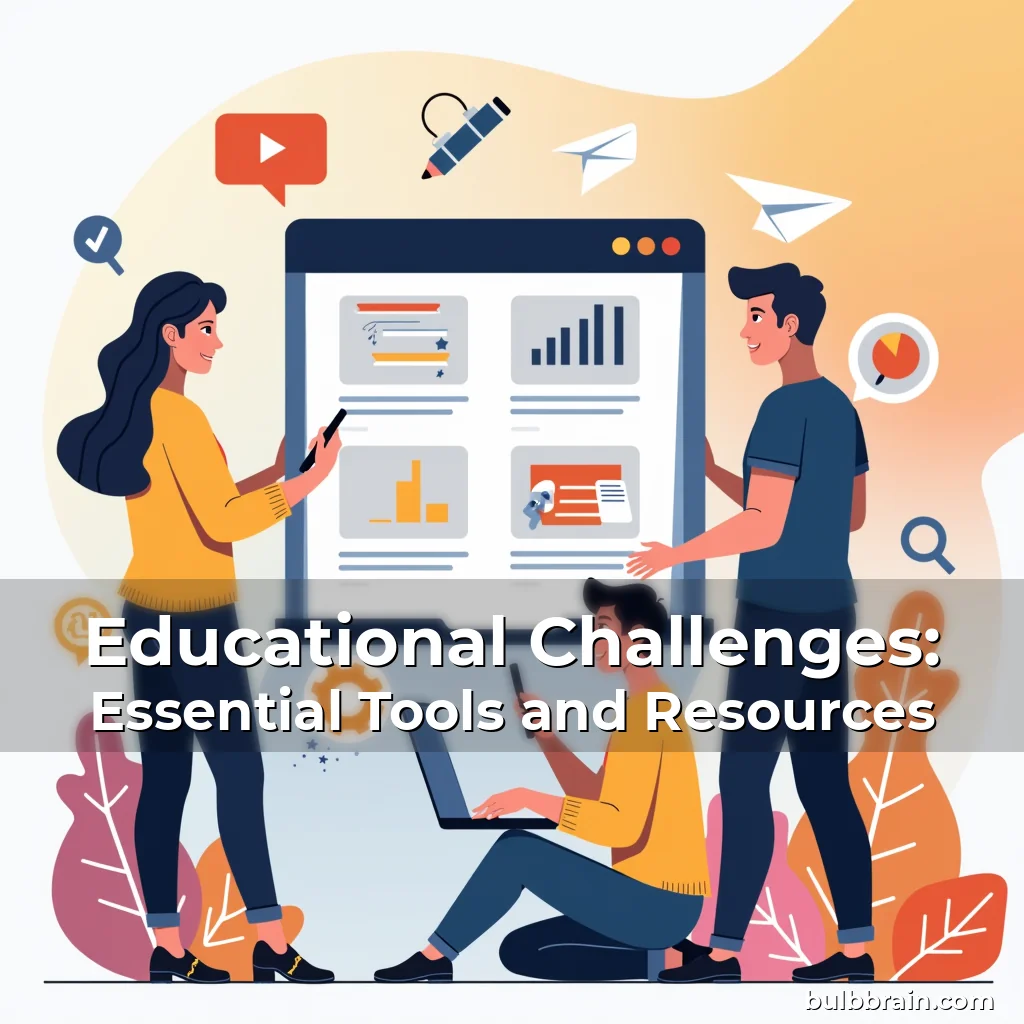
Educational Challenges: Essential Tools and Resources
In an era defined by rapid change and evolving expectations, educational challenges have taken center stage. From shifting demographics to technological disruptions, students, teachers, and institutions are navigating a complex landscape shaped by inequality, innovation, and uncertainty. Understanding these challenges is not just about identifying problems—it’s about unlocking solutions.
The complexity of modern education demands multifaceted responses. Whether it’s addressing gaps in access, rethinking pedagogy, or preparing learners for an unpredictable future, the stakes are high. This guide explores the most pressing educational challenges and equips educators and policymakers with tools and resources to drive meaningful progress.
Access Inequities: Bridging the Gap Between Opportunity and Reality
One of the most persistent educational challenges is unequal access to quality schooling. Students in marginalized communities often lack basic amenities like stable internet connections, reliable electricity, and safe learning spaces. These disparities
Mental Health and Wellbeing: Navigating Stress in Modern Schools
The increasing pressure placed upon students—from academic competition to social media influences—is reshaping the psychological landscape of education. Anxiety disorders, depression symptoms, and self-esteem issues affect numerous youth, demanding urgent attention from schools and healthcare providers alike.
Academic stressors manifest differently depending on age group. Younger children may struggle with transitioning between grades, while teenagers grapple with college admissions processes. Identifying signs of distress early enables timely interventions before conditions worsen.
School counselors report rising requests related to relationship conflicts, cyberbullying, and identity exploration. However, counselor-to-student ratios in many districts exceed recommended thresholds, straining support systems already overwhelmed by demand.
Integrating mindfulness exercises, fitness routines, and arts-based therapies into daily schedules promotes emotional regulation skills. Creating inclusive club activities focused on mental wellness encourages open dialogue and reduces stigma associated with seeking help.
Building Resilient Learners
Resilience-building initiatives teach students coping mechanisms rather than simply managing symptoms after crises occur. Programs centered around goal-setting, time management, and positive affirmations empower individuals to navigate setbacks constructively.
Families play integral roles too. Workshops educating caregivers about developmental milestones enable them to recognize warning signals earlier. Encouraging home environments conducive to sleep hygiene and screen-time moderation reinforces healthy habits established at school.
Resource Allocation: Optimizing Limited Funds for Greatest Impact
Budget limitations persistently challenge institutions aiming to deliver optimal educational experiences. Allocating funds wisely becomes imperative given competing priorities ranging from facility maintenance to program expansion.
Public schools typically depend heavily on state revenues tied to property tax assessments. Consequently, districts located in economically depressed areas operate with dwindling budgets despite having higher numbers of students requiring additional assistance.
Prioritization frameworks assist decision-makers in evaluating spending effectiveness. Data-driven analysis reveals which expenditures yield measurable outcomes—such as improved test scores or increased graduation rates—versus those yielding minimal return-on-investment.
Strategic partnerships offer promising alternatives. Collaborating with universities for internship placements connects students with real-world learning opportunities without costly infrastructure investments. Crowdfunding platforms let communities rally around particular cause areas, whether new sports equipment or science lab upgrades.
Parental Engagement: Fostering Strong Home-School Connections
Active parental involvement contributes significantly to student achievement and behavioral conduct. Yet disparities exist regarding the extent and nature of family participation in educational affairs.
Cultural norms influence parent-school interactions. Some backgrounds encourage frequent communication whereas others prefer minimal interference unless serious concerns arise. Recognizing these differences enables educators to develop culturally responsive outreach methods.
Tech-enabled platforms facilitate easier connectivity regardless of geographic location or personal schedule. Applications allowing parents to track homework completion status, monitor attendance records, or request meetings digitally democratize access to information traditionally confined within school premises.
Professional development workshops targeting parents highlight how to support child learning beyond formal settings. Teaching literacy strategies applicable during bedtime stories or math games played at dinner tables translates theory into practice effectively.
Technological Integration: Balancing Innovation and Access
EdTech innovations promise transformative possibilities, yet implementation faces hurdles stemming from resistance to change, privacy concerns, and variable adoption rates. Schools must approach digital transformation thoughtfully rather than haphazardly.
Augmented reality simulations immerse learners in historical events or scientific phenomena interactively. Online discussion boards promote democratic participation wherein every voice matters irrespective of shyness or language proficiency level.
Data security remains paramount however. Robust encryption protocols coupled with strict permission controls safeguard sensitive student records against breaches. Educators receive regular training sessions outlining ethical usage guidelines surrounding digital footprints left behind through platform utilization.
Not all educational technology serves equal purposes though. Choosing tools aligned with curricular goals ensures integration enhances—not distracts from—instructional objectives. Teachers collaborate regularly to evaluate software efficacy prior to full-scale deployment across classrooms.
Evaluation Methods: Redefining Success Beyond Test Scores
The reliance on standardized assessments as primary indicators of educational success creates narrow definitions of what constitutes intelligent behavior. This reductionist approach overlooks soft skills necessary for thriving in interconnected societies.
Performance tasks assessing problem-solving capabilities through scenario analyses provide richer insight than mere fact recall measurements. Group projects simulating business negotiations cultivate interpersonal communication skills coveted by employers.
Self-assessment components give students agency over own learning journeys. Reflective journals documenting progress overtime assist in setting realistic targets and celebrating incremental victories along the way.
Evaluating teachers similarly deserves reconsideration. Peer reviews offering constructive critique replace arbitrary metrics previously used to gauge effectiveness solely based on test results achieved by pupils.
Global Perspectives: Lessons From Diverse Educational Models
Examining international approaches unveils alternative paradigms worthy consideration. Finland’s emphasis on autonomy, Japan’s rigorous academic standards combined with leisure activities, Singapore’s focus on mastery before progression—all contain elements adaptable elsewhere.
Scandinavian countries demonstrate strong correlation between egalitarian principles applied in classrooms and national rankings in PISA scores. Their structured yet flexible model permits freedom of expression amidst clear expectations.
India showcases rapid adaptation of distance learning modalities amidst lockdown restrictions, proving scalability possible even within infrastructurally challenged contexts. Regional variations underscore need for localized solutions rather than uniform prescriptions.
Comparative studies identify common denominators contributing to system efficacy – consistent teacher training regimens, prioritization of fundamental skill acquisition, and continuous monitoring mechanisms enabling adaptive adjustments when needed.
Future Outlook: Preparing for Tomorrow’s Educational Landscapes
As we look ahead, emerging trends suggest hybrid learning formats blending offline/online mediums will become norm rather than exception. Lifelong learning concepts dissolve boundaries separating K-12 from postsecondary environments.
Artificial intelligence holds tremendous potential automating repetitive tasks freeing up human capital for more impactful endeavors. Adaptive algorithms customize lesson sequences according to individual pace maximizing efficiency gains without compromising comprehensiveness.
However, ethical considerations accompany these advancements. Ensuring algorithmic fairness prevents reinforcement of existing biases embedded within datasets utilized to train machine learning models. Transparency measures guarantee accountability whenever automated decisions impact learner trajectories.
Ultimately, confronting educational challenges necessitates collective action spanning governmental bodies, corporate entities, nonprofit organizations, and grassroots movements alike. Only sustained commitment toward equitable delivery of优质教育 will unlock humanity’s fullest potential collectively.
Conclusion
This exploration of educational challenges highlights recurring themes: accessibility, affordability, inclusivity, and sustainability. Each issue interconnects forming webbed relationships influencing overall quality of experiences provided within educational ecosystems globally.
By adopting proactive stances embracing technological breakthroughs responsibly while respecting foundational values rooted in equality and dignity, we can forge paths paving way for brighter futures characterized by empowered individuals ready to contribute meaningfully wherever life takes them next.

news is a contributor at BulbBrain. We are committed to providing well-researched, accurate, and valuable content to our readers.
You May Also Like



About news
Passionate about learning, cognitive science, and helping people unlock their full potential.