
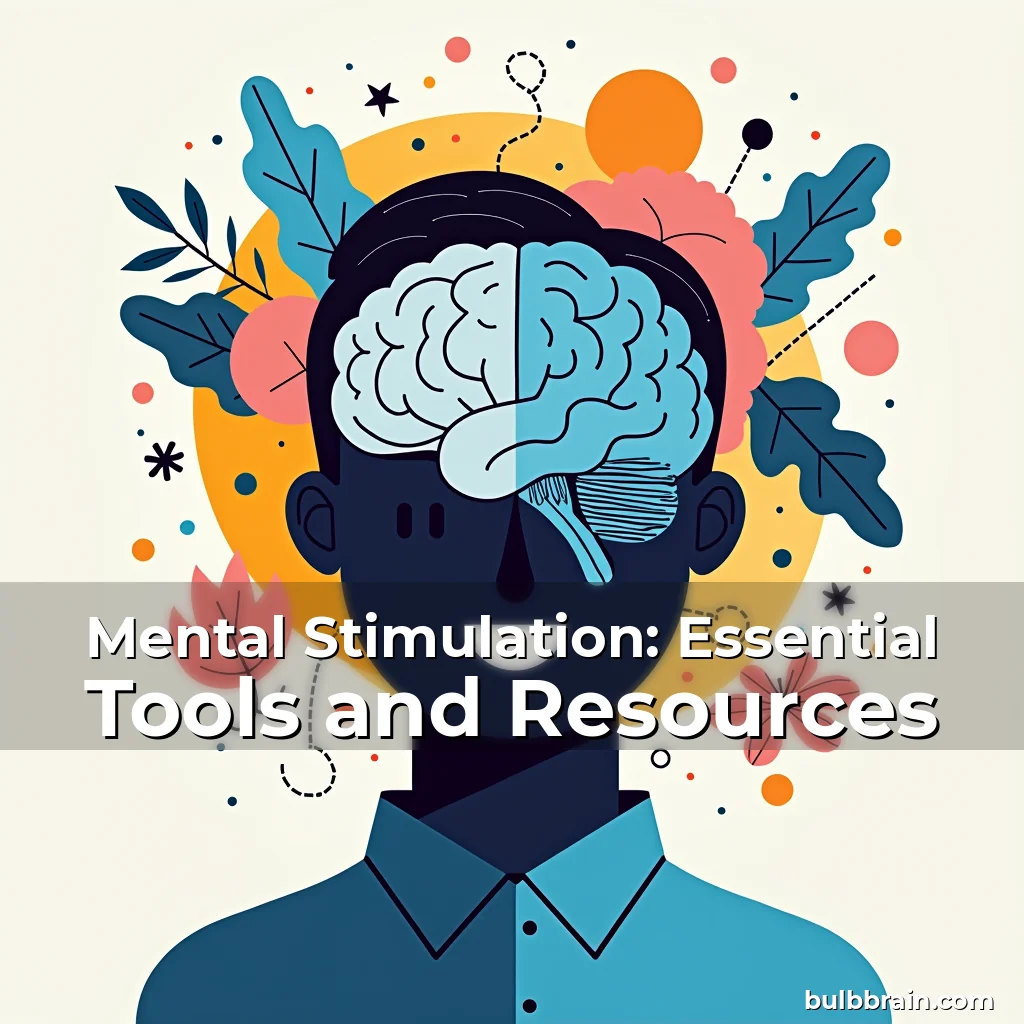
Mental Stimulation: Essential Tools and Resources
The human brain is an extraordinary organ, capable of adapting, learning, and evolving throughout life. Yet, without consistent mental engagement, cognitive abilities can decline over time, leading to issues such as memory loss, reduced problem-solving skills, and decreased attention span. Mental stimulation—defined as any activity that challenges the mind—is crucial for maintaining neural health and preventing cognitive deterioration.
In today’s fast-paced world, finding effective ways to engage the brain has become both necessary and rewarding. Whether through puzzles, reading, creative pursuits, or social interaction, there are countless avenues to explore when seeking mental enrichment. This guide aims to provide you with practical tools and resources tailored to enhance your cognitive well-being and sharpen your intellectual agility.
The Science Behind Mental Stimulation
Mental stimulation refers to activities that promote active thinking, encourage new perspectives, and challenge existing knowledge. These exercises range from solving mathematical problems to engaging in philosophical discussions. The key principle lies in keeping the brain constantly engaged rather than allowing it to fall into routine patterns.
Neuroscientists have found that regular mental exercise strengthens synaptic connections within the brain. Synapses act as communication channels between neurons; stronger synapses mean faster information processing and improved recall capabilities. Furthermore, these activities stimulate neuroplasticity—the brain’s ability to reorganize itself by forming new neural pathways.
Studies show:
- A study published in the Journal of Neuroscience revealed that mentally stimulating tasks increased hippocampal volume, which plays a vital role in memory formation.
- Research from Harvard Medical School indicated that individuals who regularly engage in cognitively demanding activities experience slower rates of age-related cognitive decline.
Types of Mental Activities That Boost Cognitive Function
Variety is essential when choosing mental exercises because different parts of the brain benefit from various types of stimuli. While some people prefer structured approaches like puzzle games or language learning, others thrive on more spontaneous forms of mental engagement such as improvisational music or conversational debates.
Categorizing these activities helps identify what best suits individual preferences while ensuring holistic development across multiple cognitive domains. For example, logical reasoning tasks strengthen analytical thinking, whereas artistic endeavors foster creativity and emotional intelligence.
One particularly beneficial category includes problem-solving scenarios. Engaging with complex situations requires critical thinking, pattern recognition, and decision-making—all fundamental components of higher-order cognition.
Language acquisition also stands out as another powerful form of mental workout. Learning a second language involves memorization techniques, grammatical structures, cultural contexts, and pronunciation nuances. All these elements contribute significantly towards enhancing overall cognitive flexibility.
Cognitive Benefits of Regular Brain Engagement
Consistently challenging the mind yields numerous benefits beyond mere entertainment value. One notable advantage is enhanced memory retention—an outcome supported by extensive scientific research demonstrating direct links between mental exercise and improved recall mechanisms.
Frequent mental workouts not only prevent forgetfulness but also aid in quicker retrieval processes during times of high stress or pressure. By reinforcing neuronal networks responsible for storing memories, these practices ensure greater efficiency even under less-than-ideal conditions.
Moreover, sustained cognitive engagement promotes better concentration levels. People who routinely perform attention-intensive tasks tend to develop sharper focus and longer periods of undistracted work compared to those whose brains remain idle most days.
This heightened sense of attentiveness translates positively into everyday life settings—from academic environments where deep comprehension matters greatly to professional workplaces requiring multitasking abilities at peak performance levels.
The Role of Social Interaction in Mental Health
Social interactions serve dual purposes: they fulfill basic psychological needs related to belongingness and affection while simultaneously offering rich opportunities for mental stimulation. Conversations, group projects, team sports—all involve exchanging ideas, interpreting nonverbal cues, negotiating viewpoints—affecting every aspect of cognitive functioning.
Participating actively in social groups enhances executive functions such as impulse control, working memory capacity, and strategic planning skills. These soft skills aren’t merely useful academically or professionally; they’re integral aspects contributing toward personal growth too.
Data reveals compelling evidence regarding positive correlations between robust social lives and lower incidences of dementia among elderly populations. A longitudinal study conducted by University College London showed participants with strong interpersonal relationships had up to thirty percent fewer chances developing Alzheimer’s disease later in life.
Therefore, nurturing meaningful friendships isn’t solely about feeling emotionally fulfilled—it serves equally important roles in safeguarding long-term neurological integrity against degenerative diseases commonly associated aging processes.
Technology and Its Impact on Modern Mental Stimulation Practices
With technological advancements reshaping how we live our daily routines, digital platforms now offer innovative methods for keeping minds sharp. From mobile apps designed specifically around memory training algorithms to virtual reality simulations mimicking real-world challenges, technology provides accessible yet efficient means to maintain cognitive vitality.
Digital literacy shouldn’t be seen strictly as something acquired passively—it must evolve alongside emerging technologies so users stay adequately equipped handle ever-changing landscapes presented online spaces today.
However, caution remains warranted concerning screen-based entertainment sources. Excessive exposure might lead dependency issues similar to sedentary lifestyles promoting physical unhealthiness due prolonged sitting durations without adequate movement intermissions.
To maximize potential gains from tech-assisted cognitive enhancements, balance becomes imperative. Combining traditional face-to-face engagements with carefully curated electronic media consumption ensures optimal results without compromising broader wellness goals encompassing mental acuity along with bodily fitness standards required modern living conditions.
Practical Strategies for Incorporating Daily Mental Exercises Into Your Routine
Integrating mental exercises seamlessly into daily schedules doesn’t require drastic lifestyle changes nor significant financial investments upfront. Small adjustments made consistently yield considerable improvements over extended timelines.
Begin by identifying areas where you already spend considerable amounts of time each day—whether commuting hours spent listening audiobooks instead watching videos during drives, utilizing lunchbreaks exploring educational podcasts covering topics outside comfort zones—or dedicating few minutes before bed practicing mindfulness meditation focusing deeply upon breathing patterns.
Create personalized checklists outlining preferred types of cognitive activities matched precisely according to current interests level while accounting possible constraints imposed by schedule commitments. Prioritizing quality above quantity guarantees sustainable adherence without inducing burnout risks associated forced participation strategies often counterproductive efforts aimed increasing productivity metrics alone.
Additionally, consider setting measurable targets tied achievable milestones facilitating progress tracking enabling timely recalibrations whenever necessary adjusting difficulty thresholds accordingly based upon feedback received post-exercise sessions performed throughout week.
Nutrition and Physical Exercise As Complementary Factors Influencing Cognitive Performance
While mental stimulation holds paramount importance shaping cerebral architecture, neglecting supporting pillars foundational underlying physiological bases could undermine intended outcomes considerably. Nutrition emerges foremost amongst them—specific micronutrients known scientifically proven facilitate optimal brain function necessitating inclusion diets consumed regularly.
Vitamin B12 deficiency symptoms manifest frequently amongst vegetarians adhering strict plant-based regimens potentially impairing myelin sheath productions affecting nerve signal transmissions resulting diminished cognitive capacities unless supplemented externally appropriately sourced reliable products available marketplaces globally nowadays.
Evidence suggests omega-3 fatty acids extracted primarily from fish oil supplements display remarkable efficacy improving mood regulation stabilizing mental states reducing inflammation markers linked chronic illnesses including depression anxiety disorders prevalent contemporary society increasingly burdened psychosomatic ailments exacerbated environmental pollutants impacting ecosystems negatively thereby influencing food chains ultimately reaching human population consuming final product derived thereof.
Physical exercise complements nutritional considerations playing equally pivotal roles enhancing vascular health supplying sufficient oxygenated blood flow directing towards cranial regions essential sustaining metabolic activities occurring continuously irrespective external circumstances surrounding individuals involved lifelong journeys pursuing self-improvement objectives aligned pursuit excellence across multifaceted dimensions comprising existence.
Common Myths About Mental Stimulation Debunked
Several misconceptions surround the concept of mental stimulation, leading many astray in their quest for cognitive enhancement. One widespread belief is that only intellectually rigorous tasks count as valid forms of mental engagement. However, this notion overlooks the fact that even casual conversations or simple hobbies can stimulate different areas of the brain effectively.
Another myth claims that once past certain ages, it becomes futile trying to boost intellect further. Scientific data contradicts this assertion showing continuous learning experiences regardless chronological years passed produce tangible gains observable via standardized testing procedures measuring baseline knowledge prior initiating intervention programs targeting skillset expansions relevant target demographic cohorts represented samples analyzed peer-reviewed journals.
Some argue that passive leisure activities like watching television don’t qualify as mental stimulations despite seeming idle nature. Research indicates otherwise revealing passive viewing activates visual cortex processing imagery displayed screens triggering implicit memory encoding mechanisms operating subconsciously without conscious awareness exerted participant observers absorbing material unconsciously absorbed automatically integrated subconscious databases subsequently recalled voluntarily when triggered appropriate contextual cues encountered later encounters future events mirroring previous exposures recorded earlier stages developmental timelines.
Last but certainly not least misconception persists suggesting solitary pursuits exclusively benefit cognitive development dismissing altogether significance communal exchanges fostering collaborative problem-solving dynamics arising naturally multi-person environments generating synergistic effects surpassing sum individual contributions isolated efforts undertaken separately independent entities lacking interdependencies connecting disparate elements together forming cohesive whole greater than collective total achieved additive approach aggregating separate achievements attained individually distinct units combined resultant output exceeding expected totals projected initial assumptions pre-existing models predicting probable outcomes absent interactive components facilitating cross-pollination thoughts ideas generated collectively shared amongst members groups participating joint ventures coalescing diverse perspectives converging singular solution addressing common issue faced jointly resolved collaboratively strengthening bonds formed through cooperative endeavors cultivating trust mutual respect appreciation differences acknowledged embraced rather viewed obstacles hindering success.
Conclusion
In conclusion, mental stimulation is far more than just a buzzword; it represents a proactive strategy for preserving and enhancing cognitive abilities throughout life. By incorporating varied activities that challenge the mind, individuals can enjoy substantial benefits ranging from improved memory and focus to better emotional resilience and social connectivity.
Whether through structured learning, playful exploration, or simply engaging with others, everyone has access to tools that can help maintain a vibrant and agile brain. Embracing a mindset centered around curiosity, adaptability, and lifelong learning will not only enrich personal experiences but also contribute positively to societal well-being as a whole.

news is a contributor at BulbBrain. We are committed to providing well-researched, accurate, and valuable content to our readers.
You May Also Like
About news
Passionate about learning, cognitive science, and helping people unlock their full potential.