
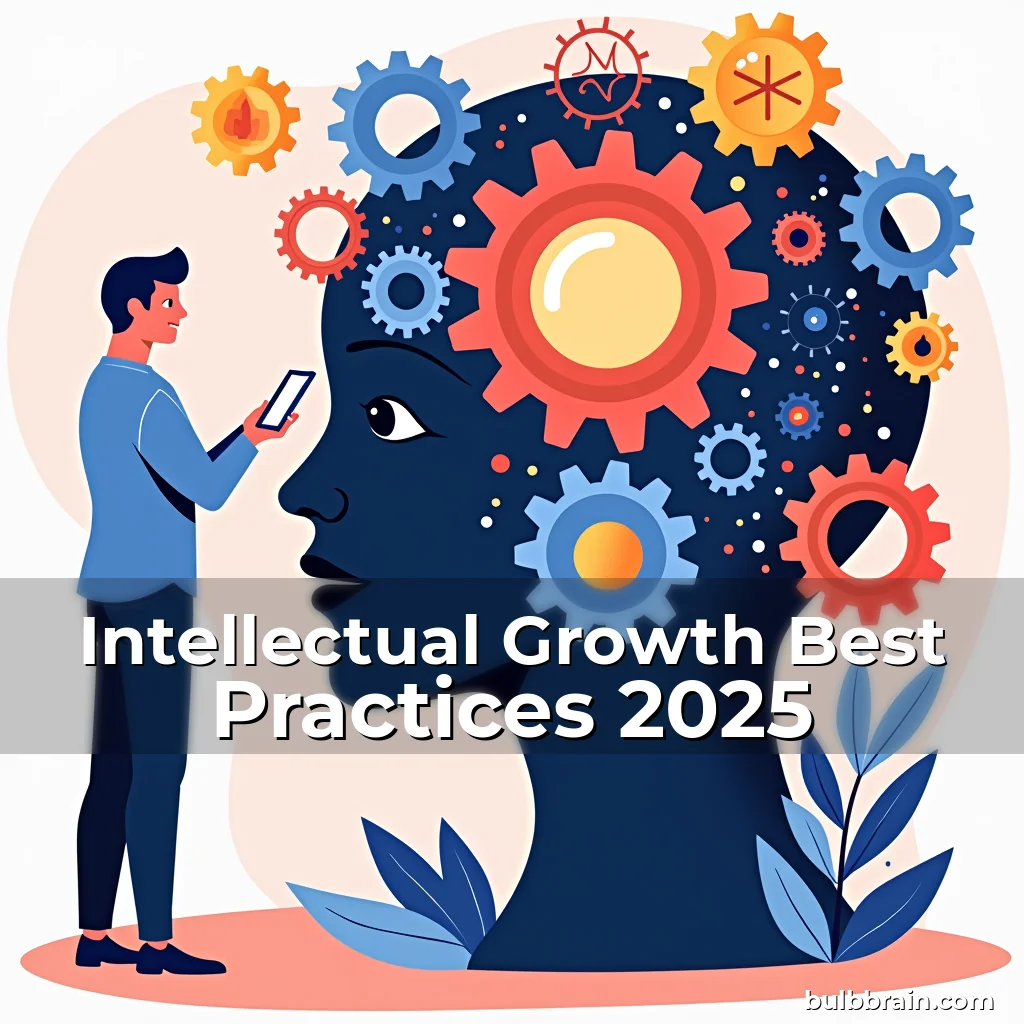
The Art of Intellectual Evolution: Cultivating Curiosity in a Rapidly Changing World
In an era defined by information overload and constant technological advancement, intellectual growth has become both a necessity and an art form. As members of the BulbBrain community, we recognize that true cognitive development transcends rote learning—it requires deliberate practice, sustained curiosity, and a willingness to embrace uncertainty.
This guide is designed specifically for individuals seeking meaningful mental expansion beyond surface-level knowledge acquisition. We’ll explore strategies that have been empirically validated through neuroscience research, educational psychology studies, and real-world implementation across diverse cultures and disciplines.
Reframing Intelligence: Beyond IQ Metrics
Modern understanding of intelligence has moved far beyond static IQ scores. Researchers at the University of California, Berkeley demonstrate that cognitive flexibility—the ability to switch between different modes of thinking—is now considered a key indicator of intellectual potential.
Neuroplasticity research reveals that our brains can rewire themselves well into adulthood when challenged with novel experiences. This challenges outdated notions that intelligence becomes fixed after adolescence.
Three dimensions define contemporary intellectual capacity:
- Cognitive agility: The speed at which one processes new information while maintaining accuracy
- Mental resilience
: The ability to recover from cognitive setbacks without losing motivation
- Synthetic thinking: Combining disparate ideas to create innovative solutions
A study published in Nature Neuroscience found that adults who engaged in regular intellectual challenges showed increased grey matter density in prefrontal cortex regions associated with decision-making and problem-solving.
Cultivating Cognitive Fitness Through Daily Habits
Evidence-based practices for daily intellectual maintenance include structured routines that challenge neural pathways in varied ways. Harvard researchers recommend alternating between analytical tasks and creative exercises to maintain balanced brain function.
One effective strategy involves implementing the “30/70 rule”: dedicating 30% of your focused time to deep work requiring concentration, and 70% to exploratory activities that encourage divergent thinking patterns.
Daily mental exercises might include:
- Solving complex puzzles that require multi-step reasoning
- Engaging in philosophical discussions using Socratic questioning techniques
- Learning basic coding principles through interactive platforms
Consistency is crucial—MIT’s Learning Lab recommends spacing these activities over several days rather than cramming them into single sessions for optimal retention.
Navigating Information Overload Strategically
In our hyperconnected world, managing information intake has become as critical as acquiring knowledge itself. Neuroscientists warn against passive consumption patterns that lead to fragmented attention spans and shallow comprehension.
Active learning methodologies emphasize engagement with material rather than mere exposure. Techniques such as the Feynman Technique—which involves teaching concepts to others—significantly enhance long-term memory retention.
A 2024 meta-analysis in Educational Psychology Review revealed that learners who practiced retrieval-based studying remembered information twice as effectively as those relying solely on rereading materials.
Implementing digital detox periods—at least two hours weekly without screens—can help recalibrate attention mechanisms and restore deeper processing capabilities.
Fostering Interdisciplinary Thinking Patterns
True intellectual growth thrives at the intersections of different fields. Nobel laureates frequently cite their success to cross-disciplinary approaches that combine elements from seemingly unrelated domains.
Creating mental frameworks that connect diverse areas of knowledge enhances pattern recognition abilities. For example, applying mathematical models to social sciences or using artistic principles in engineering design fosters innovative breakthroughs.
Practicing interdisciplinary thinking could involve:
- Analyzing historical events through economic theory lenses
- Applying physics principles to understand biological systems
- Using literary analysis techniques in technical documentation creation
Stanford’s d.school emphasizes “constraint-based creativity,” encouraging students to solve problems with limitations that force unconventional thinking patterns.
Building Intellectual Resilience Through Challenge
Growth occurs most profoundly when we engage with material slightly above our current skill level—a concept known as Vygotsky’s Zone of Proximal Development. Embracing difficult topics builds lasting mental strength.
Mistakes are not failures but essential data points in the learning process. A MIT cognitive science team discovered that participants who received feedback after errors demonstrated better mastery outcomes than those avoiding mistakes altogether.
Strategies for developing intellectual courage include:
- Voluntarily taking on projects outside comfort zones
- Participating in debate clubs to sharpen argumentation skills
- Keeping a reflective journal to track progress and setbacks
Gradually increasing difficulty levels ensures continuous improvement without overwhelming the learner. The sweet spot appears to be approximately 80% task completion rate, indicating appropriate challenge levels.
Leveraging Technology for Cognitive Enhancement
Emerging technologies offer powerful tools for intellectual development. Brain-computer interfaces are already showing promise in enhancing memory recall and information processing speeds.
Artificial intelligence applications personalize learning paths based on individual performance metrics. Adaptive learning platforms adjust difficulty levels in real-time according to user proficiency assessments.
Some promising tech-enhanced learning methods include:
- Binaural beats for improved focus during study sessions
- Virtual reality simulations for immersive experiential learning
- Augmented reality overlays for contextualized knowledge application
However, technology should complement—not replace—traditional learning methods. Maintaining balance ensures holistic cognitive development across various neural networks.
Cultivating a Lifelong Learning Mindset
Continuous learning is not merely about accumulating facts but developing adaptable thinking patterns. Research indicates that individuals who view learning as a lifelong journey show greater career satisfaction and personal fulfillment.
Establishing micro-learning habits—short bursts of concentrated study integrated into daily routines—proves more sustainable than sporadic intensive sessions. These brief intervals prevent burnout while maintaining momentum.
Effective lifelong learning strategies may encompass:
- Setting monthly theme-based reading goals
- Attending industry-specific webinars regularly
- Joining online communities dedicated to continuous education
Tracking progress through habit journals helps visualize growth trajectories. Celebrating small victories reinforces positive associations with learning endeavors.
Conclusion
In synthesizing these insights, we see that intellectual evolution is a dynamic, ongoing process that requires intentional cultivation. It demands both discipline and playfulness, structure and spontaneity, solitude and collaboration.
By adopting these best practices—reframing traditional conceptions of intelligence, building cognitive fitness through purposeful routines, navigating information wisely, embracing interdisciplinary connections—we position ourselves for meaningful transformation. Let us continue growing together, always curious, forever evolving.

news is a contributor at BulbBrain. We are committed to providing well-researched, accurate, and valuable content to our readers.
You May Also Like


About news
Passionate about learning, cognitive science, and helping people unlock their full potential.