
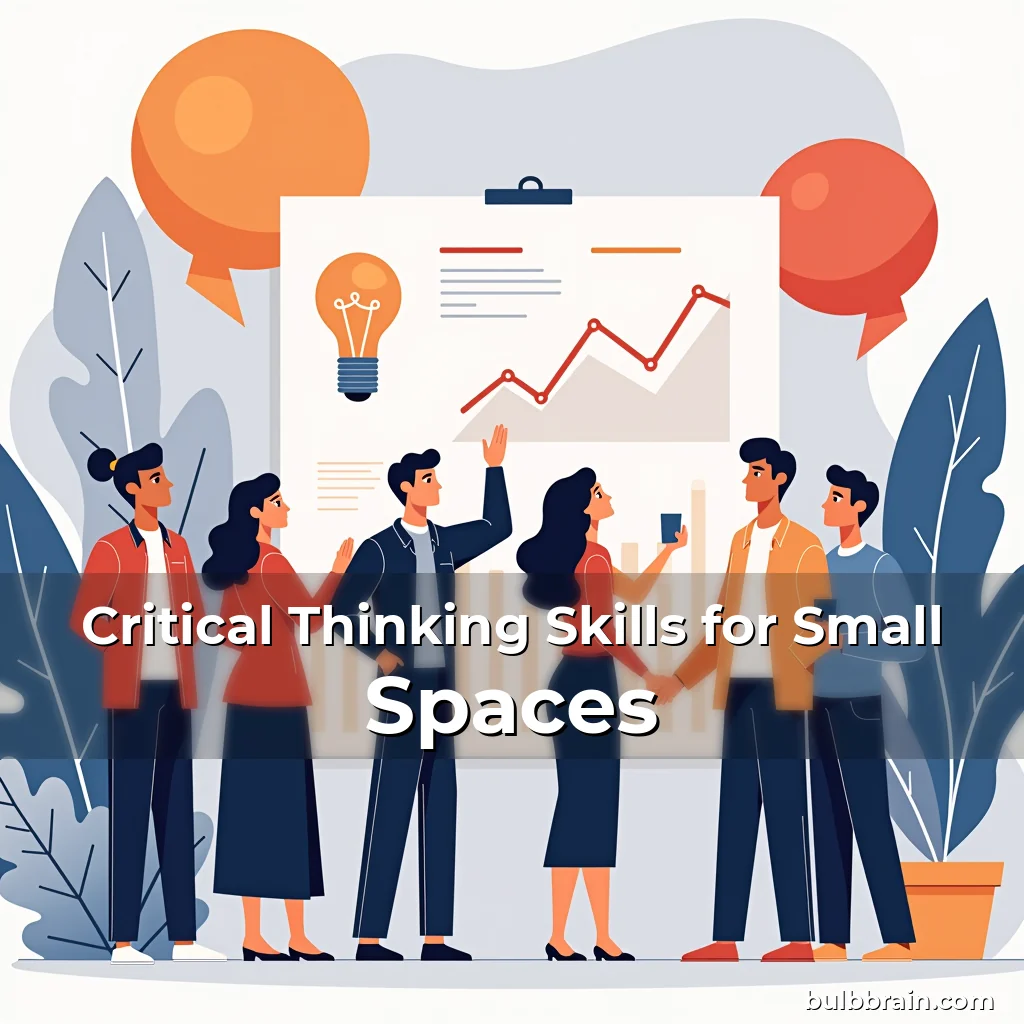
Navigating Chaos: How to Sharpen Your Critical Thinking Skills in Any Situation
In today’s fast-paced world, the ability to think critically is no longer optional—it’s essential. From navigating complex decisions to filtering misinformation online, critical thinking equips you to make informed choices. This skill transcends academic settings, influencing everything from personal relationships to professional success.
The core of critical thinking lies in questioning assumptions, analyzing evidence, and weighing alternatives. It’s a dynamic process that requires curiosity, patience, and a willingness to challenge your own beliefs. By mastering it, you gain clarity amid confusion and confidence in your judgments.
What Is Critical Thinking and Why Does It Matter?
Critical thinking is the disciplined analysis of information to form reasoned conclusions. Unlike passive acceptance of facts, it involves actively evaluating sources, identifying biases, and recognizing logical fallacies. In a digital age saturated with conflicting data, this skill acts as your intellectual compass.
Its importance extends beyond academics. Employers increasingly seek candidates who can solve problems creatively, adapt to change, and communicate effectively. A study by the World Economic Forum ranks critical thinking among the top ten skills required for future jobs, underscoring its relevance across industries.
On a personal level, critical thinking fosters resilience. When faced with adversity, individuals skilled in critical thinking assess situations objectively rather than reacting impulsively. This mindset reduces stress and improves decision-making during crises.
Culturally, critical thinking promotes civic engagement. Informed citizens question policies, hold leaders accountable, and contribute meaningfully to societal progress. Without this skill, societies risk stagnation due to uncritically accepted norms and ideas.
Breaking Down the Components of Critical Thinking
To understand critical thinking deeply, consider its foundational elements. These components work together to form a cohesive cognitive framework. Recognizing them allows you to identify gaps in your current abilities and target areas for improvement.
Analytical Reasoning: This involves dissecting information into smaller parts to examine relationships and patterns. Think of solving a puzzle—each piece contributes to the whole picture.
Evidence Evaluation: Not all information is equal. Critical thinkers prioritize credible sources, cross-check facts, and scrutinize methodologies behind studies or claims. They distinguish between correlation and causation before drawing conclusions.
Bias Awareness: Everyone holds implicit biases shaped by culture, upbringing, and experiences. Acknowledging these prejudices prevents skewed interpretations. Techniques like perspective-taking and mindfulness enhance this awareness.
Logical Fallacy Recognition: Common errors such as straw man arguments or ad hominem attacks often cloud discussions. Learning to spot these fallacies protects against manipulation and ensures sound debates.
Creativity and Open-Mindedness: While logic forms the backbone, creativity allows exploration of unconventional solutions. Remaining open-minded means entertaining new possibilities without premature dismissal.
Synthesis: After gathering diverse perspectives, synthesizing them into coherent conclusions requires integration of knowledge. This process mirrors scientific research, where hypotheses evolve through iterative testing.
Developing Critical Thinking Through Daily Practice
Like any skill, critical thinking improves with consistent practice. Incorporate exercises that stretch your analytical muscles into everyday routines. Simple activities can yield significant growth over time.
One effective method is asking “why” repeatedly. If confronted with a claim, trace its origins. For example, instead of accepting news headlines at face value, investigate the source and supporting data. This habit builds skepticism grounded in inquiry rather than cynicism.
Engaging in debates or Socratic seminars forces you to articulate thoughts clearly. Prepare counterarguments to anticipate objections. Remember, the goal isn’t to win but to refine reasoning through constructive dialogue.
Mental models from disciplines like economics or psychology provide frameworks for analysis. Understanding concepts such as opportunity cost or confirmation bias expands your toolkit for interpreting events.
Taking Note of Cognitive Biases
Cognitive biases distort perception and judgment unconsciously. The availability heuristic, for instance, leads people to overestimate risks based on memorable incidents rather than statistical probability. Becoming aware of these tendencies enables proactive correction.
A classic example is the anchoring effect, where initial numbers unduly influence subsequent estimates. Real estate buyers may fixate on a listing price despite market fluctuations. Identifying this bias helps maintain objectivity in negotiations.
Confirmation bias presents a particularly insidious threat. People tend to favor information reinforcing preexisting views. Combat this by seeking out opposing viewpoints deliberately, especially on contentious issues.
Regular self-reflection is crucial. Journaling about decisions and reviewing thought processes reveals recurring patterns. Over time, this introspection weakens entrenched biases and strengthens rationality.
Critical Thinking in Education: Transforming Students Into Independent Learners
Educational systems worldwide are reevaluating curricula to emphasize critical thinking alongside traditional subjects. This shift reflects recognition that rote memorization alone fails to prepare students for modern challenges.
Teachers play a pivotal role by designing lessons that encourage analysis rather than mere recall. Instead of providing answers outright, posing open-ended questions prompts deeper engagement. For instance, discussing historical events through multiple perspectives cultivates empathy and nuance.
Technology offers tools to reinforce critical thinking skills. Online platforms like Coursera feature courses dedicated to logical reasoning and argument evaluation. Interactive simulations allow virtual experimentation with consequences—an invaluable learning experience.
Assessment methods must align with these goals. Traditional exams measuring factual knowledge give way to project-based evaluations emphasizing problem-solving approaches. Rubrics rewarding creative solutions and rigorous justification better reflect true comprehension levels.
Professional Applications: Leveraging Critical Thinking At Work
In corporate environments, critical thinking drives innovation and efficiency. Employees equipped with these skills excel at troubleshooting complex systems, optimizing workflows, and anticipating potential risks.
Strategic planners utilize SWOT analyses (Strengths, Weaknesses, Opportunities, Threats) to evaluate business prospects objectively. This systematic approach prevents hasty decisions driven solely by optimism or fear.
Data-driven organizations rely heavily on critical thinkers to interpret metrics accurately. Distinguishing meaningful trends from noise requires sophisticated analytical capabilities. Tools like Tableau enable visualization that supports informed decision-making.
Leadership roles demand exceptional critical thinking prowess. Effective managers balance input from various stakeholders, synthesize divergent opinions, and navigate ambiguity toward consensus. Their ability to question assumptions often determines organizational success.
Fostering Critical Thinking in Children and Teenagers
Instilling critical thinking early sets lifelong habits that benefit both personal development and societal advancement. Parents and educators serve as primary influences shaping young minds’ capacity for independent thought.
Encouraging curiosity through open-ended questions sparks natural inquiry. Rather than providing direct answers, guide children to explore resources themselves. Asking “How do you think X works?” invites investigative thinking without spoon-feeding solutions.
Play-based learning reinforces critical thinking indirectly. Board games requiring strategic planning, puzzles demanding spatial reasoning, and imaginative storytelling all nurture cognitive flexibility and problem-solving aptitude.
Media literacy becomes vital as digital natives encounter vast amounts of information daily. Teaching kids to verify sources, recognize clickbait tactics, and differentiate fact from opinion empowers them to become discerning consumers of content.
Critical Thinking Challenges in the Digital Age
The internet’s democratization of information brings unprecedented access but also overwhelming complexity. Navigating this landscape demands heightened critical thinking abilities to separate reliable knowledge from misinformation.
Social media algorithms exacerbate echo chambers by prioritizing emotionally charged content. Users exposed exclusively to confirming viewpoints gradually lose exposure to alternative perspectives, undermining balanced thinking.
Deepfakes and AI-

news is a contributor at BulbBrain. We are committed to providing well-researched, accurate, and valuable content to our readers.
You May Also Like
About news
Passionate about learning, cognitive science, and helping people unlock their full potential.