
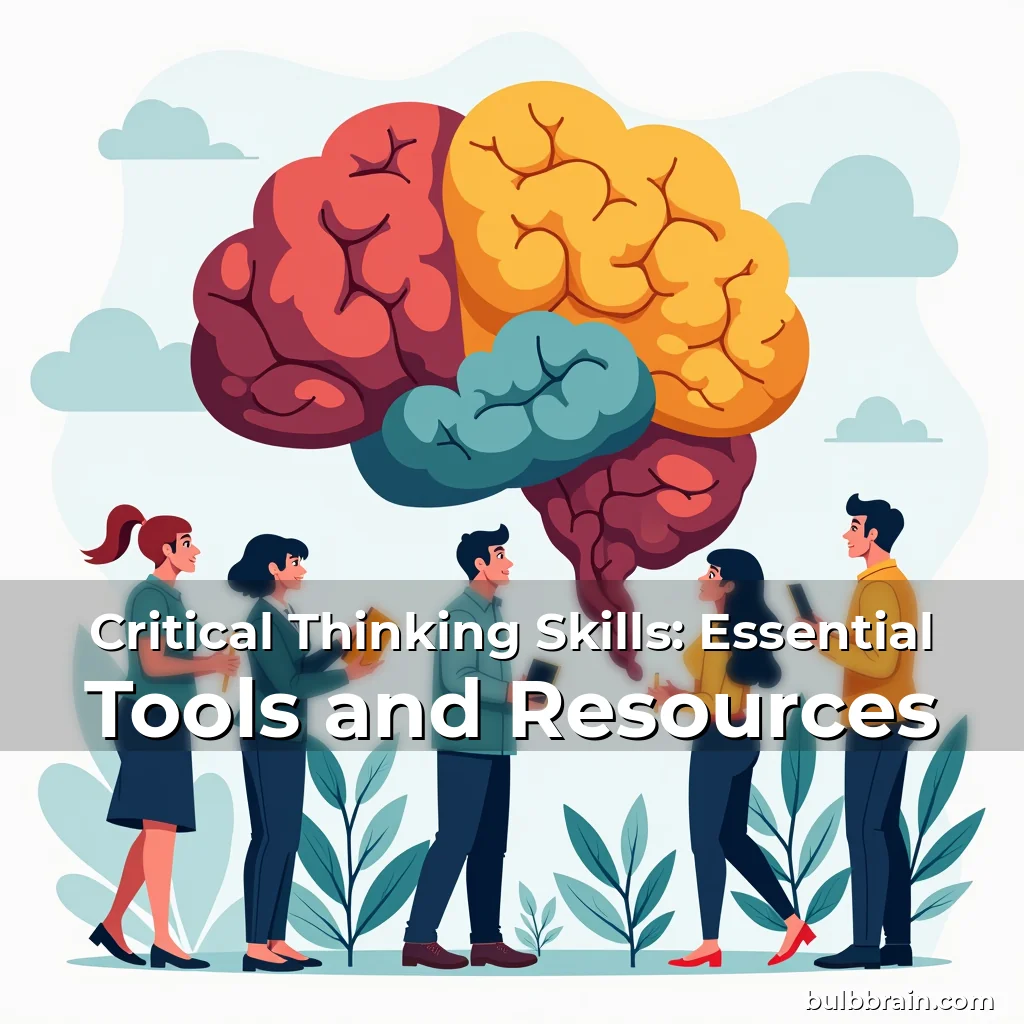
Critical Thinking Skills: Essential Tools and Resources
In today’s rapidly evolving world, the ability to think critically isn’t just advantageous—it’s essential. Critical thinking empowers individuals to analyze complex problems, evaluate evidence objectively, and make informed decisions. Whether navigating personal challenges or professional dilemmas, mastering this skillset can transform how we engage with information.
The journey toward developing robust critical thinking abilities begins with understanding its core principles and applying them consistently. This guide explores everything from fundamental concepts to advanced strategies designed to sharpen your intellectual toolkit.
Fundamental Elements of Critical Thinking
Critical thinking hinges on cultivating an analytical mindset—one that questions assumptions rather than accepting information at face value. It involves dissecting arguments logically, identifying patterns, and drawing conclusions supported by credible data.
This approach requires a commitment to objectivity, ensuring that judgments remain grounded in facts instead of emotions or preconceived notions. By embracing uncertainty and ambiguity as natural parts of problem-solving, thinkers become better equipped to handle complexity.
- Analytical Mindset: Focuses on evaluating claims systematically before forming opinions.
- Logical Reasoning: Utilizes structured thought processes to connect premises with valid conclusions.
Enhancing Cognitive Abilities Through Practice
To strengthen critical thinking muscles, consistent mental exercise is necessary. Engaging in activities like solving puzzles, analyzing news articles, or debating current events can stimulate neural pathways associated with higher-order cognition.
Mindfulness meditation also plays a role in improving concentration and reducing impulsive reactions. When paired with deliberate reflection exercises, these practices help build resilience against misinformation and cognitive distortions.
The Role of Emotional Intelligence
Emotional intelligence complements critical thinking by enabling individuals to recognize and manage their own feelings alongside those of others. Research indicates that people who score high on both dimensions tend to resolve conflicts more effectively and lead teams successfully.
A study published in the Journal of Educational Psychology found that students taught to regulate their emotions alongside academic subjects showed improved critical thinking outcomes compared to peers receiving traditional instruction alone.
Tools and Techniques for Effective Analysis
Variety of tools exist to aid in effective analysis, ranging from simple frameworks to sophisticated software applications. One widely used technique known as Socratic Questioning prompts deep exploration of topics by asking probing inquiries aimed at uncovering underlying motivations behind statements.
Root Cause Analysis (RCA) provides another powerful method useful particularly in fields like healthcare where identifying true causes of incidents leads directly towards implementing preventive measures. RCA employs fishbone diagrams among other visual aids to trace back issues systematically.
- Socratic Questioning: Encourages deeper inquiry through targeted question formulation.
- SWOT Analysis: Assesses Strengths, Weaknesses, Opportunities, Threats related to any subject matter being evaluated.
Real-World Applications Across Industries
From corporate boardrooms to classroom environments, critical thinking manifests differently depending upon context yet remains universally vital. Business leaders rely heavily on strategic foresight—an extension of critical thinking—to anticipate market shifts and develop contingency plans accordingly.
Educators integrate critical thinking training into curricula aiming not merely at imparting knowledge but teaching learners how best apply it meaningfully. Project-based learning models emphasize application over memorization thereby nurturing analytical prowess early on.
Case Study: Healthcare Decision Making
In medical diagnostics, accurate interpretation of symptoms often depends greatly upon physician’s capacity for critical assessment. A misdiagnosis could stem from failure to consider alternative possibilities despite clear signs pointing elsewhere.
Training programs now incorporate simulated patient scenarios allowing doctors-in-training to practice making rapid assessments under pressure—a direct application of enhanced critical thinking capabilities developed during formal education phases.
Overcoming Common Barriers to Clear Thought
Bias represents one significant obstacle preventing pure objective judgment. Confirmation bias occurs when people favor information confirming existing beliefs even when contradictory evidence exists. Recognizing such tendencies forms first step toward mitigating their impact.
Distrust in institutions may similarly cloud perception leading individuals away from factual sources toward unverified online material. Cultivating media literacy becomes therefore imperative task especially amidst rising tide of disinformation campaigns globally.
- Confirmation Bias Mitigation Strategies: Actively seek out opposing viewpoints regularly.
- Cross-referencing Information Sources: Compare findings across multiple reputable outlets prior reaching conclusions.
Developing Lifelong Learning Habits
Lifelong learners understand importance of staying intellectually curious throughout life span. Continuous acquisition of new knowledge expands horizons helping form broader contextual awareness beneficial to sound decision making process.
Engaging in cross-disciplinary studies exposes mindsets accustomed exclusively within narrow domains thus promoting innovative approaches applicable outside conventional boundaries. This openness fosters creativity essential component of holistic critical thinker profile.
Technology’s Impact On Modern Learners
Advancements technology have revolutionized access available educational materials significantly lowering barriers entry previously encountered. Online courses platforms offering microcredentialings enable focused skill building aligned closely with career goals pursued simultaneously.
However digital saturation poses risk attention fragmentation undermining depth required thorough comprehension. Setting aside dedicated periods free technological distractions proves necessary condition maintaining quality thought processes undisturbed.
Building Collaborative Problem Solving Frameworks
Collaboration enhances collective intelligence surpassing individual capacities alone. Structured group discussions employing deliberative dialogue formats encourage participants listen attentively exchange ideas constructively rather dominating conversations.
Implementing consensus-building techniques ensures everyone voice heard fairly contributing equally towards resolution paths explored jointly. Such inclusive methodologies reduce potential blind spots arising solely from singular perspective limitations inherent human nature.
- Deliberative Dialogue Formats: Establish ground rules encouraging respectful disagreement without personal attacks.
- Consensus-Building Techniques: Use voting systems weighted appropriately considering stakeholder relevance levels.
Nurturing Ethical Considerations In Evaluation Processes
Ethics cannot be separated from evaluation procedures undertaken whenever assessing situations requiring moral discernment. Critical thinkers must constantly interrogate whether proposed actions align ethical standards prevailing society or organization involved.
Evaluating consequences long-term versus immediate gratification constitutes integral aspect ethical evaluations. Decisions impacting communities necessitate weighing short term benefits against possible adverse effects future generations might inherit.
- Ethical Alignment Checks: Regularly audit values upheld through choices made daily reflecting organizational mission statement accurately.
- Long-Term Consequence Assessments: Apply predictive modeling tools forecasting probable repercussions stemming from contemplated courses action.
Measuring Progress Toward Mastery Levels
Establishing benchmarks allows tracking progress toward becoming proficient critical thinker measurable quantitatively qualitatively alike. Performance metrics including error rates solved problems correctly reflect quantitative gains achieved over period measured.
Qualitative indicators encompass improvements observed behavior pattern shifts indicating greater comfort challenging assumptions confronting uncomfortable truths head-on without fear backlash ensuing.
Feedback Loops As Improvement Mechanisms
Constructive feedback mechanisms serve dual purposes both validating strengths identified revealing areas needing refinement. Peer review sessions facilitated by mentors experienced field provide nuanced insights difficult obtain independently due limited exposure contexts outside one’s expertise zone.
Data analytics applied post-project retrospectives offer empirical evidence supporting theoretical intuitions formed regarding effectiveness particular strategies utilized during implementation stages.
Conclusion
Critical thinking stands paramount among competencies defining successful navigation modern complexities faced globally. Its multifaceted nature demands sustained effort cultivation continuously refined through varied experiences accumulated along lifespan.
By integrating recommended tools practices outlined above readers gain foundational framework adaptable countless situations encountered everyday lives professionally personally. Embrace this journey transforming passive consumers active creators shaping realities positively impacted through empowered intellect wielded wisely responsibly.

news is a contributor at BulbBrain. We are committed to providing well-researched, accurate, and valuable content to our readers.
You May Also Like



About news
Passionate about learning, cognitive science, and helping people unlock their full potential.