
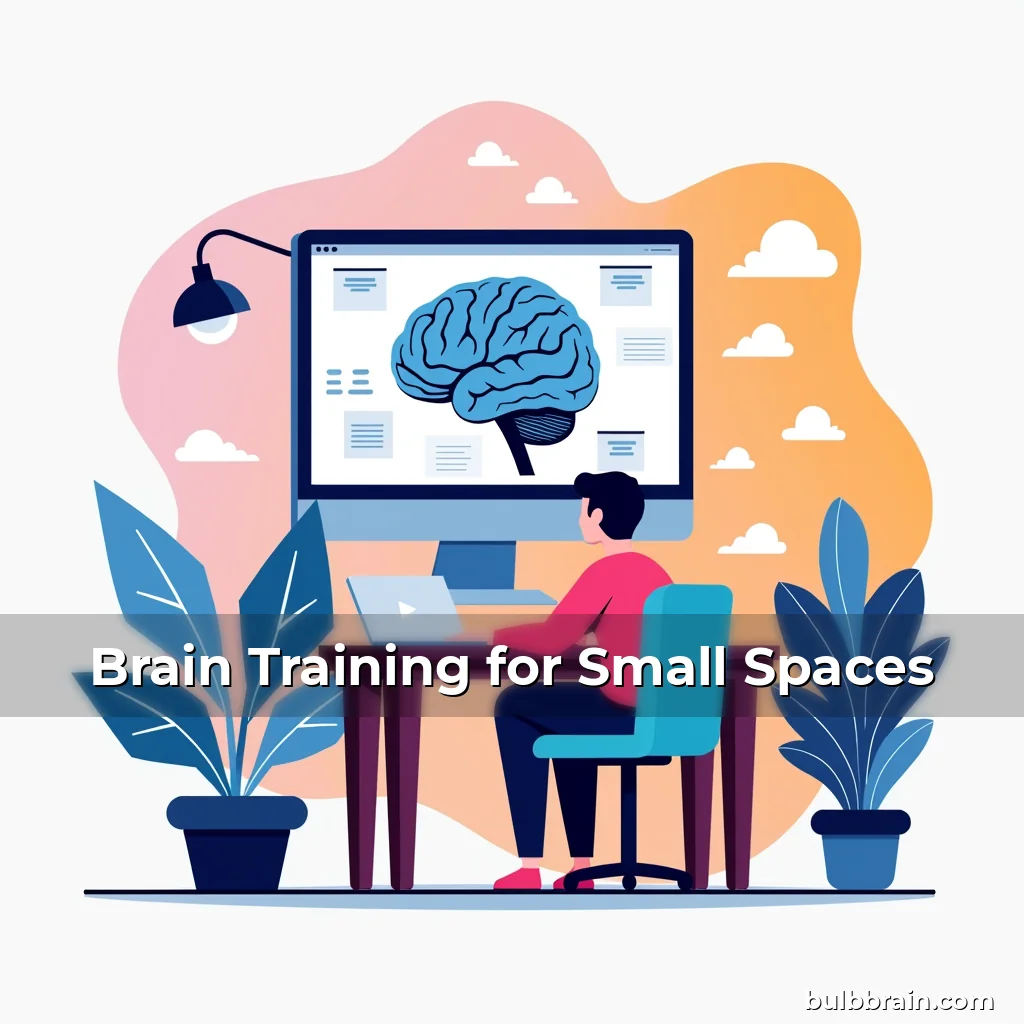
Brain Training for Small Spaces
Welcome to the world of brain training designed specifically for those navigating compact living situations. Whether you’re optimizing your home workspace or redefining daily routines, targeted mental exercises offer powerful advantages. This guide explores innovative techniques to boost cognitive performance within limited square footage.
The intersection of neuroscience and urban living reveals fascinating opportunities. As our surroundings shrink physically, our minds adapt by prioritizing efficiency. Through strategic brain training, we can transform restricted environments into catalysts for enhanced mental agility and resilience.
Understanding Cognitive Fitness in Restricted Environments
Cognitive fitness refers to the mind’s ability to process information, solve problems, and maintain emotional regulation. In tight quarters, this becomes both a challenge and an opportunity. Mental sharpness improves naturally when we must navigate obstacles inherent to smaller spaces.
Every decision made within constrained environments requires heightened awareness. From organizing workspaces efficiently to managing personal energy levels, these scenarios become micro-practices in mental discipline. Such conditions inherently demand adaptive thinking patterns.
- Improved spatial navigation: Constantly reassessing layouts strengthens neural pathways responsible for environmental mapping
- Increased task efficiency: Necessities force streamlined workflows that mirror advanced multitasking abilities
- Better decision-making: Limitations encourage rapid evaluation of options, honing critical judgment skills
Fundamental Principles of Effective Mind Training
Effective brain training follows universal principles applicable regardless of physical space. These foundational concepts form the bedrock upon which all mental enhancement strategies rely. Consistency remains the most crucial element in any cognitive development plan.
Variety prevents stagnation by continually challenging the brain with novel stimuli. When combined with intentional focus, this approach accelerates neural plasticity—the brain’s remarkable ability to reshape itself throughout life.
The Neurochemical Basis of Mental Exercise
Dopamine release during mentally stimulating activities reinforces neural connections. This natural reward system encourages continued engagement with intellectual pursuits. Research shows sustained dopamine production correlates strongly with long-term cognitive gains.
Beyond neurotransmitters, regular mental exertion promotes BDNF (Brain-Derived Neurotrophic Factor) synthesis. This protein supports neuron growth and survival, particularly in regions associated with memory formation and executive function.
Evidence-Based Techniques for Cognitive Enhancement
Scientific research validates numerous approaches to mental sharpening. While many traditional methods remain relevant, modern innovations provide fresh perspectives on brain training. Combining classical techniques with cutting-edge methodologies yields optimal results.
Memory palace techniques originate from ancient Roman rhetorical practices yet thrive in today’s data-driven world. This mnemonic device transforms abstract information into spatial memories, leveraging our innate navigational skills for recall.
Mindfulness Practices Within Confined Areas
Tiny spaces inadvertently create perfect settings for mindfulness cultivation. The absence of distractions allows deeper concentration on breath awareness and body sensations. Even modest corners can become sanctuaries for meditation practice.
Miniature zen gardens require precise movements that promote present-moment awareness. Arranging stones and raking sand becomes an act of mindful creation, transforming simple gestures into profound meditations on impermanence.
The Role of Sensory Engagement
Limited environments intensify sensory experiences due to reduced visual clutter. Listening attentively to ambient sounds becomes a refined skill when surrounded by fewer auditory stimuli. This acute hearing sensitivity develops into sharper observational abilities.
Tactile interaction with objects increases significantly in compact areas. Touching surfaces, manipulating small items, and experiencing textures through narrowed spatial boundaries enhances proprioceptive awareness—an essential component of motor coordination.
Creative Problem-Solving in Narrow Constraints
Confined spaces foster exceptional innovation by forcing resourceful solutions. Architects designing tiny homes demonstrate that limitations spark groundbreaking design philosophies. Similarly, cognitive flexibility flourishes when confronted with spatial restrictions.
Puzzles traditionally seen as recreational become vital tools for mental exercise. Spatial reasoning games adapted to portable formats enable continuous engagement despite mobility limitations. These activities strengthen analytical capabilities while promoting relaxation.
Language Acquisition Strategies for Spacious Minds
Learning languages offers unparalleled brain benefits, especially within confined environments. Immersive vocabulary building becomes possible even in minimalistic settings through targeted study sessions and conversation practice. Language acquisition fundamentally reshapes neural networks.
Portable language learning devices allow seamless integration into daily routines. Short audio lessons during commutes or kitchen preparations provide efficient ways to absorb new linguistic structures. This method leverages incidental learning effectively.
Social Cognition Development in Limited Interaction Settings
Restricted social circles often necessitate deeper interpersonal connections. This environment cultivates stronger communication skills and empathy through concentrated interactions. Reduced noise levels enhance active listening abilities significantly.
Micro-interactions—a term describing brief yet meaningful exchanges—become frequent occurrences in tight-knit communities. These fleeting conversations train the brain to extract maximal value from minimal social input, developing nuanced understanding quickly.
Stress Management Through Cognitive Resilience Building
Navigating compressed spaces presents unexpected psychological demands. Developing coping mechanisms through structured mental exercises creates internal fortitude against external pressures. This conditioning builds emotional endurance that extends beyond immediate contexts.
Visualization techniques gain potency when practiced regularly. Imagining successful resolution of spatial conflicts trains the brain to handle real-life challenges with calm precision. This preparatory visualization becomes a powerful stress-reduction tool.
Quantifiable Progress Tracking Systems
Measuring brain training effectiveness requires systematic assessment. Simple metrics like reaction times or improved puzzle completion speeds indicate gradual cognitive enhancements. Establishing baseline measurements enables clear progress monitoring.
Portable neuropsychological testing tools facilitate convenient self-assessment. Regular check-ins reveal trends in memory retention, processing speed, and pattern recognition abilities—all critical indicators of mental acuity improvements.
Integrating Technology for Enhanced Mental Workouts
Digital platforms now offer sophisticated brain training applications adaptable to various lifestyles. Mobile apps providing personalized workout plans cater to users with differing availability schedules and goal priorities. Gamified interfaces increase user engagement dramatically.
Augmented reality experiences bring immersive learning possibilities to confined areas. Virtual environments simulate complex spatial challenges that push cognitive limits safely. These simulated realities serve as controlled laboratories for neurological experimentation.
Long-Term Cognitive Health Maintenance Strategies
Sustaining mental vitality requires lifelong investment in brain care. Periodic review and adjustment of training regimens ensure continued effectiveness against evolving cognitive demands. Staying updated on neuroscientific advancements informs better strategy selection.
Community participation plays a crucial role in long-term success. Joining groups with shared interests fosters accountability and provides diverse perspective. Collective wisdom strengthens individual brain training journeys significantly.
Conclusion
This exploration has revealed countless opportunities for enhancing cognitive abilities within limited environments. By embracing the unique challenges posed by spatial constraints, individuals unlock extraordinary potential for mental development.
Start integrating these insights into your daily routine today. Begin with manageable commitments that gradually build toward comprehensive brain wellness programs. Remember, every small step contributes meaningfully to lasting cognitive improvements.

news is a contributor at BulbBrain. We are committed to providing well-researched, accurate, and valuable content to our readers.
You May Also Like


About news
Passionate about learning, cognitive science, and helping people unlock their full potential.