
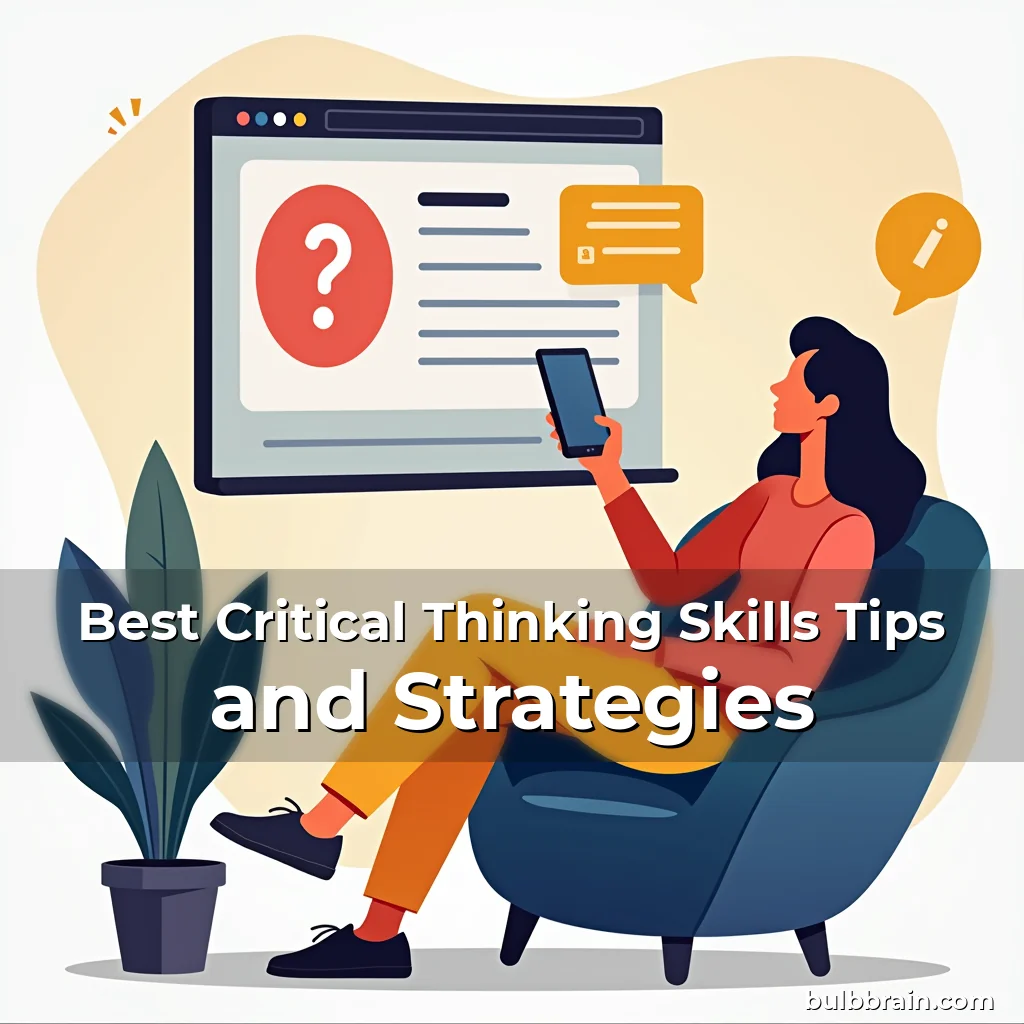
Best Critical Thinking Skills Tips and Strategies
Critical thinking skills are essential tools for navigating an increasingly complex world. They empower individuals to analyze information objectively, evaluate evidence thoughtfully, and make well-informed decisions. Whether you’re solving problems at work, making personal choices, or participating in public discourse, these abilities can transform how you approach challenges.
In today’s fast-paced environment filled with misinformation and conflicting viewpoints, developing critical thinking has never been more crucial. It enables people to distinguish between facts and opinions, assess arguments effectively, and avoid cognitive biases that cloud judgment. By mastering these techniques, anyone can enhance their ability to think clearly under pressure and arrive at sound conclusions independently.
The Foundation of Critical Thinking
A strong foundation in critical thinking begins with understanding what it truly means. This skill set involves actively analyzing information rather than passively accepting it without question. Individuals who practice critical thinking ask probing questions, seek out diverse perspectives, and remain open-minded even when faced with uncomfortable truths.
Cultivating curiosity plays a vital role in building this mental discipline. When people develop a habit of asking why things happen the way they do, they begin to see patterns where others might only perceive randomness. This mindset encourages deeper exploration beyond surface-level observations towards uncovering underlying causes and effects.
- Analyzing vs. Reacting: Critical thinkers pause before responding by evaluating whether an action aligns with available evidence rather than reacting impulsively based solely on emotion or instinct.
- Seeking Multiple Sources: Relying exclusively on single sources increases vulnerability to bias; cross-referencing information from various reputable channels ensures a balanced perspective.
Cognitive Biases That Hinder Clarity
One significant obstacle preventing clear thought processes is the influence of cognitive biases. These unconscious tendencies shape our perceptions and interpretations automatically, often leading us astray from objective reality. Recognizing common types such as confirmation bias or anchoring effect helps mitigate their impact significantly.
The confirmation bias leads individuals toward seeking out information supporting pre-existing beliefs while ignoring contradictory data. Anchoring effect occurs when someone places too much importance on initial pieces of information encountered during decision-making processes, which can distort subsequent judgments unnecessarily.
Common Cognitive Distortions to Watch For
Familiarizing oneself with typical cognitive distortions provides insight into potential pitfalls within one’s own thought process. Examples include catastrophizing—exaggerating negative outcomes—and overgeneralization drawing sweeping conclusions from limited experiences.
Becoming aware of these distortions allows practitioners of critical thinking to recognize them when they occur naturally. With conscious effort, individuals can challenge automatic thoughts and replace distorted views with more accurate assessments grounded in factual knowledge.
Developing Analytical Reasoning Abilities
To strengthen analytical reasoning capabilities, consistent practice through structured exercises proves highly effective. Engaging regularly in activities designed specifically for improving logical deduction enhances problem-solving acumen across various domains.
Puzzles like Sudoku require players to systematically eliminate possibilities until reaching definitive solutions—a method applicable far beyond recreational contexts. Similarly, logic games train participants to identify relationships among variables efficiently, translating seamlessly into real-world applications involving data interpretation and strategy formulation.
Tips for Effective Information Evaluation
Evaluating information critically requires applying systematic methods consistently whenever encountering new material. One fundamental technique involves identifying both premises and conclusions within any argument presented.
Distinguishing between supportive statements (premises) versus final claims (conclusions) clarifies how different components relate logically. Assessing whether each premise adequately supports its conclusion reveals weaknesses or gaps present in reasoning structures used by communicators.
Enhancing Decision-Making Through Reflection
Reflection serves as powerful tool enhancing quality of decisions made daily. Allocating time post-decision to examine rationale behind choices promotes self-awareness regarding factors influencing judgment calls.
This introspective practice identifies recurring themes affecting choices positively or negatively. Understanding triggers related to certain behaviors allows targeted adjustments aimed at fostering better future outcomes aligned with long-term goals instead of immediate gratifications alone.
Practical Applications Across Different Domains
Critical thinking transcends academic settings finding relevance across numerous professional fields including healthcare, engineering, law enforcement, education, etcetera. In medicine particularly, doctors rely heavily upon diagnostic reasoning every day while interpreting symptoms accurately amidst ambiguity.
Lawyers must construct compelling narratives using legal principles alongside factual elements proving innocence or guilt convincingly enough to sway juries accordingly. Engineers apply rigorous testing protocols ensuring safety standards met precisely according to regulatory guidelines governing industries globally.
Building Confidence Through Practice
Gaining confidence stems largely from repeated exposure combined with gradual progression towards increasing complexity levels challenging current capacities progressively. Starting small then gradually taking on tasks requiring higher order processing builds resilience against frustration typically associated with unfamiliar situations.
Maintaining positive reinforcement after successful completions reinforces belief in one’s capability handling difficult scenarios confidently. Celebrating milestones achieved along journey strengthens motivation required sustaining commitment necessary for continued growth over extended periods.
Overcoming Obstacles Along The Journey
Navigating path toward mastery inevitably encounters obstacles deterring progress sometimes unexpectedly. Identifying specific barriers early facilitates development strategies tailored uniquely addressing individual concerns directly impacting effectiveness personally experienced.
Resistance stemming from fear change commonly hinders attempts advancing further ahead comfortably within comfort zones established previously limiting scope aspirations potentially attainable otherwise unlocked fully embracing expansion opportunities provided growing intellectually continuously.
Conclusion
Critical thinking equips individuals not just surviving but thriving amid uncertainty characterizing modern life conditions constantly evolving rapidly. Mastering this invaluable asset transforms passive consumers becoming proactive agents shaping realities themselves consciously deliberately rather following blindly dictated external forces.
By adopting practical approaches outlined here—focusing especially cultivating habits promoting continual learning—readers position themselves advantageously prepared facing complexities ahead boldly equipped resources empowering confident navigation unknown territories awaiting discovery eagerly anticipating intellectual fulfillment derived pursuit excellence consistently maintained rigorously pursued relentlessly.
“`html
Best Critical Thinking Skills Tips and Strategies
Critical thinking skills are essential tools for navigating an increasingly complex world. They empower individuals to analyze information objectively, evaluate evidence thoughtfully, and make well-informed decisions. Whether you’re solving problems at work, making personal choices, or participating in public discourse, these abilities can transform how you approach challenges.
In today’s fast-paced environment filled with misinformation and conflicting viewpoints, developing critical thinking has never been more crucial. It enables people to distinguish between facts and opinions, assess arguments effectively, and avoid cognitive biases that cloud judgment. By mastering these techniques, anyone can enhance their ability to think clearly under pressure and arrive at sound conclusions independently.
The Foundation of Critical Thinking
A strong foundation in critical thinking begins with understanding what it truly means. This skill set involves actively analyzing information rather than passively accepting it without question. Individuals who practice critical thinking ask probing questions, seek out diverse perspectives, and remain open-minded even when faced with uncomfortable truths.
Cultivating curiosity plays a vital role in building this mental discipline. When people develop a habit of asking why things happen the way they do, they begin to see patterns where others might only perceive randomness. This mindset encourages deeper exploration beyond surface-level observations towards uncovering underlying causes and effects.
- Analyzing vs. Reacting: Critical thinkers pause before responding by evaluating whether an action aligns with available evidence rather than reacting impulsively based solely on emotion or instinct.
- Seeking Multiple Sources: Relying exclusively on single sources increases vulnerability to bias; cross-referencing information from various reputable channels ensures a balanced perspective.
Cognitive Biases That Hinder Clarity
One significant obstacle preventing clear thought processes is the influence of cognitive biases. These unconscious tendencies shape our perceptions and interpretations automatically, often leading us astray from objective reality. Recognizing common types such as confirmation bias or anchoring effect helps mitigate their impact significantly.
The confirmation bias leads individuals toward seeking out information supporting pre-existing beliefs while ignoring contradictory data. Anchoring effect occurs when someone places too much importance on initial pieces of information encountered during decision-making processes, which can distort subsequent judgments unnecessarily.
Common Cognitive Distortions to Watch For
Familiarizing oneself with typical cognitive distortions provides insight into potential pitfalls within one’s own thought process. Examples include catastrophizing—exaggerating negative outcomes—and overgeneralization drawing sweeping conclusions from limited experiences.
Becoming aware of these distortions allows practitioners of critical thinking to recognize them when they occur naturally. With conscious effort, individuals can challenge automatic thoughts and replace distorted views with more accurate assessments grounded in factual knowledge.
Developing Analytical Reasoning Abilities
To strengthen analytical reasoning capabilities, consistent practice through structured exercises proves highly effective. Engaging regularly in activities designed specifically for improving logical deduction enhances problem-solving acumen across various domains.
Puzzles like Sudoku require players to systematically eliminate possibilities until reaching definitive solutions—a method applicable far beyond recreational contexts. Similarly, logic games train participants to identify relationships among variables efficiently, translating seamlessly into real-world applications involving data interpretation and strategy formulation.
Tips for Effective Information Evaluation
Evaluating information critically requires applying systematic methods consistently whenever encountering new material. One fundamental technique involves identifying both premises and conclusions within any argument presented.
Distinguishing between supportive statements (premises) versus final claims (conclusions) clarifies how different components relate logically. Assessing whether each premise adequately supports its conclusion reveals weaknesses or gaps present in reasoning structures used by communicators.
Enhancing Decision-Making Through Reflection
Reflection serves as a powerful tool enhancing the quality of decisions made daily. Allocating time post-decision to examine the rationale behind choices promotes self-awareness regarding factors influencing judgment calls.
This introspective practice identifies recurring themes affecting choices positively or negatively. Understanding triggers related to certain behaviors allows targeted adjustments aimed at fostering better future outcomes aligned with long-term goals instead of immediate gratifications alone.
Practical Applications Across Different Domains
Critical thinking transcends academic settings, finding relevance across numerous professional fields including healthcare, engineering, law enforcement, education, etcetera. In medicine particularly, doctors rely heavily upon diagnostic reasoning every day while interpreting symptoms accurately amidst ambiguity.
Lawyers must construct compelling narratives using legal principles alongside factual elements proving innocence or guilt convincingly enough to sway juries accordingly. Engineers apply rigorous testing protocols ensuring safety standards are met precisely according to regulatory guidelines governing industries globally.
Building Confidence Through Practice
Gaining confidence stems largely from repeated exposure combined with gradual progression towards increasing complexity levels challenging current capacities progressively. Starting small then gradually taking on tasks requiring higher order processing builds resilience against frustration typically associated with unfamiliar situations.
Maintaining positive reinforcement after successful completions reinforces belief in one’s capability of handling difficult scenarios confidently. Celebrating milestones achieved along the journey strengthens motivation required for sustaining commitment necessary for continued growth over extended periods.
Overcoming Obstacles Along The Journey
Navigating the path toward mastery inevitably encounters obstacles deterring progress sometimes unexpectedly. Identifying specific barriers early facilitates development strategies tailored uniquely addressing individual concerns directly impacting effectiveness personally experienced.
Resistance stemming from fear of change commonly hinders attempts advancing further ahead comfortably within comfort zones established previously limiting scope of aspirations potentially attainable otherwise unlocked fully embracing expansion opportunities provided by growing intellectually continuously.
Conclusion
Critical thinking equips individuals not just surviving but thriving amid uncertainty characterizing modern life conditions constantly evolving rapidly. Mastering this invaluable asset transforms passive consumers into proactive agents shaping realities themselves consciously and deliberately rather than following blindly dictated external forces.
By adopting practical approaches outlined here—focusing especially on cultivating habits promoting continual learning—readers position themselves advantageously prepared facing complexities ahead boldly equipped with resources empowering confident navigation of unknown territories awaiting discovery eagerly anticipating intellectual fulfillment derived from the pursuit of excellence consistently maintained and rigorously pursued relentlessly.
“`
“`html
Best Critical Thinking Skills Tips and Strategies
Critical thinking skills are essential tools for navigating an increasingly complex world. They empower individuals to analyze information objectively, evaluate evidence thoughtfully, and make well-informed decisions. Whether you’re solving problems at work, making personal choices, or participating in public discourse, these abilities can transform how you approach challenges.
In today’s fast-paced environment filled with misinformation and conflicting viewpoints, developing critical thinking has never been more crucial. It enables people to distinguish between facts and opinions, assess arguments effectively, and avoid cognitive biases that cloud judgment. By mastering these techniques, anyone can enhance their ability to think clearly under pressure and arrive at sound conclusions independently.
The Foundation of Critical Thinking
A strong foundation in critical thinking begins with understanding what it truly means. This skill set involves actively analyzing information rather than passively accepting it without question. Individuals who practice critical thinking ask probing questions, seek out diverse perspectives, and remain open-minded even when faced with uncomfortable truths.
Cultivating curiosity plays a vital role in building this mental discipline. When people develop a habit of asking why things happen the way they do, they begin to see patterns where others might only perceive randomness. This mindset encourages deeper exploration beyond surface-level observations towards uncovering underlying causes and effects.
- Analyzing vs. Reacting: Critical thinkers pause before responding by evaluating whether an action aligns with available evidence rather than reacting impulsively based solely on emotion or instinct.
- Seeking Multiple Sources: Relying exclusively on single sources increases vulnerability to bias; cross-referencing information from various reputable channels ensures a balanced perspective.
Cognitive Biases That Hinder Clarity
One significant obstacle preventing clear thought processes is the influence of cognitive biases. These unconscious tendencies shape our perceptions and interpretations automatically, often leading us astray from objective reality. Recognizing common types such as confirmation bias or anchoring effect helps mitigate their impact significantly.
The confirmation bias leads individuals toward seeking out information supporting pre-existing beliefs while ignoring contradictory data. Anchoring effect occurs when someone places too much importance on initial pieces of information encountered during decision-making processes, which can distort subsequent judgments unnecessarily.
Common Cognitive Distortions to Watch For
Familiarizing oneself with typical cognitive distortions provides insight into potential pitfalls within one’s own thought process. Examples include catastrophizing—exaggerating negative outcomes—and overgeneralization drawing sweeping conclusions from limited experiences.
Becoming aware of these distortions allows practitioners of critical thinking to recognize them when they occur naturally. With conscious effort, individuals can challenge automatic thoughts and replace distorted views with more accurate assessments grounded in factual knowledge.
Developing Analytical Reasoning Abilities
To strengthen analytical reasoning capabilities, consistent practice through structured exercises proves highly effective. Engaging regularly in activities designed specifically for improving logical deduction enhances problem-solving acumen across various domains.
Puzzles like Sudoku require players to systematically eliminate possibilities until reaching definitive solutions—a method applicable far beyond recreational contexts. Similarly, logic games train participants to identify relationships among variables efficiently, translating seamlessly into real-world applications involving data interpretation and strategy formulation.
Tips for Effective Information Evaluation
Evaluating information critically requires applying systematic methods consistently whenever encountering new material. One fundamental technique involves identifying both premises and conclusions within any argument presented.
Distinguishing between supportive statements (premises) versus final claims (conclusions) clarifies how different components relate logically. Assessing whether each premise adequately supports its conclusion reveals weaknesses or gaps present in reasoning structures used by communicators.
Enhancing Decision-Making Through Reflection
Reflection serves as a powerful tool enhancing the quality of decisions made daily. Allocating time post-decision to examine the rationale behind choices promotes self-awareness regarding factors influencing judgment calls.
This introspective practice identifies recurring themes affecting choices positively or negatively. Understanding triggers related to certain behaviors allows targeted adjustments aimed at fostering better future outcomes aligned with long-term goals instead of immediate gratifications alone.
Practical Applications Across Different Domains
Critical thinking transcends academic settings, finding relevance across numerous professional fields including healthcare, engineering, law enforcement, education, etcetera. In medicine particularly, doctors rely heavily upon diagnostic reasoning every day while interpreting symptoms accurately amidst ambiguity.
Lawyers must construct compelling narratives using legal principles alongside factual elements proving innocence or guilt convincingly enough to sway juries accordingly. Engineers apply rigorous testing protocols ensuring safety standards are met precisely according to regulatory guidelines governing industries globally.
Building Confidence Through Practice
Gaining confidence stems largely from repeated exposure combined with gradual progression towards increasing complexity levels challenging current capacities progressively. Starting small then gradually taking on tasks requiring higher order processing builds resilience against frustration typically associated with unfamiliar situations.
Maintaining positive reinforcement after successful completions reinforces belief in one’s capability of handling difficult scenarios confidently. Celebrating milestones achieved along the journey strengthens motivation required for sustaining commitment necessary for continued growth over extended periods.
Overcoming Obstacles Along The Journey
Navigating the path toward mastery inevitably encounters obstacles deterring progress sometimes unexpectedly. Identifying specific barriers early facilitates development strategies tailored uniquely addressing individual concerns directly impacting effectiveness personally experienced.
Resistance stemming from fear of change commonly hinders attempts advancing further ahead comfortably within comfort zones established previously limiting scope of aspirations potentially attainable otherwise unlocked fully embracing expansion opportunities provided by growing intellectually continuously.
Conclusion
Critical thinking equips individuals not just surviving but thriving amid uncertainty characterizing modern life conditions constantly evolving rapidly. Mastering this invaluable asset transforms passive consumers into proactive agents shaping realities themselves consciously and deliberately rather than following blindly dictated external forces.
By adopting practical approaches outlined here—focusing especially on cultivating habits promoting continual learning—readers position themselves advantageously prepared facing complexities ahead boldly equipped with resources empowering confident navigation of unknown territories awaiting discovery eagerly anticipating intellectual fulfillment derived from the pursuit of excellence consistently maintained and rigorously pursued relentlessly.
“`

news is a contributor at BulbBrain. We are committed to providing well-researched, accurate, and valuable content to our readers.
You May Also Like


About news
Passionate about learning, cognitive science, and helping people unlock their full potential.