
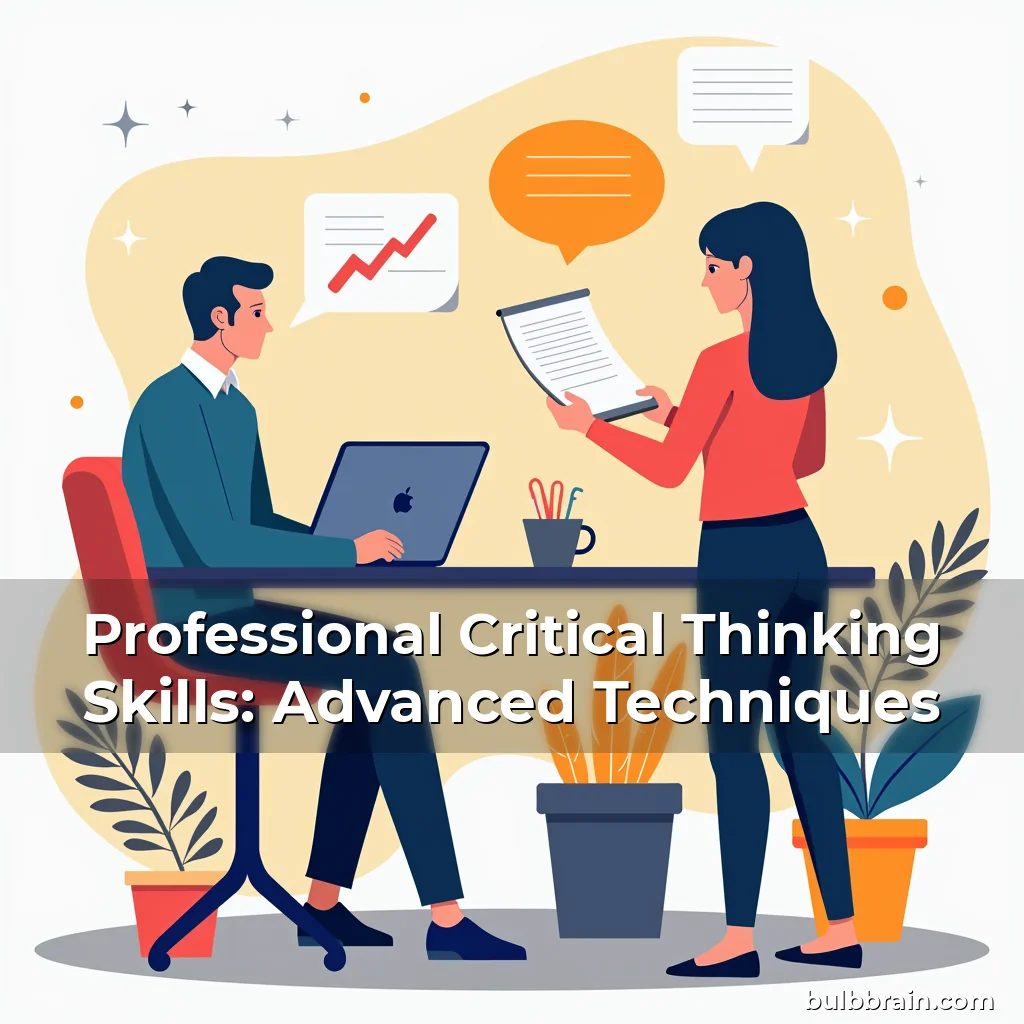
Mastering Professional Critical Thinking: Strategies for Sharp Decision-Making
Critical thinking is not merely a skill—it is a mindset that transforms how we approach problems, evaluate evidence, and navigate complex situations. In a rapidly evolving professional landscape, individuals who master critical thinking gain a distinct advantage, enabling them to innovate, adapt, and lead effectively.
This article delves into advanced techniques for developing critical thinking skills tailored to professionals. Whether you’re aiming to refine your analytical prowess or enhance decision-making capabilities, the insights shared here will empower you to think deeper, question smarter, and act decisively.
Understanding the Core Principles of Critical Thinking
Critical thinking begins with a fundamental shift in perspective: viewing problems as opportunities for exploration rather than obstacles to avoid. It involves systematically examining information, challenging assumptions, and weighing evidence objectively. These principles form the bedrock of sound judgment in both personal and professional contexts.
A core component of critical thinking is intellectual curiosity—the desire to seek out knowledge, ask probing questions, and remain open to alternative viewpoints. This trait distinguishes passive learners from those who actively engage with their environment, constantly refining their understanding of the world around them.
To cultivate critical thinking, one must embrace the habit of inquiry. Instead of accepting statements at face value, critically inclined individuals probe further: “What is the source of this claim?” “Is there sufficient evidence to support it?” Such habits foster clarity and precision in thought.
- Analyzing Information: Breaking down complex issues into smaller parts allows for clearer assessment of validity and relevance.
- Evaluating Evidence: Assessing the credibility, reliability, and sufficiency of supporting data ensures informed conclusions.
- Synthesizing Ideas: Combining disparate pieces of information
Social media amplifies echo chambers, reinforcing existing beliefs through algorithmic curation. Practicing media literacy—evaluating authorship, context, and intent—helps break free from informational silos and fosters balanced perspectives.
- Vet Sources: Prioritize institutions with reputations for rigor, such as universities or government agencies.
- Detect Emotional Manipulation: Be wary of sensationalist headlines designed to provoke fear or outrage.
- Promote Transparency: Encourage open discourse and demand proof for extraordinary claims.
Fostering a Culture of Critical Thinking in Organizations
Leaders play a pivotal role in embedding critical thinking practices within organizational cultures. By modeling reflective behaviors and rewarding thoughtful contributions, they inspire employees to adopt similar habits.
You Might Also Enjoy: How to Choose Critical Thinking Skills: Expert GuideTraining programs focusing on logical reasoning, ethical decision-making, and innovative problem-solving can transform workplaces into hubs of intellectual vitality. Regular workshops and mentorship initiatives reinforce these values consistently.
Encouraging psychological safety allows staff to voice concerns without fear of reprisal. When people feel secure expressing doubts or proposing unconventional ideas, organizations harness untapped creative potential.
Metrics for Measuring Progress
Quantifiable indicators such as reduced error rates, increased employee engagement scores, or higher productivity metrics reflect improvements in critical thinking proficiency. Tracking these KPIs over time highlights areas needing refinement.
Surveys gauging openness to feedback and willingness to collaborate reveal cultural shifts toward valuing critical inquiry. Positive trends indicate successful integration of these principles into daily operations.
Conclusion
Critical thinking is a dynamic, ever-evolving skill that demands intentional cultivation. By mastering its nuances, professionals unlock pathways to excellence, whether in leadership roles, strategic planning, or day-to-day interactions.
To advance your journey, commit to practicing critical thinking daily. Question assumptions, verify facts, and communicate clearly. Over time, these actions become instinctual, transforming you into a sharper thinker capable of influencing positively in every sphere of life.

news is a contributor at BulbBrain. We are committed to providing well-researched, accurate, and valuable content to our readers.
You May Also Like
About news
Passionate about learning, cognitive science, and helping people unlock their full potential.