
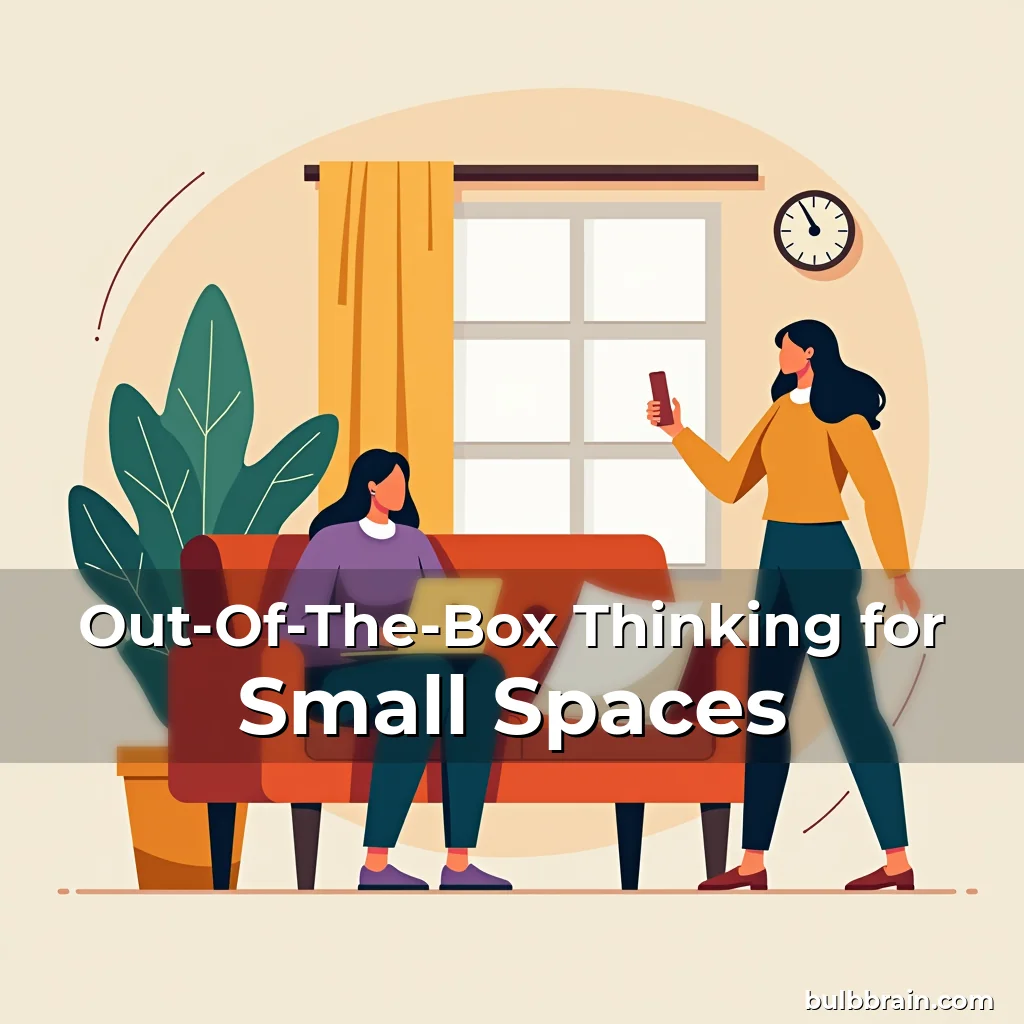
Unlocking Innovation: The Power of Out-of-the-Box Thinking in Everyday Life
In today’s fast-paced world, where conventional solutions often fall short, out-of-the-box thinking has emerged as a crucial skill. This creative approach enables individuals to break free from traditional constraints and explore unconventional ideas. Whether you’re an entrepreneur seeking new market opportunities or someone looking to solve everyday challenges, embracing innovative thought processes can lead to remarkable outcomes.
The essence of out-of-the-box thinking lies in its ability to challenge assumptions and question established norms. By fostering curiosity and open-mindedness, this mindset encourages exploration beyond what seems possible at first glance. It empowers people to envision alternative paths and discover fresh perspectives that might otherwise remain hidden beneath layers of routine expectations.
The Concept Behind Out-of-the-Box Thinking
At its core, out-of-the-box thinking refers to generating original ideas by exploring possibilities outside typical boundaries. Unlike linear problem-solving methods, which rely heavily on existing frameworks, this form of creativity thrives on divergent thinking—allowing thoughts to branch out freely rather than follow strict logical sequences.
This concept gained prominence through various psychological studies emphasizing the importance of cognitive flexibility. Researchers have found that individuals who regularly engage in such mental exercises tend to be better equipped to handle complex situations. Their minds are trained not only to find answers but also to ask the right questions that pave the way for breakthroughs.
A key aspect of this type of thinking involves reframing problems instead of approaching them head-on. Instead of asking “How do I fix this?” one might consider “What if there was another way entirely?” Such rephrasing opens up numerous avenues for potential solutions that may seem far-fetched initially yet prove highly effective upon closer examination.
- Cognitive Flexibility: The capacity to switch between different modes of thinking allows individuals to adapt quickly when faced with unexpected obstacles.
- Divergent Thinking: Encouraging multiple interpretations of any given situation enhances innovation capabilities significantly.
Moreover, cultivating an environment conducive to experimentation plays a vital role in nurturing this kind of creativity. When people feel safe enough to try novel approaches without fear of failure, they become more willing to take risks and push boundaries further than ever before.
By integrating these elements into daily routines—whether through brainstorming sessions or simply taking time each day to reflect creatively—one can gradually build stronger foundations for sustained inventive thinking over time.
Fostering Creativity Through Mindset Shifts
Transforming your perspective towards challenges is essential for unlocking true ingenuity. Rather than viewing limitations as barriers, see them as invitations to innovate differently. This shift doesn’t require abandoning logic altogether; instead, it blends analytical rigor with imaginative flair seamlessly.
Embracing uncertainty becomes part of the process itself. Traditional problem-solving strategies prioritize certainty and predictability, whereas out-of-the-box thinkers thrive amidst ambiguity. They understand that some of the most groundbreaking discoveries stem precisely from venturing into uncharted territory where few dare to tread.
To cultivate this attitude effectively, start small by questioning basic assumptions surrounding common tasks or objects around you. For instance, why does your morning coffee always come in a mug? Could there be other ways to enjoy your favorite beverage while simultaneously improving productivity levels?
Engaging in activities known to stimulate imagination helps reinforce these shifts mentally. Reading fiction expands empathy and understanding across diverse experiences, while playing musical instruments trains both sides of the brain equally—an ideal combination for enhancing overall cognitive abilities related to creativity.
Maintaining openness toward varied opinions fosters richer discussions leading ultimately toward more robust solutions. Surround yourself with peers whose viewpoints differ substantially from yours; their input frequently provides fresh angles that would never occur naturally within homogenous groups.
Practical Applications Across Various Domains
Out-of-the-box thinking isn’t confined solely to artistic endeavors or academic research—it permeates every facet of life including business operations, personal development goals, and even interpersonal relationships. Understanding how versatile this methodology truly is broadens horizons considerably regarding its applicability.
Consider how businesses leverage creative problem-solving techniques during product launches. Companies constantly seek novel features that differentiate their offerings from competitors’ products. A prime example includes Apple Inc., renowned globally for consistently delivering groundbreaking technology through relentless pursuit of innovation combined with user-centric design principles.
Similarly, educators employ unconventional teaching methodologies aimed at engaging students actively rather than passively absorbing information. Project-based learning models encourage hands-on participation allowing learners to apply theoretical knowledge practically thereby deepening comprehension dramatically compared to rote memorization alone.
Even in mundane aspects like home organization systems, applying non-traditional layouts yields surprising benefits. Floating shelves positioned strategically along walls maximize visual appeal alongside functional storage space efficiently utilizing vertical dimensions typically left underutilized.
These examples illustrate clearly that regardless of context—be it professional environments requiring strategic decision-making skills or casual settings involving everyday choices—the value derived from adopting flexible mindsets remains universally applicable.
Nurturing an Environment Conducive to Creative Exploration
Creating conditions favorable to spontaneous ideation requires intentional effort focused primarily on reducing inhibitions associated with sharing unconventional notions openly. Establishing trust among team members ensures everyone feels comfortable voicing potentially radical suggestions without facing undue criticism.
An atmosphere characterized by mutual respect forms the backbone of successful collaborative ventures centered around creativity. Leaders must model behaviors promoting inclusiveness ensuring all voices get heard equitably irrespective of hierarchy levels present within organizational structures.
Encouraging cross-disciplinary interactions exposes participants to unfamiliar domains thereby expanding intellectual toolkits available for tackling multifaceted issues comprehensively. Combining expertise spanning disparate fields frequently results in synergistic effects producing innovations neither party could achieve independently.
Providing access to resources facilitating experimental playtime proves instrumental too. Workshops featuring prototyping tools allow teams to test hypotheses physically reinforcing conceptual understanding concretely instead merely theorizing abstractly.
Lastly, celebrating successes—no matter how minor they appear—reinforces positive associations linking achievement closely together with risk-taking behaviors inherently linked with pioneering spirit necessary for continued progress forward.
Bridging Gaps Between Tradition and Modernity Using Innovative Thought Processes
One compelling application area lies within cultural preservation efforts wherein modern technologies help safeguard heritage traditions against erosion caused by globalization trends threatening indigenous customs worldwide. Digital archiving projects exemplify this synergy perfectly capturing oral histories accurately preserving languages spoken exclusively by certain communities.
Leveraging social media platforms facilitates wider dissemination reaching younger generations who might otherwise lose touch completely with ancestral practices due largely because they perceive those rituals outdated lacking relevance contemporary lifestyles impose upon them nowadays.
Furthermore, incorporating interactive exhibits inside museums transforms passive observation experiences into active engagement opportunities enabling visitors immerse themselves fully within historical narratives thus increasing retention rates significantly over conventional display formats previously utilized.
Such integrations demonstrate powerfully how merging old-world wisdom with cutting-edge advancements creates harmonious coexistence benefiting society collectively advancing civilization progressively towards brighter futures filled promise yet unseen.
Overcoming Common Obstacles Hindering Free Flow Of Ideas
Despite best intentions, several factors commonly impede smooth progression towards realizing full potential inherent within human cognition capacities specifically relating to lateral thinking abilities. Identifying primary culprits lays groundwork required addressing underlying causes systematically.
Preconceived notions rooted deeply within societal constructs act as formidable roadblocks preventing emergence novel concepts capable challenging status quo effectively. These ingrained beliefs manifest externally via rigid institutional policies resistant change despite evident need evolution occurring rapidly around us daily.
Social conditioning instilled early childhood profoundly influences adult perceptions shaping worldview accordingly limiting scope consideration alternatives readily available should individuals choose broaden perspectives deliberately.
Additionally, lack adequate exposure diverse stimuli restricts imagination severely curbing range viable options considered seriously whenever confronted perplexing dilemmas demanding resolution urgently.
Tackling these hurdles necessitates conscious awareness coupled consistent practice dedicated dismantling mental barriers erected long ago obstructing pathways leading discovery extraordinary solutions waiting patiently unveiled through persistent inquiry driven genuine desire explore unknown territories courageously.
Developing Strategies To Enhance Cognitive Agility And Problem-Solving Skills
Enhancing one’s ability think critically demands structured approaches tailored specifically individual needs considering differences exist amongst people concerning preferred learning styles receptiveness novelty varying degrees.
Begin experimenting varied techniques designed sharpen mental acuity incrementally building resilience against stagnation creeping insidiously unnoticed until detrimental consequences materialize visibly later stage development trajectories.
Mind mapping serves excellent starting point visually organizing scattered thoughts connecting seemingly unrelated entities revealing hidden links previously obscured dense webs confusion clouded judgment adversely affecting clarity required decisive action promptly.
Engaging puzzles ranging difficulty levels stimulates neural pathways responsible pattern recognition essential navigating complexities encountered routinely everyday scenarios requiring quick adaptive responses appropriately calibrated situational contexts dynamically shifting continuously.
Journaling regularly documents reflections exposing recurring themes aiding identification patterns indicative growth areas needing attention prioritization aligned personal objectives pursued diligently assiduously.
Participating group workshops promotes collective intelligence pooling strengths weaknesses creating balanced ecosystems propelling innovation forward collaboratively rather competitively isolating oneself siloed environments stifle progress ironically intended foster independence prematurely.
The Role Of Technology In Facilitating Unconventional Solutions
Technological advancements offer unprecedented opportunities revolutionizing problem-solving paradigms traditionally perceived immutable fixed frameworks constraining scope possibilities explored thoroughly exhaustively.
Artificial Intelligence algorithms analyze vast datasets identifying correlations invisible naked eye opening doors discovering connections otherwise overlooked overlooked contributing substantial value augmenting human capacity exponentially surpassing natural limitations imposed biology.
Virtual reality simulations create immersive environments replicating real-world situations safely testing theories virtually eliminating risks associated physical implementations permitting iterations refinement prior deployment actual operational landscapes fraught unpredictability variables.
Blockchain technology introduces decentralized architectures disrupting conventional transactional models establishing transparent verifiable records securing data integrity fundamentally altering trust dynamics governing digital interactions reshaping economic landscapes irreversibly.
These technological interventions underscore transformative potential residing within digital age ushering era marked by fluidity adaptability responsiveness characteristics indispensable thriving amid volatile global climate witnessing rapid transformations continuously accelerating pace change experienced currently.
Cultivating A Culture Of Continuous Learning And Adaptation
Establishing lifelong commitment acquiring new competencies maintaining vigilance evolving landscape necessitate proactive measures implementing systemic changes embedded within organizational cultures reinforcing values embracing perpetual improvement relentlessly.
Investing educational programs focusing emerging trends equips workforce future-ready anticipating disruptions preemptively mitigating adverse impacts stemming sudden paradigm shifts destabilizing established hierarchies reliant antiquated methodologies ill-suited current realities.
Leadership initiatives promoting mentorship facilitate transfer knowledge experiences across generational divides bridging gaps arising differing levels expertise maturity ensuring seamless transition legacy systems progressive innovations coexisting symbiotically rather antagonistically.
Implementing feedback mechanisms regularly assesses effectiveness ongoing training modules refining pedagogical approaches aligning curriculum requirements industry standards guaranteeing graduates possess requisite skills employers demand eagerly pursuing talents demonstrating readiness contribute meaningfully dynamic marketplace.
Ultimately, embedding continuous learning ethos throughout institutions cultivates resilient organizations adept pivoting swiftly responding external pressures maintaining competitive edge indefinitely sustaining prosperity longevity achieved through unwavering dedication excellence pursuit superior performance benchmarks exceeded consistently surpassing expectations set forth initially conceived visions originally articulated founding missions.
Conclusion
Out-of-the-box thinking represents powerful catalyst transformation capable altering trajectories lives professions societies alike. Its significance extends beyond mere intellectual exercise serving foundational pillar driving progress fueling revolutions igniting sparks ideas destined blaze brightly illuminate path ahead.
Adopting this mindset demands deliberate effort conscious choice persistently challenging self limits pushing frontiers courageously stepping uncertainties armed conviction belief boundless potential resides within everyone awaiting opportunity unfurl wings soar heights unimaginable previously deemed unreachable aspirations lofty ambitions once dismissed fanciful dreams now tangible realities achievable through steadfast determination relentless pursuit enlightenment.

news is a contributor at BulbBrain. We are committed to providing well-researched, accurate, and valuable content to our readers.
You May Also Like

About news
Passionate about learning, cognitive science, and helping people unlock their full potential.