
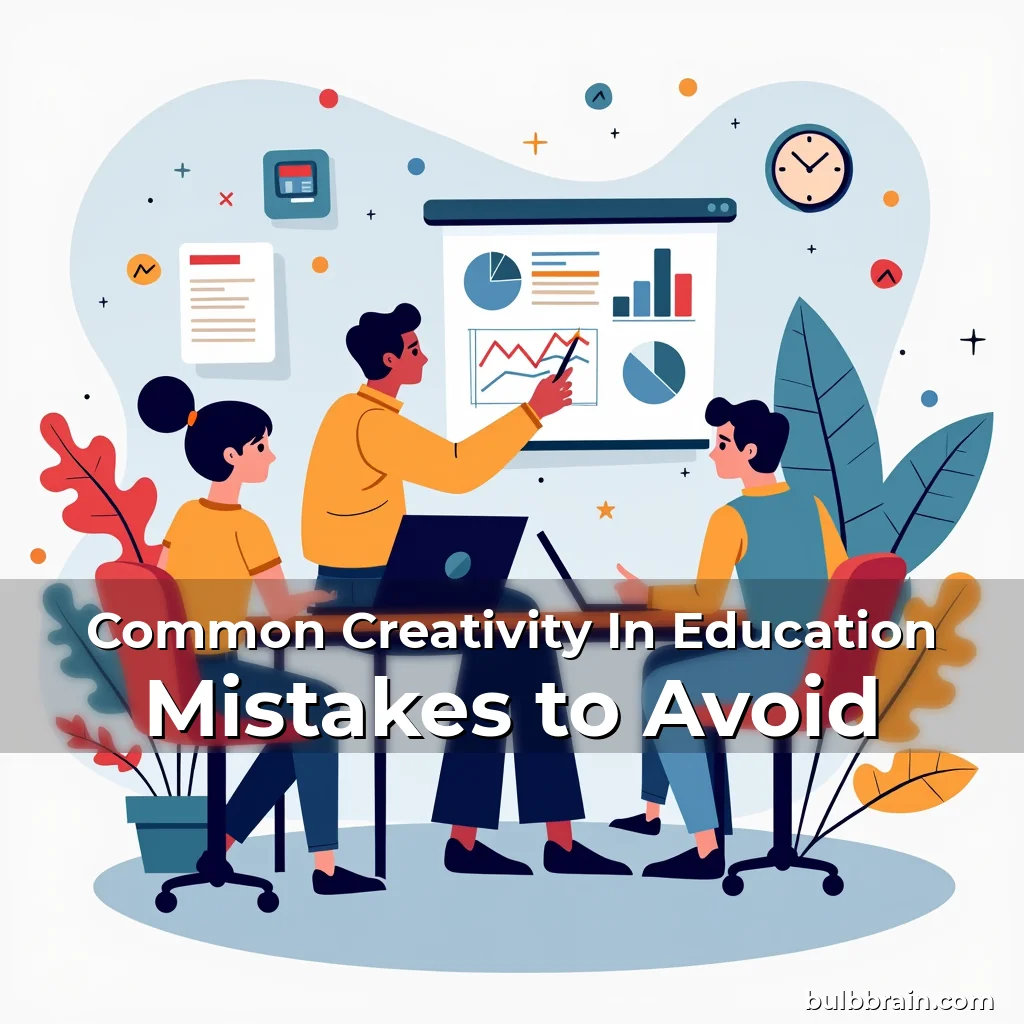
Common Creativity In Education Mistakes to Avoid
Creativity is often hailed as the cornerstone of innovation and problem-solving, yet its implementation in educational settings remains inconsistent. Many educators struggle to integrate creative practices without falling into common pitfalls that undermine their effectiveness.
The journey toward fostering creativity requires not only intention but also awareness of potential missteps. By recognizing these mistakes early, teachers can cultivate environments where students thrive through original thought and imaginative exploration.
Failing to Define What Creativity Means in Your Context
Creativity is a multifaceted concept that varies across disciplines, age groups, and learning objectives. Without clear definitions tailored to your classroom, you risk implementing activities that may seem creative but fail to align with broader goals.
A well-defined framework helps ensure that creativity supports academic standards while encouraging divergent thinking. This clarity prevents confusion among both teachers and students about what constitutes meaningful creative work.
Lack of definition can lead to superficial engagement with projects that prioritize novelty over substance. Students might produce visually appealing outputs without developing critical skills such as analysis or synthesis.
To avoid this mistake, begin by examining curricular requirements and identifying areas where creativity naturally complements existing topics. For example, incorporating storytelling elements when teaching history can enhance comprehension while allowing expressive freedom.
- Align creativity with curriculum: Ensure that creative exercises reinforce key subject knowledge rather than serving as distractions from core material.
- Establish criteria for success: Develop rubrics that assess both the creative process and final outcomes based on predefined benchmarks relevant to each activity.
Misunderstanding the Role of Structure in Creative Learning
Creative learning does not equate to unstructured chaos; instead, it thrives within carefully designed boundaries. Too much openness can overwhelm learners who need guidance to channel their ideas effectively.
Structured frameworks provide scaffolding that enables students to explore possibilities systematically. They help maintain focus on learning objectives even during open-ended tasks.
Without structure, some students may become disengaged due to uncertainty about expectations or fear of failure associated with unpredictable outcomes.
Striking an optimal balance involves providing enough direction so that students feel supported while still leaving room for personal interpretation and experimentation.
How Much Guidance Is Appropriate?
Educational research suggests that effective creative instruction typically includes between 30% to 60% structured guidance depending on student maturity levels. Younger children benefit from higher percentages of direction, whereas older students require less oversight once foundational skills are established.
This range allows flexibility for differentiation based on individual needs while maintaining overall coherence across diverse classrooms.
Overlooking Assessment Strategies That Support Creative Growth
Traditional assessment models often emphasize uniformity at the expense of valuing diverse approaches to problem-solving. When evaluating creative works, focusing solely on end products neglects the developmental aspects crucial for long-term growth.
Incorporating formative assessments provides ongoing feedback that nurtures evolving creative capacities. These evaluations monitor progress through iterative refinement rather than singular judgments.
An exclusive reliance on summative measures risks discouraging risk-taking behaviors essential for cultivating innovative thinkers. Students may opt for safe choices rather than exploring novel solutions out of concern for grades.
Developing multimodal assessment systems that include peer reviews, self-reflections, and teacher observations ensures holistic evaluation aligned with creative development principles.
- Implement reflective journals: Encourage students to document their thought processes throughout creative endeavors, highlighting how they arrived at particular decisions.
- Use peer review sessions: Facilitate collaborative critique opportunities where constructive feedback reinforces understanding of different perspectives.
Prioritizing Product Over Process in Creative Assignments
While polished results have their place in showcasing achievements, placing undue emphasis on aesthetics can detract from the intrinsic value of the creative journey itself. The true measure of creativity lies in how individuals approach challenges and develop new ways of thinking.
When students concentrate exclusively on producing impressive visuals or narratives, they may miss deeper cognitive benefits derived from grappling with complex problems creatively.
Encouraging metacognitive reflection prompts learners to analyze their own strategies and recognize patterns emerging from repeated attempts at innovation.
Integrating process-oriented components into grading schemes acknowledges effort invested in conceptualization phases alongside technical execution skills.
Ignoring Cultural and Individual Differences in Creative Expression
Creativity manifests uniquely across cultures and individuals influenced by varied backgrounds, experiences, and values. Assuming a universal standard for what counts as ‘creative’ overlooks rich diversity present within any given classroom setting.
Different cultural contexts shape perceptions regarding acceptable forms of expression which must be acknowledged when designing inclusive creative assignments.
Stereotypes about certain types of creativity being superior can marginalize those whose preferred modes don’t conform to mainstream norms.
Actively seeking input from students regarding their comfort zones regarding artistic mediums fosters greater inclusivity and respect for multiple forms of intelligence recognized by Howard Gardner’s theory of multiple intelligences.
- Offer choice in project formats: Allow students select presentation styles best matching their strengths whether verbal, visual, musical etc.
- Provide culturally responsive examples: Share case studies illustrating successful creative applications from various global communities enhancing relevance for diverse audiences.
Underestimating the Importance of Teacher Modeling in Fostering Creativity
Teachers serve as powerful role models influencing attitudes towards creativity through their own demonstration of inventive thinking. Neglecting this aspect diminishes chances of inspiring similar behavior among students.
By openly sharing personal creative struggles and successes related to lesson preparation, educators model resilience necessary for navigating uncertainties inherent in innovative pursuits.
Visible commitment to continuous professional development around pedagogical innovations signals willingness to embrace change—an attitude highly transferable to student mindsets.
Creating spaces where faculty members experiment with novel teaching methods encourages cross-pollination of ideas leading ultimately to richer learning ecosystems benefiting everyone involved.
Not Providing Sufficient Time for Deep Engagement With Creative Tasks
Rushed timelines constrain depth of exploration required for genuine breakthroughs. Merely allocating time slots without considering complexity limits opportunities for authentic discovery processes central to meaningful creation.
Realistic scheduling accounts for stages including brainstorming, prototyping iterations, refining drafts—all integral parts contributing toward final product quality.
Students accustomed to quick turnaround times may lose patience waiting through lengthy cycles necessary for mastering intricate techniques or solving layered issues.
Building flexible calendars accommodating unexpected delays or discoveries maintains momentum facilitating sustained engagement with challenging creative undertakings.
Resistance to Incorporating Technology As A Tool For Enhancing Creativity
Technological tools offer unprecedented avenues for expanding traditional notions of creativity beyond conventional mediums. Dismissing digital resources denies access to platforms enabling multimedia composition and interactive design capabilities.
Integration of technology doesn’t mean replacing human ingenuity—it enhances capacity for expressing abstract concepts through virtual simulations or augmented reality overlays previously unimaginable.
Training programs focused specifically on tech literacy empower educators to leverage software suites supporting graphic design, coding adventures, or digital storytelling missions safely guided within appropriate parameters.
Collaboration between schools districts and tech companies could yield customized solutions addressing local needs ensuring equitable distribution of modern creative toolkits amongst participating institutions nationwide.
Conclusion
Successfully integrating creativity into education demands deliberate attention to numerous interrelated factors affecting its efficacy. Recognizing common obstacles paves way for strategic interventions aimed at maximizing positive impacts across all learner demographics.
Adopting mindful approaches characterized by thoughtful planning combined with adaptive responsiveness positions educators as catalysts driving transformative changes within contemporary classrooms dedicated wholly toward nurturing future innovators capable tackling tomorrow’s challenges confidently.

news is a contributor at BulbBrain. We are committed to providing well-researched, accurate, and valuable content to our readers.
You May Also Like

About news
Passionate about learning, cognitive science, and helping people unlock their full potential.