
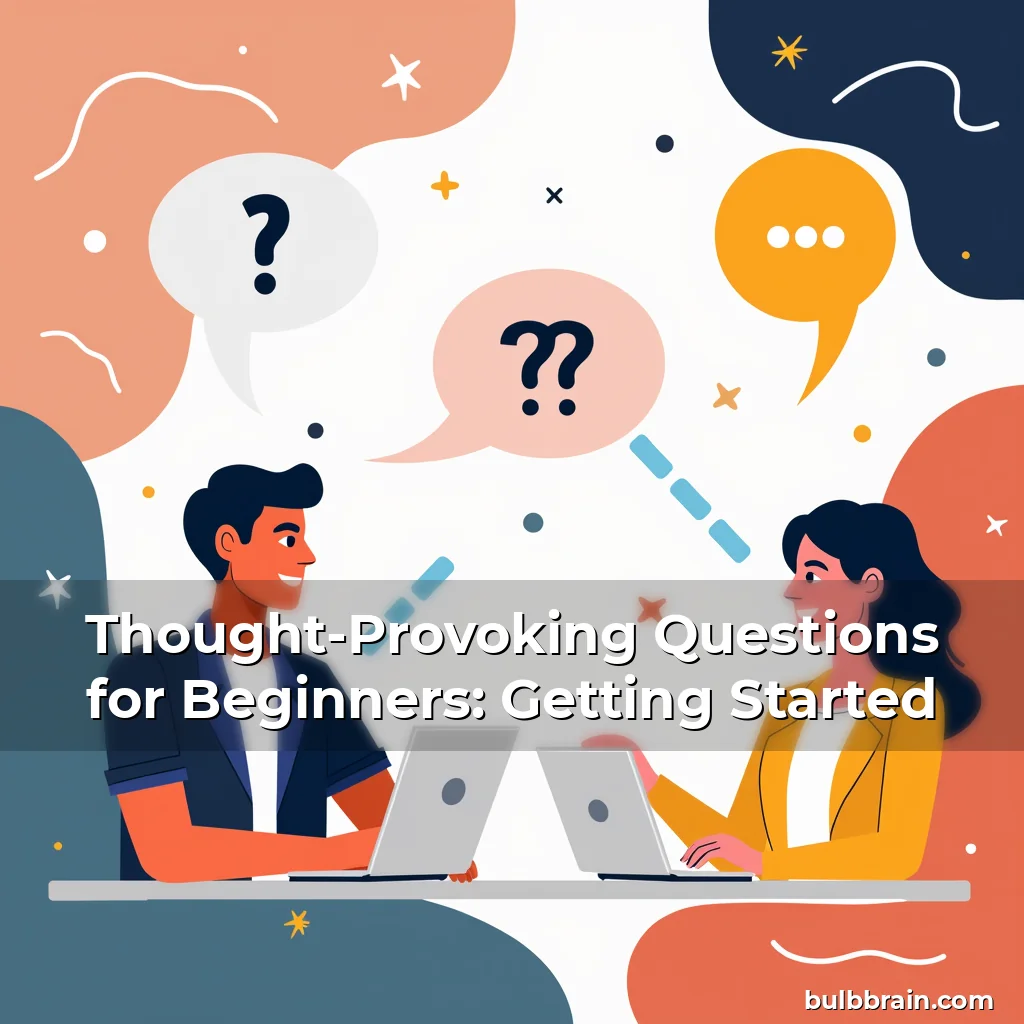
The Art of Questioning: Unlocking Deeper Thinking Through Thought-Provoking Queries
In an age where information is abundant yet often superficial, cultivating deep critical thinking has become more crucial than ever. The ability to ask thoughtful questions—not just consume answers—is a powerful tool that can transform how we engage with ideas, solve problems, and understand ourselves and the world around us.
For members of the BulbBrain community and any curious mind seeking intellectual growth, learning to formulate and explore thought-provoking questions offers immense value. These queries don’t merely seek facts; they challenge assumptions, stimulate creativity, and encourage us to think beyond conventional boundaries.
Understanding What Makes a Question Truly Thought-Provoking
A thought-provoking question is more than a simple inquiry—it’s a catalyst for deeper exploration and reflection. It doesn’t have an obvious answer but instead invites the respondent to consider new perspectives, analyze complex issues from different angles, and sometimes even confront uncomfortable truths.
Such questions are open-ended by nature, allowing room for interpretation rather than prescribing a single correct response. They often require synthesizing knowledge across disciplines or applying abstract principles to real-world situations, making them particularly effective tools for cognitive development.
To identify what makes a question truly provocative, consider its impact on both the person asking and answering. Does it spark curiosity? Encourage debate? Challenge existing beliefs?
- Cognitive Engagement: A good thought-provoking question engages higher-order thinking skills such as analysis, evaluation, and synthesis rather than mere recall of information.
- Perspective Expansion: Effective questions expose individuals to alternative viewpoints, encouraging empathy and broader understanding of diverse experiences.
Fostering Intellectual Curiosity Through Strategic Inquiry
Strategic questioning is essential for nurturing intellectual curiosity. By carefully choosing which questions to pose—whether in academic settings, personal conversations, or professional environments—we create opportunities for meaningful dialogue and discovery.
This approach requires awareness of context and audience. For instance, posing philosophical dilemmas during casual chats may be inappropriate compared to discussing them within structured debates or classroom discussions designed specifically for critical thinking exercises.
The Science Behind Why We Ask Questions
Research indicates that humans naturally gravitate toward questions when faced with uncertainty or ambiguity. According to studies published in journals like Psychological Science, our brains actively seek patterns and meaning through inquiry—a process known as “cognitive dissonance resolution.”
This intrinsic drive isn’t just psychological; it also plays a vital role in learning processes. When students encounter challenging material, their tendency to generate relevant questions correlates strongly with improved comprehension rates later on.
Moreover, neuroimaging techniques show increased activity in regions associated with problem-solving when people grapple with difficult questions versus straightforward ones. This suggests there might be biological underpinnings behind why certain types of questions resonate more deeply with us intellectually.
Interestingly enough, cultural factors influence how comfortable people feel expressing their uncertainties publicly via questioning behaviors. Some societies prioritize certainty over exploration while others celebrate inquiry as part of communal wisdom-building efforts.
Exploring Different Categories Of Thought-Provoking Questions
Thought-provoking questions come in various forms depending upon their purpose and intended effect. Understanding these categories helps tailor inquiries effectively towards specific goals whether aimed at self-reflection, stimulating discussion among peers, or driving innovation forward.
One common category involves existential contemplations focusing on fundamental aspects of life itself—from morality choices made daily down to broader societal implications stemming from technological advancements today.
Another type revolves around ethical conundrums presented in hypothetical scenarios meant to test moral reasoning capabilities without direct consequences involved unlike actual decision-making contexts.
Questions related to identity formation help individuals examine who they are versus whom society expects them to become thereby fostering authentic self-awareness journeys.
Finally, predictive inquiries look ahead speculating about future possibilities based current trends suggesting potential outcomes if particular actions continue unchallenged.
- Existential Reflections: Explore core values, life purposes, and human condition themes prompting introspection regarding existence’s meaning.
- Ethical Dilemmas: Present morally ambiguous situations requiring judgment calls highlighting internal conflicts between competing priorities.
- Identity Formation: Prompt examination of individual vs collective expectations shaping personal identity development trajectories.
- Predictive Scenarios: Encourage forecasting likely developments assuming present conditions remain unchanged facilitating strategic planning initiatives accordingly.
How To Formulate Your Own Thought-Provoking Questions
Creating impactful questions demands intentionality along several dimensions including clarity, relevance, depth level required responses, etcetera. Following some basic guidelines ensures generated prompts achieve desired effects efficiently regardless varying application areas.
Begins with identifying key topics worth exploring followed by defining exact objectives behind formulating those particular queries. Are you aiming solely for entertainment purposes? Educational enhancement? Or perhaps sparking transformative change within targeted communities?
Determines appropriate phrasing style suitable given audience demographics ensuring accessibility levels match listener capabilities preventing alienation due excessive complexity or oversimplification respectively.
Additionally incorporates elements promoting multi-dimensional analyses compelling respondents engage critically rather passively accepting surface-level interpretations readily available online nowadays.
- Clarity & Conciseness: Ensure each prompt clearly communicates intent avoiding convoluted language structures hindering immediate graspability especially amongst non-expert audiences.
- Relevance Assessment: Verify proposed subjects align closely with prevailing interests demonstrated previously minimizing chances encountering resistance born out mismatched expectations.
- Depth Regulation: Adjust complexity appropriately matching skill sets possessed by expected participants maintaining balance between too easy causing boredom versus overly difficult triggering frustration reactions negatively affecting engagement metrics overall.
Examples Of Effective Thought-Provoking Questions Across Various Domains
Applying theoretical frameworks practically becomes clearer once observing concrete examples drawn from distinct fields showcasing successful implementation strategies yielding positive results consistently reported globally irrespective geographical locations or cultural backgrounds.
Education sector frequently employs Socratic Method wherein teachers utilize probing techniques guiding students toward independent conclusions themselves rather simply delivering ready-made solutions outrightly.
Business organizations benefit immensely leveraging scenario-based simulations prompting employees envision challenges awaiting them professionally subsequently devising contingency plans addressing anticipated obstacles preemptively.
Healthcare professionals rely heavily upon reflective practices involving patients considering lifestyle modifications potentially improving long-term well-being outcomes significantly surpassing short-term symptomatic relief alone.
Social media platforms increasingly incorporate interactive polls featuring nuanced options rather binary yes/no formats inviting users deliberate thoroughly before casting votes enhancing quality discourse occurring publicly visible spaces simultaneously.
- Educational Contexts: Implement Socratic seminars encouraging peer-to-peer dialogues centered around selected texts analyzing underlying messages critically evaluating authorial intentions accurately.
- Professional Development: Conduct virtual workshops presenting case studies requiring teams collaborate solving real-life business problems remotely mirroring authentic work environment dynamics precisely.
- Personal Growth: Keep journal entries documenting weekly reflections assessing progress achieved against previously established milestones setting realistic targets achievable next cycle ensuring continuous improvement trajectory remains sustainable indefinitely.
- Societal Impact: Organize town hall meetings featuring local experts addressing pressing concerns impacting entire neighborhoods collaboratively brainstorming feasible resolutions respecting differing opinions valuing inclusive participation wholeheartedly.
The Role Of Thought-Provoking Questions In Personal And Professional Development
Integrating regular use of high-quality questions systematically contributes substantially toward achieving measurable improvements both personally and occupationally. Regular practice strengthens mental agility enabling quicker adaptability amidst rapidly changing landscapes characteristic modern era experiencing currently.
On individual fronts, consistent exposure sharpens analytical abilities necessary navigating complexities inherent everyday living successfully. This translates directly into better decision-making capacities applicable ranging from financial investments decisions up managing interpersonal relationships constructively.
Professionally speaking, incorporating such methodologies enhances team performance considerably since members learn communicate effectively articulate thoughts cohesively contributing positively group objectives collectively pursuing shared visions earnestly.
Furthermore, leadership qualities strengthen noticeably because leaders who model active listening behaviors combined with constructive feedback mechanisms inspire greater trust loyalty cultivated among followers leading enhanced productivity outputs observed regularly thereafter.
- Mental Agility Enhancement: Frequent interaction with challenging questions improves neural pathways responsible processing novel stimuli accelerating reaction times beneficial competitive industries demanding swift responses routinely.
- Decision-Making Refinement: Exposure trains minds weighing pros/cons objectively reducing biases influencing judgments favorably increasing likelihood optimal choices selected frequently overtime.
- Leadership Skill Amplification: Leaders demonstrating openness welcoming dissenting views demonstrate humility reinforcing credibility establishing stronger bonds rapport colleagues subordinates alike.
Overcoming Common Challenges Associated With Asking Deep Questions
Despite numerous benefits associated employing sophisticated questioning techniques widely, many individuals struggle initiating such endeavors primarily due fear confronting unknown territories discomfort stepping outside comfort zones commonly experienced universally.
Some perceive risks linked vulnerability arising from admitting ignorance exposing gaps knowledge base potentially damaging perceived expertise status held dearly by many especially within hierarchical structures emphasizing authority positions prominently.
Others find reluctance originating lack confidence believing only authorities possess right ask profound matters whereas ordinary citizens ought remain silent deference superior intellects supposedly residing elite circles exclusively.
To mitigate these barriers effectively, gradual introduction recommended starting small building momentum incrementally until reaching full capacity comfortably handling intense intellectual exchanges confidently.
- Vulnerability Management: Begin experimenting low-stakes environments gradually escalating intensity proportionately according to growing tolerance thresholds safely monitored progression assuredly.
- Confidence Building Strategies: Engage mentors coaches offering guidance support helping navigate treacherous waters encountered unfamiliar domains reassuring presence mitigates anxiety sufficiently.
- Permission Seeking Techniques: Frame inquiries respectfully acknowledging value input received beforehand establishing mutual respect foundation strengthening connections organically.
Cultivating An Environment Conducive To Open Exploration Of Ideas
Establishing cultures embracing free expression devoid judgmental attitudes absolutely essential creating safe havens conducive fruitful exchange radical notions typically shunned mainstream paradigms generally upheld rigidly.
Organizations institutions must consciously design policies procedures safeguarding freedom speech ensuring punitive measures never applied against those voicing unconventional perspectives despite initial shockwaves provoked thereby.
At home, families could implement nightly rituals dedicated reflecting together sharing stories experiences freely without censorship promoting healthy communication habits nurtured lifelong eventually.
Communities benefit greatly hosting events festivals celebrating diversity ideologies allowing cross-pollination fresh ideas emerging spontaneously naturally through organic interactions happening effortlessly whenever possible.
- Policy Implementation: Develop clear codes conduct outlining acceptable behavior norms protecting everyone rights ensuring equitable treatment regardless background origin whatsoever.
- Ritual Establishment: Introduce recurring traditions reinforcing positive values teaching younger generations appreciate plurality differences inherently enriching lives immeasurably.
- Event Organization: Plan gatherings bringing disparate groups together facilitating meaningful encounters generating synergies otherwise impossible achieve separately isolated silos created artificial divisions intentionally or unintentionally.
Conclusion
In conclusion, mastering art questioning opens doors endless possibilities transforming passive recipients knowledge into proactive seekers truth committed relentless pursuit enlightenment perpetually.
By adopting mindset prioritizing investigation over acceptance embracing uncertainty as natural state being rather obstacle avoidance strategy, anyone can begin journey unlocking latent potentials residing dormant corners consciousness waiting patiently activation signals triggered precise formulations crafted meticulously with care devotion.

news is a contributor at BulbBrain. We are committed to providing well-researched, accurate, and valuable content to our readers.
You May Also Like

About news
Passionate about learning, cognitive science, and helping people unlock their full potential.