
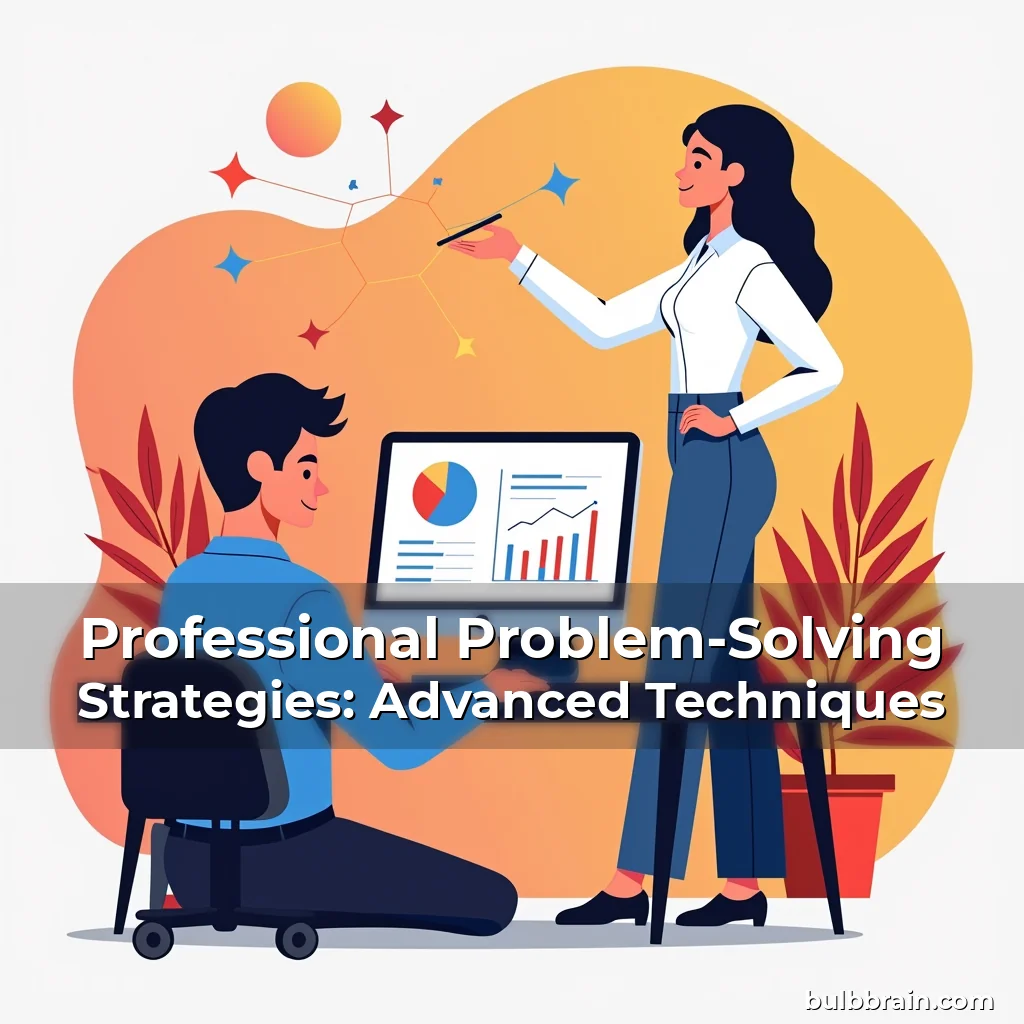
Mastering Strategic Problem Solving: Essential Frameworks and Tools
In an era defined by complexity and rapid change, effective problem solving is not merely a skill but a competitive necessity. Whether you’re navigating business challenges, technological dilemmas, or personal obstacles, mastering strategic approaches can transform uncertainty into opportunity.
The modern problem solver must be equipped with adaptable methodologies that transcend traditional solutions. This guide explores advanced frameworks designed to sharpen analytical thinking, enhance decision-making, and foster innovation across diverse scenarios.
The Scientific Method as a Foundation
The scientific method provides a structured approach rooted in empirical evidence and systematic inquiry. It begins with observation and ends with verification through experimentation, creating a cycle that ensures objectivity in problem resolution.
This methodology emphasizes hypothesis formation based on data rather than assumptions. By testing predictions against real-world outcomes, individuals can refine their understanding and eliminate ineffective solutions efficiently.
Application Example: A software development team encountering performance issues might observe system bottlenecks, hypothesize that database queries are inefficient, then test optimization techniques before validating results through benchmark comparisons.
Its iterative nature allows continuous refinement without bias toward preconceived notions. Each failed experiment becomes part of the knowledge base rather than an obstacle to progress.
Adopting this framework requires discipline in documenting each stage—from initial observations to final conclusions—ensuring transparency and repeatability in problem analysis.
Cognitive Biases and Their Impact
Understanding cognitive biases is crucial for accurate problem assessment. These mental shortcuts often lead to flawed judgments when applied without awareness during critical thinking processes.
Confirmation bias, for instance, causes individuals to favor information reinforcing existing beliefs while ignoring contradictory evidence. This can skew diagnostic accuracy and limit solution diversity in complex situations.
Common Cognitive Biases:
- Anchoring Bias: Over-relying on first impressions which may distort subsequent evaluations
- Hindsight Bias: Believing past events were predictable after they’ve occurred
- Framing Effect: Decisions influenced significantly by how problems are presented
Awareness alone isn’t sufficient; active mitigation strategies such as seeking opposing viewpoints or using structured decision matrices help counteract these natural tendencies effectively.
Training programs incorporating behavioral economics principles have shown measurable improvements in organizational decision quality by addressing underlying bias patterns systematically.
Lateral Thinking Principles
Lateral thinking encourages non-linear exploration of ideas to uncover unconventional solutions. Unlike vertical thinking’s step-by-step progression, this approach values creative leaps between seemingly unrelated concepts.
Edward de Bono popularized lateral thinking as a means to break free from rigid thought patterns. His six thinking hats technique exemplifies how different perspectives can coexist within collaborative problem-solving environments.
Techniques to Foster Lateral Thinking:
- Random stimulus introduction to disrupt conventional mindsets
- Reversal exercises where problems are viewed backward or inverted
- Attribute listing to identify components that could be modified independently
Creative industries frequently apply these methods successfully, demonstrating that innovative breakthroughs often arise from unexpected connections rather than direct logic chains.
Regular practice with abstract puzzles or scenario-based simulations enhances flexibility in approaching new challenges with fresh insight.
Design Thinking Process
Originating from product design disciplines, design thinking integrates empathy, ideation, and prototyping into a human-centered problem-solving model. Its five-stage process facilitates deep user engagement at every phase.
Core Stages of Design Thinking:
- Empathize: Understand users’ needs through immersive research and interviews
- Define: Articulate clear problem statements based on gathered insights
- Ideate: Generate numerous potential solutions through brainstorming sessions
- Prototype: Build tangible models representing proposed solutions
- Test: Gather feedback and iterate continuously until optimal outcomes emerge
Businesses applying design thinking report increased customer satisfaction scores due to solutions tailored precisely to end-user requirements. Healthcare organizations utilizing this approach have improved patient care experiences notably.
The emphasis on iteration distinguishes design thinking from other methodologies—it embraces failure as part of the learning curve rather than viewing it negatively.
Six Thinking Hats Technique
Developed by Edward de Bono, the Six Thinking Hats method organizes group discussions around distinct cognitive roles represented by colored hats. Each hat symbolizes a particular mode of thinking contributing uniquely to comprehensive analyses.
Roles Associated With Each Hat:
- White Hat: Focuses solely on factual information and available data
- Red Hat: Represents emotional responses and intuitive feelings
- Black Hat: Emphasizes caution and risk identification
- Yellow Hat: Highlights positive aspects and benefits
- Green Hat: Encourages creativity and alternative possibilities
- Blue Hat: Manages the overall thinking process and organization
This structure prevents unproductive debates by assigning specific functions to participants. Teams employing this technique regularly show enhanced collaboration efficiency compared to ad-hoc discussion formats.
Implementation requires training to ensure members understand their assigned roles thoroughly. Effective facilitators maintain balance among differing viewpoints throughout the session.
Critical Chain Project Management
Critical chain project management focuses on optimizing resource allocation and minimizing delays through buffer scheduling. It addresses common pitfalls like overestimation of task durations and underutilization of resources.
Key Components of Critical Chain Approach:
- Precise estimation of required time for each activity
- Identification of critical path—the sequence determining total duration
- Creation of buffers to absorb uncertainties affecting timelines
- Focus on dependencies rather than individual tasks
Organizations implementing this strategy experience up to 25% improvement in project delivery times according to PMI studies. The emphasis on realistic scheduling reduces burnout risks associated with unrealistic deadlines.
Differentiating itself from traditional Gantt charts, critical chain prioritizes throughput over mere timeline adherence, ensuring sustainable workloads across teams involved in execution phases.
SWOT Analysis Application
SWOT analysis remains a fundamental tool for evaluating internal strengths/weaknesses alongside external opportunities/threats facing any entity. Its simplicity makes it accessible yet powerful when executed strategically.
Strategic Uses of SWOT Analysis:
- Market entry assessments identifying viable locations based on local conditions
- Product launch preparations examining competitor landscapes thoroughly
- Mergers & acquisitions reviews analyzing synergy potentials accurately
While basic versions provide high-level views, advanced implementations integrate quantitative metrics for deeper insights. Cross-functional workshops facilitate richer input from various departments involved in operations.
Limitations include potential subjectivity unless validated with objective measures. Combining SWOT with financial modeling tools strengthens its predictive capabilities significantly.
Scenario Planning Methods
Scenario planning helps anticipate future developments by exploring multiple plausible futures rather than predicting single outcomes. This forward-looking approach prepares organizations for volatility inherent in today’s markets.
Steps Involved In Scenario Development:
- Identify key driving forces influencing industry dynamics
- Create contrasting narratives reflecting different possible trajectories
- Assess implications of each scenario on current operations
- Formulate contingency plans aligned with identified risks
Leading corporations incorporate scenario planning into long-term strategic frameworks. Energy companies, for example, prepare for both fossil fuel decline and renewable energy adoption scenarios simultaneously.
The process fosters resilience by encouraging proactive adaptation instead of reactive adjustments post-crisis occurrences. Regular updates ensure alignment with evolving environmental and economic contexts.
Root Cause Analysis Techniques
Effective root cause analysis goes beyond surface symptoms to address underlying factors perpetuating recurring issues. Various methodologies exist to trace back to fundamental sources systematically.
Popular Root Cause Analysis Approaches:
- 5 Whys: Iteratively asking ‘why’ questions until reaching core reasons
- Fishbone Diagram: Categorizing contributing elements visually along causal lines
- Ishikawa Analysis: Similar to fishbone diagrams focusing on interrelated factors
- Failure Mode and Effects Analysis (FMEA): Evaluating potential failures proactively
Healthcare institutions leveraging FMEA have reduced medical errors substantially by preemptively addressing vulnerabilities. Manufacturing plants benefit similarly from early detection systems preventing production halts.
Combining qualitative investigations with quantitative data collection yields more reliable diagnoses. Regular audits reinforce accountability mechanisms essential for sustained improvement efforts.
Data Analytics Integration
Modern problem-solving increasingly relies on robust data analytics to inform decisions objectively. Quantitative insights complement traditional qualitative assessments providing holistic views.
Analytics Applications Across Domains:
- Banks utilize fraud detection algorithms to flag suspicious transactions instantly
- Retailers analyze consumer behavior patterns for targeted marketing campaigns
- Governments employ predictive policing models though controversial ethical considerations remain
Machine learning technologies enable pattern recognition far exceeding human capacity limits. Real-time dashboards offer instant visibility into operational KPIs facilitating prompt interventions.
Ethical implementation requires balancing data utility against privacy concerns. Transparent governance structures ensure responsible usage aligns with regulatory compliance standards.
Cross-Disciplinary Collaboration Models
Complex contemporary problems demand expertise spanning multiple domains necessitating cross-disciplinary teamwork. Integrating diverse perspectives enriches solution sets dramatically compared to siloed approaches.
Successful Collaboration Structures:
- Interdepartmental task forces combining engineering, finance, and marketing inputs
- Academic-industry partnerships fostering translational research applications
- Virtual communities connecting global experts on specialized topics
Establishing shared objectives and communication protocols mitigates friction inherent in multidisciplinary engagements. Conflict resolution frameworks ensure constructive dialogue prevails over competition for dominance.
Technology platforms supporting asynchronous contributions expand participation possibilities beyond geographical constraints. Digital whiteboarding tools facilitate visual idea exchanges irrespective of location differences.
Continuous Improvement Systems
Implementing continuous improvement initiatives ensures ongoing enhancement of processes and outcomes. Lean methodologies emphasize waste reduction while maintaining value creation consistently.
Lean Implementation Pillars:
- Value stream mapping to visualize workflow inefficiencies clearly
- Kaizen events promoting incremental changes through employee involvement
- Voice of Customer surveys capturing frontline service interactions authentically
Manufacturers adopting lean practices report significant cost savings accompanied by higher productivity rates. Service sectors witness improved client retention figures through personalized attention enhancements.
Leadership commitment sustains momentum necessary for cultural transformation towards perpetual refinement. Metrics tracking progress reinforces accountability at all levels within organizations.
Decision-Making Under Uncertainty
Navigating uncertain environments demands specialized decision frameworks capable of handling ambiguity gracefully. Probabilistic thinking emerges as particularly useful when definitive answers aren’t readily available.
Uncertainty Handling Frameworks:
- Monte Carlo Simulations: Modeling probability distributions for forecasting purposes
- Sensitivity Analysis: Examining how variations affect outcome stability
- Real Options Valuation: Applying financial theory to investment decisions
Entrepreneurs utilizing Monte Carlo simulations make better capital allocation choices by assessing range of probable returns realistically. Investment firms employ sensitivity analysis to stress-test portfolios against extreme market fluctuations.
These methods don’t guarantee perfect outcomes but increase preparedness for various contingencies. Decision documentation maintains audit trails beneficial for retrospective learning and policy refinement.
Emotional Intelligence in Problem Solving
Integrating emotional intelligence into problem-solving processes enhances interpersonal effectiveness crucial for successful implementation. Self-awareness enables clearer perception of own limitations during challenging circumstances.
Components of Emotional Intelligence Relevant To Problem Solving:
- Self-regulation managing impulses appropriately during tense negotiations
- Empathy facilitating understanding of stakeholders’ motivations deeply
- Motivation sustaining perseverance despite setbacks encountered
- Social skills building coalitions necessary for executing complex projects
Teams led by emotionally intelligent managers demonstrate superior conflict resolution abilities. High EI correlates strongly with leadership efficacy ratings across multiple industries surveyed recently.
Development programs targeting EQ growth produce measurable improvements in workplace cohesion and innovation output. Assessments measuring emotional quotient supplement traditional IQ measurements comprehensively.
Conclusion
Advanced problem-solving strategies form the backbone of success in rapidly evolving professional landscapes. From foundational scientific methods to cutting-edge AI integration, these frameworks equip individuals with versatile tools applicable across varied contexts.
By embracing continuous learning and adaptive thinking, professionals can navigate complexities confidently. Implementing discussed methodologies not only resolves immediate challenges but also cultivates enduring competencies vital for future endeavors.

news is a contributor at BulbBrain. We are committed to providing well-researched, accurate, and valuable content to our readers.
You May Also Like


About news
Passionate about learning, cognitive science, and helping people unlock their full potential.