
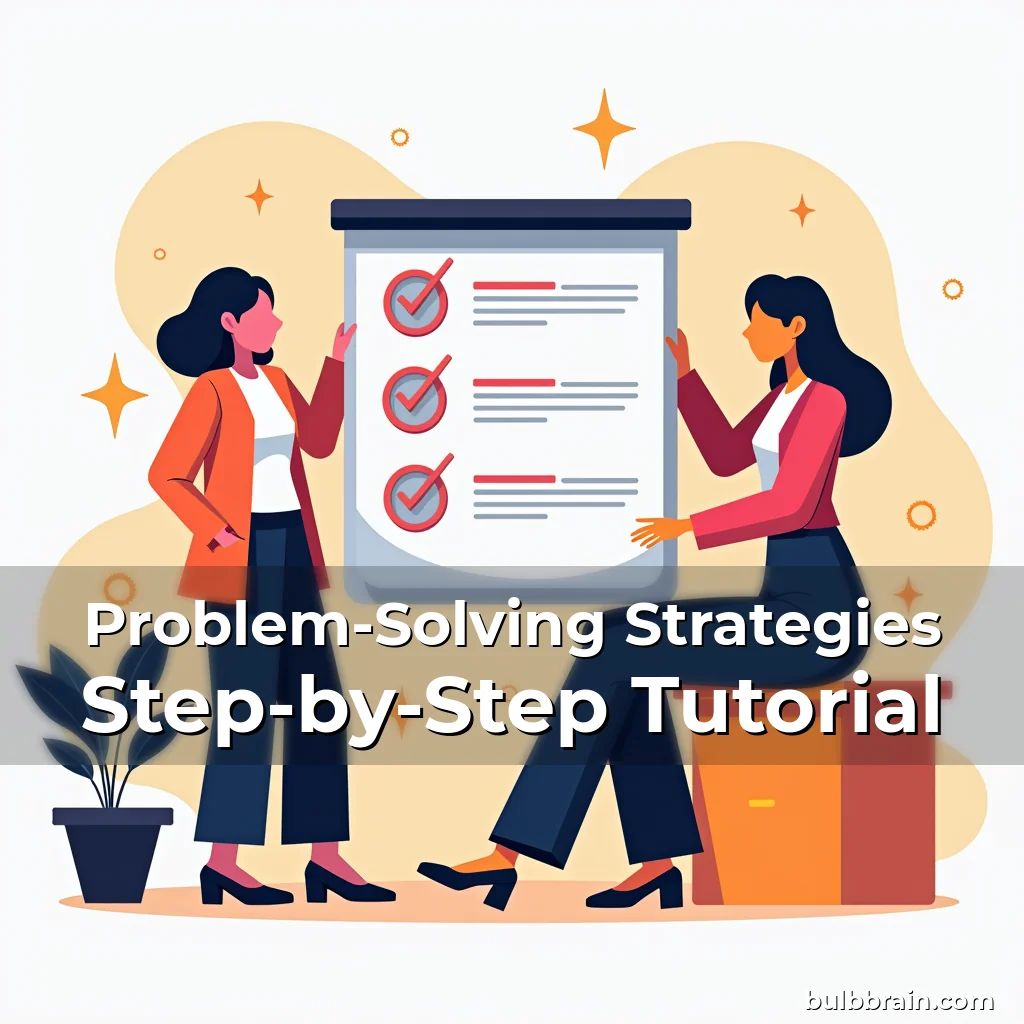
The Art of Strategic Problem Solving: Mastering Techniques That Work
In today’s fast-paced world, effective problem-solving isn’t just a skill—it’s an essential survival mechanism. From personal dilemmas to complex business challenges, mastering strategic approaches can transform how we navigate life’s obstacles.
This guide explores proven methodologies that empower individuals and teams to tackle issues systematically. Whether you’re troubleshooting technical problems or resolving interpersonal conflicts, these strategies provide clear pathways toward solutions.
Framing the Problem Effectively
Before diving into solutions, understanding the core issue is crucial. Misidentifying the problem often leads to ineffective resolutions that address symptoms rather than root causes.
Carefully defining the problem helps clarify objectives and constraints. This step involves asking questions like: What exactly needs fixing? Who is affected? And what are the current limitations?
A well-framed problem statement serves as the foundation for all subsequent steps. It ensures everyone involved has a shared understanding before exploring potential fixes.
Consider using tools like mind maps or flowcharts to visualize relationships between different elements of the challenge at hand.
Generating Creative Solutions Through Divergent Thinking
Divergent thinking encourages generating many possible ideas without immediate judgment. This approach fosters innovation by allowing free association and unconventional perspectives.
Techniques such as brainstorming sessions and lateral thinking exercises help unlock creative possibilities. These methods prioritize quantity over quality during initial idea generation phases.
Tip: Establish a safe environment where participants feel comfortable sharing even outlandish suggestions. All ideas contribute to finding optimal solutions eventually.
- Brainstorming: Gather diverse team members to generate numerous options quickly
- Lateral thinking: Approach problems from unexpected angles to discover novel solutions
- SCAMPER method: Apply seven prompts (Substitute, Combine, Adapt, Modify, Put to another use, Eliminate, Reverse) to spark new ideas
Evaluating Options Using Convergent Thinking
Once multiple alternatives exist, convergent thinking focuses on analyzing which option best addresses the identified problem. This process requires critical evaluation of each possibility.
Establish criteria for assessment based on factors like feasibility, cost-effectiveness, time requirements, and long-term impact. Weigh pros and cons objectively to avoid bias influencing decisions.
Data-driven analysis enhances decision-making accuracy. Quantitative metrics combined with qualitative assessments offer balanced viewpoints when comparing choices.
Prioritize solutions that align most closely with predefined goals while considering potential risks associated with implementation plans.
Implementing Solutions Strategically
Solution execution demands careful planning and resource allocation. A well-thought-out action plan increases chances of success significantly compared to haphazard implementations.
Create timelines outlining key milestones and assign responsibilities clearly among stakeholders. Regular check-ins ensure progress remains aligned with original objectives.
Anticipate potential roadblocks through risk management frameworks. Identify alternative courses of action for scenarios where primary plans encounter difficulties.
Maintain flexibility within structured plans—adaptability often determines whether initiatives succeed or fail under changing conditions.
Monitoring Progress and Adjusting Course
Ongoing monitoring allows early detection of deviations from expected outcomes. Continuous feedback loops facilitate timely interventions when necessary adjustments become apparent.
Use KPIs (key performance indicators) tailored specifically to your solution’s success metrics. Track these regularly to measure effectiveness against benchmarks established earlier.
When results fall below expectations, conduct root cause analyses to determine why discrepancies occurred. This insight guides corrective actions aimed at restoring desired trajectories.
Remember that adaptation doesn’t mean abandoning efforts entirely; sometimes refining tactics yields better results than starting fresh altogether.
Building Long-Term Problem-Solving Capabilities
Cultivating strong analytical skills contributes greatly to becoming proficient in solving complex issues consistently. Engage in activities that enhance logical reasoning abilities continuously.
Practice case studies involving various domains—from engineering puzzles to social policy debates—to expand versatile thinking patterns applicable across contexts.
Develop emotional intelligence alongside cognitive capabilities since both play vital roles in navigating challenging situations effectively.
Stay updated on emerging trends affecting industries relevant to your interests. New technologies frequently introduce innovative ways to resolve traditional problems efficiently.
Collaborative Approaches to Complex Challenges
Many modern problems require collective effort due to their complexity and scale. Collaborative problem-solving leverages diverse expertise available within groups working together towards common goals.
Effective collaboration relies on communication clarity, mutual respect, and active listening. Encourage open dialogue where every voice matters regardless of hierarchical positions held by contributors.
Tips for Successful Teamwork:
- Define clear roles and expectations upfront
- Utilize collaborative platforms for documentation and tracking progress
- Hold regular meetings focused solely on addressing challenges faced collectively
- Recognize contributions publicly to maintain motivation levels high among participants
Overcoming Common Obstacles in the Problem-Solving Process
Bias and preconceived notions often cloud judgment during evaluations. Recognizing these tendencies enables clearer objective assessments leading ultimately to superior decisions made confidently.
Time pressure creates urgency but shouldn’t compromise thoroughness required for meaningful resolutions. Prioritization techniques help manage workload while maintaining quality standards demanded by intricate tasks.
Lack of resources poses significant barriers unless alternative strategies are considered creatively. Exploring partnerships or leveraging existing assets smartly can overcome seemingly insurmountable hurdles successfully.
Resistance to change must be addressed proactively through transparent communication explaining benefits clearly while acknowledging concerns genuinely expressed by those impacted negatively.
Conclusion
Mastering problem-solving strategies equips individuals with powerful tools capable of transforming daunting challenges into manageable opportunities for growth and improvement.
By applying systematic approaches consistently—from accurately framing issues through implementing refined solutions—you’ll develop resilience needed to thrive amidst uncertainty characterizing contemporary environments globally.

news is a contributor at BulbBrain. We are committed to providing well-researched, accurate, and valuable content to our readers.
You May Also Like

About news
Passionate about learning, cognitive science, and helping people unlock their full potential.