
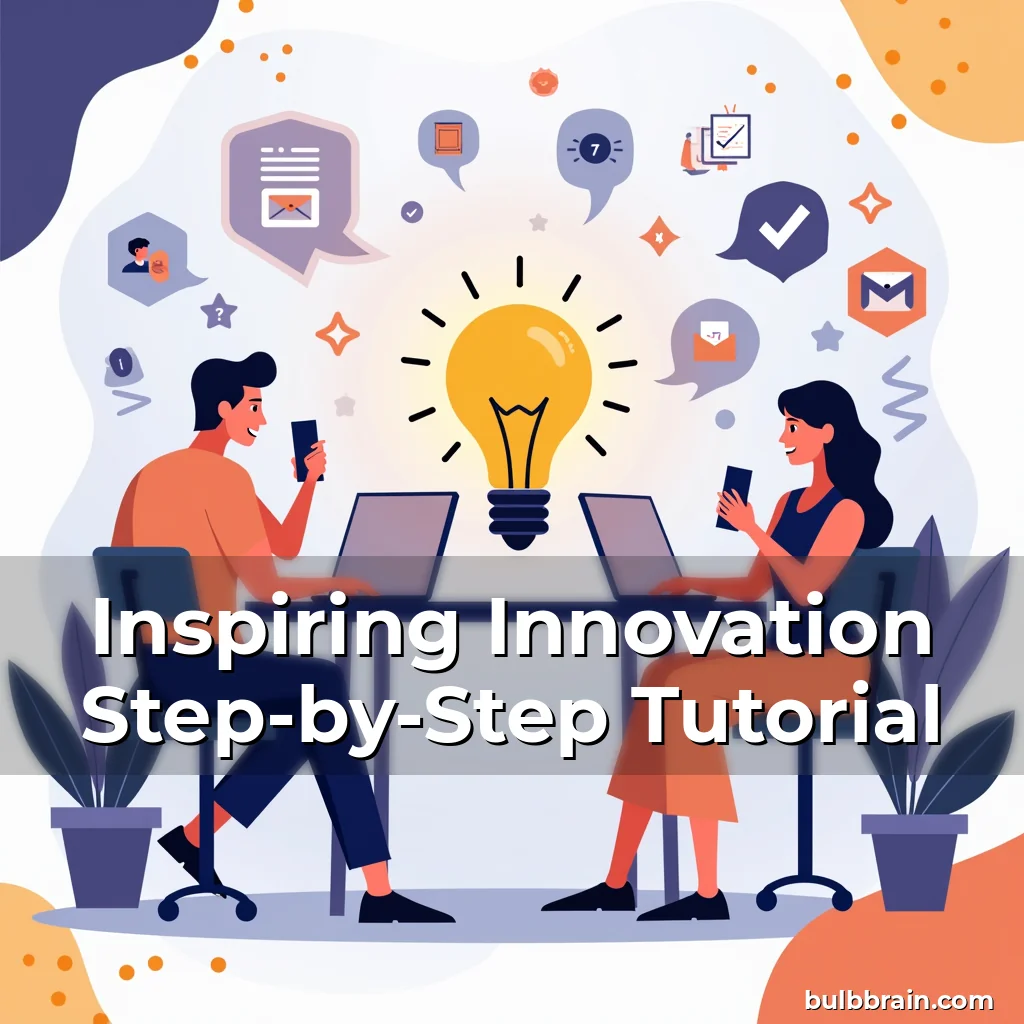
Inspiring Innovation Through Curiosity and Collaboration
Innovation is often seen as an elusive spark that only comes from the most brilliant minds, but the truth is far more accessible. It’s not limited by talent alone; rather, it thrives on curiosity, collaboration, and a willingness to challenge conventional wisdom. By fostering these qualities within our communities, we can create environments where groundbreaking ideas flourish.
The journey toward inspiring innovation begins with understanding what drives creative breakthroughs. Whether you’re part of the BulbBrain community or simply passionate about progress, exploring how innovation works can empower everyone to contribute meaningfully to shaping tomorrow’s world.
Cultivating a Mindset of Inquiry
A curious mind is the foundation upon which all great innovations are built. This mindset isn’t merely about asking questions—it involves actively seeking out new information, challenging assumptions, and embracing uncertainty as an opportunity for discovery.
Curiosity acts as both a motivator and a guidepost in problem-solving scenarios. When individuals approach challenges with open-ended inquiry instead of preconceived solutions, they unlock pathways previously hidden behind traditional thought patterns.
One effective way to nurture curiosity is through exposure to diverse perspectives. Engaging with people from different backgrounds fosters cognitive flexibility—the ability to think creatively across disciplines—and opens doors to unconventional approaches.
- Diverse teams: Research shows that groups composed of varied expertise tend to generate more innovative outcomes due to increased idea generation and reduced groupthink.
- Lifelong learning: Continuously acquiring knowledge helps maintain mental agility necessary for adapting old skills to novel situations.
Fostering Collaborative Environments
Collaboration amplifies individual creativity by allowing thoughts to merge and evolve beyond their original form. In collaborative settings, participants build upon each other’s strengths while mitigating weaknesses through shared responsibility and mutual support.
An environment conducive to teamwork requires intentional design—both physically and culturally. Open workspaces encourage spontaneous interactions, whereas inclusive policies ensure every voice contributes equally regardless of hierarchy levels.
Encouraging cross-functional projects further enhances innovation potential. These initiatives bring together experts who might otherwise never interact, leading to unexpected synergies when combining disparate fields such as technology with artistry or science with storytelling.
Case Study: The Impact of Cross-Disciplinary Teams
Data from various industries indicates that interdisciplinary collaborations yield higher rates of patent filings compared to siloed departments. For instance, tech companies integrating UX designers early in product development cycles report significantly improved user satisfaction metrics post-launch.
This phenomenon occurs because blending different skill sets leads to holistic problem-solving strategies. A software engineer working alongside psychologists may develop applications better attuned to human behavior than those designed solely based on technical feasibility.
Harnessing Failure as Fuel for Growth
Failure is frequently perceived negatively, yet it serves as essential feedback mechanism in any innovation process. Embracing mistakes without fear encourages experimentation at scale—an attitude crucial for achieving transformative results over time.
Creating safe spaces where failure doesn’t equate to personal shortcomings transforms setbacks into stepping stones. Organizations implementing “fail forward” philosophies typically see accelerated iteration cycles since employees feel empowered to test bold hypotheses repeatedly until success emerges.
It’s also vital to document lessons learned during failed attempts systematically. Maintaining records ensures valuable insights aren’t lost amidst frustration while providing future innovators access to historical data useful for avoiding similar pitfalls later on.
Empowering Individuals Through Resources
Access to appropriate resources plays a pivotal role in nurturing innovative thinkers. Tools ranging from prototyping kits to digital platforms facilitate rapid ideation phases critical for turning abstract concepts into tangible prototypes quickly.
Educational institutions have recognized this need by incorporating maker spaces equipped with 3D printers, microcontrollers, and coding tools into curricula worldwide. Such facilities democratize invention processes making them available even to those lacking formal engineering training initially.
Moreover, online courses now offer flexible learning options covering everything from AI fundamentals to sustainable architecture principles—all aimed at empowering self-directed learners pursuing niche interests relevant today’s evolving landscape.
Building Communities Around Shared Goals
Communities centered around common objectives provide fertile ground for sustained innovation efforts. They establish networks connecting enthusiasts, professionals, and academics who collectively push boundaries pushing past what was once considered possible.
Platforms dedicated exclusively to sharing inventions—from hardware startups to open-source software projects—allow members to collaborate globally despite geographical limitations. These virtual ecosystems thrive on reciprocal exchange promoting continuous improvement among participants irrespective of location barriers.
Local meetups complement global reach effectively too. Regular gatherings enable face-to-face interaction strengthening relationships formed digitally while reinforcing sense belonging integral long-term engagement commitment towards collective missions.
Measuring Progress Toward Innovative Outcomes
Quantifying impact remains challenging given nature intangible contributions associated innovation however establishing benchmarks enables tracking growth trajectory objectively measuring effectiveness interventions implemented thus far.
Metric frameworks tailored specifically innovation management include indicators like number patents filed percentage successful prototype iterations rate adoption new methodologies etc..
Regular assessments help identify areas requiring enhancement ensuring sustainability momentum achieved through consistent effort invested maintaining high standards excellence demanded modern era complexities demands.
Navigating Ethical Considerations in Innovation
As technologies advance rapidly ethical dilemmas inevitably arise demanding careful consideration before proceeding full-scale implementation. Balancing progress against societal well-being necessitates transparent dialogue involving stakeholders affected decisions made.
Frameworks guiding responsible innovation emphasize inclusivity accessibility fairness ensuring benefits distributed equitably avoiding exacerbating existing inequalities through poorly conceived implementations potentially harmful marginalized populations.
Engaging ethicists legal advisors environmental scientists early stages development lifecycle allows preemptively addressing concerns preventing costly revisions down road saving resources rework correcting course midstream.
Conclusion
In conclusion, inspiring innovation requires deliberate cultivation of curiosity-driven mindsets paired with supportive collaborative structures enabling free flow exchange ideas transforming theoretical possibilities practical realities impacting lives positively everywhere.
By prioritizing fail-safe cultures resource availability communal solidarity ethical integrity we lay groundwork robust framework propelling humanity toward unprecedented heights achievement continuously striving better versions ourselves future generations inherit legacy worth celebrating honoring.

news is a contributor at BulbBrain. We are committed to providing well-researched, accurate, and valuable content to our readers.
You May Also Like
About news
Passionate about learning, cognitive science, and helping people unlock their full potential.