
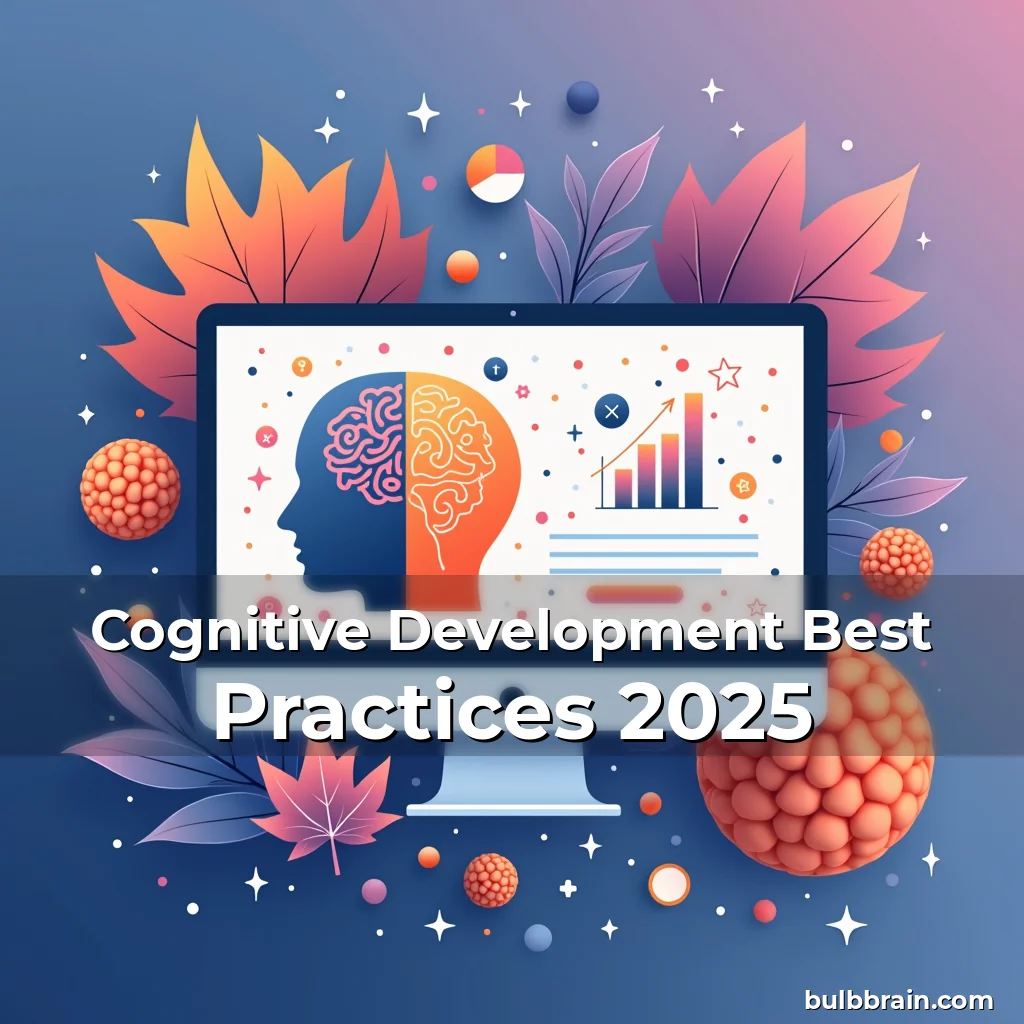
Cognitive Development Best Practices 2025
In an era defined by rapid technological advancement and information overload, cognitive development has emerged as a critical area of study and practice. The brain’s ability to process, analyze, and retain information is under constant pressure from digital distractions, shifting educational paradigms, and evolving workplace demands.
The need for intentional strategies to enhance cognitive functions—from memory retention to problem-solving—has never been greater. This guide explores cutting-edge research, practical techniques, and scientific frameworks that can help individuals optimize their mental capacities in today’s complex world.
The Foundations of Cognitive Growth
Cognitive development refers to the growth of intellectual abilities such as attention span, logical reasoning, language acquisition, and executive function over time. These foundational skills form the basis for academic achievement, professional success, and personal well-being throughout life.
From early childhood through adulthood, the human brain undergoes distinct developmental stages characterized by heightened plasticity during certain periods. Understanding these phases enables tailored approaches to learning and skill refinement at any age.
Neuroplasticity—the brain’s capacity to reorganize itself by forming new neural connections—is central to cognitive enhancement efforts. Activities that stimulate synaptic pathways contribute significantly to long-term intellectual resilience.
Environmental factors play a crucial role alongside genetic predispositions when considering individual differences in cognitive potential. Stimulating environments rich in sensory input, social interaction, and varied experiences foster optimal brain development across all ages.
Modern Research Insights into Brain Functioning
Recent neuroscience breakthroughs have illuminated how everyday activities influence cognitive processes on a neurological level. Functional MRI studies reveal that consistent mental engagement strengthens prefrontal cortex activity linked to decision-making and self-regulation.
Researchers now emphasize the importance of spaced repetition as a superior memorization technique compared to cramming sessions. Distributed practice intervals lead to better long-term recall due to enhanced consolidation mechanisms within hippocampal networks.
Digital detox practices show measurable improvements in working memory performance after just two weeks of reduced screen exposure. Limiting multitasking behaviors also enhances concentration levels and reduces mental fatigue associated with divided attention states.
Mindfulness meditation programs demonstrate structural changes in brain regions responsible for emotional regulation and attention control. Regular practitioners exhibit increased gray matter density in areas related to cognitive flexibility and impulse inhibition.
- Active Recall: Actively retrieving information rather than passively reviewing notes leads to deeper encoding and stronger retention.
- Interleaving: Alternating between different topics or skill sets improves mastery and application across contexts.
- Pomodoro Technique: Working in focused 25-minute increments with regular breaks enhances sustained attention without burnout.
- Dual Coding: Combining verbal descriptions with visual representations accelerates comprehension and retention rates.
Lifelong Learning Strategies for Optimal Cognition
Adopting lifelong learning habits creates lasting cognitive benefits that extend beyond immediate knowledge gain. Continuous education maintains neuronal connectivity and prevents intellectual stagnation in aging populations.
Formal courses provide structured frameworks but informal methods like reading diverse materials, engaging in debates, or mastering new technologies offer equally valuable cognitive stimulation. Mixing various learning formats maximizes neurobiological adaptation possibilities.
A growing body of evidence supports the concept of neurobics—exercises designed to challenge the brain in novel ways. Simple tasks like using your non-dominant hand to brush teeth activate alternate neural pathways promoting continued brain health.
Varying daily routines introduces unpredictability that forces adaptive thinking patterns. For example, changing commute routes stimulates spatial awareness while dining with unfamiliar people encourages perspective-taking abilities.
Nutritional Considerations for Mental Clarity
Optimal cognitive function relies heavily on nutritional support provided through balanced diets and targeted supplementation when necessary. Certain nutrients specifically affect neurotransmitter production and overall brain efficiency.
Omega-3 fatty acids found in fatty fish, flaxseeds, and walnuts play vital roles in maintaining cell membrane integrity within neurons. They are particularly beneficial for preventing cognitive decline associated with normal aging processes.
Antioxidants present in berries, dark chocolate, and leafy greens combat oxidative stress that damages brain cells over time. Including these foods regularly may reduce risks of developing neurodegenerative conditions later in life.
Vitamin B12 deficiency has been strongly correlated with impaired cognitive function, especially among vegetarians and older adults who might not get adequate dietary intake naturally. Supplementation can correct deficiencies quickly improving mental clarity and processing speed.
Physical Activity and Its Impact on Intellectual Capacity
Regular physical exercise does far more than improve cardiovascular fitness—it actively promotes brain health by increasing blood flow and oxygen supply to cerebral tissues. Exercise-induced endorphins boost mood which indirectly supports cognitive performance.
Aerobic exercises like running, swimming, or cycling increase hippocampus volume, directly enhancing memory capabilities. These activities trigger growth factor release which stimulates neurogenesis in key learning centers of the brain.
Strength training also offers cognitive benefits despite being less aerobic. Lifting weights requires coordination, balance, and mental calculation—all contributing to improved executive functioning and response times.
Yoga combines physical movement with mindfulness elements offering dual advantages for both bodily wellness and mental acuity. The meditative aspects of yoga practice correlate with enhanced attention spans and reduced anxiety symptoms detrimental to focus.
Social Engagement as Cognitive Fuel
Human brains evolved through millennia of social interaction making interpersonal relationships essential fuel sources for cognitive maintenance and growth. Meaningful conversations engage higher-order thinking processes unlike passive media consumption.
Participating in group activities activates mirror neuron systems involved in understanding others’ perspectives. This empathy development translates into better problem-solving abilities applicable across professional and personal domains.
Serving in team-based projects challenges individuals to communicate effectively, negotiate differing viewpoints, and synthesize collective intelligence—skills directly transferable to creative problem-solving scenarios.
Maintaining strong social bonds provides emotional stability reducing cortisol levels known to impair memory formation and retrieval capabilities when chronically elevated.
Tech Integration in Cognitive Enhancement
While technology often distracts from deep thinking, strategically selected tools can actually augment cognitive development when used mindfully. Educational apps offer personalized learning paths adapting difficulty based on real-time progress tracking.
Brain-training games targeting specific skills like reaction speed, pattern recognition, or working memory show promise when combined with other cognitive enrichment methods. However, results vary widely depending on game quality and user commitment levels.
Virtual reality simulations create immersive learning environments where users can experience abstract concepts concretely—enhancing conceptual understanding through experiential learning modalities.
Digital note-taking applications facilitate organization while encouraging active summarization—a powerful technique proven to strengthen long-term retention when practiced consistently.
The Future of Cognitive Advancement
Emerging fields like neuroengineering and bioinformatics are reshaping our understanding of what’s possible regarding human cognition. Non-invasive brain stimulation techniques already show potential for treating ADHD and Alzheimer’s disease while enhancing healthy individuals’ mental faculties.
Gene-editing advancements could eventually allow customization of cognitive traits though ethical concerns remain significant hurdles requiring careful consideration before widespread implementation becomes feasible.
Artificial intelligence integration presents exciting opportunities for creating adaptive tutoring systems capable of identifying individual learning styles instantly adjusting instructional approaches accordingly.
As we move toward 2025, maintaining curiosity and openness to new discoveries will be crucial for maximizing personal cognitive growth amid accelerating scientific progress impacting every aspect of modern living.
Continual exploration of innovative methods combined with traditional wisdom promises unprecedented achievements in optimizing mental capabilities for future generations.
Conclusion
Cognitive development remains an ever-evolving field shaped continuously by new discoveries and technological innovations. By integrating scientifically validated strategies with mindful lifestyle choices, individuals can cultivate remarkable mental agility adaptable to contemporary challenges.
Embracing a holistic approach encompassing nutrition, physical activity, social connection, deliberate practice, and conscious tech usage forms the backbone of sustainable cognitive enhancement. Remaining committed to lifelong learning ensures perpetual growth aligning personal potential with emerging global realities.

news is a contributor at BulbBrain. We are committed to providing well-researched, accurate, and valuable content to our readers.
You May Also Like
About news
Passionate about learning, cognitive science, and helping people unlock their full potential.