
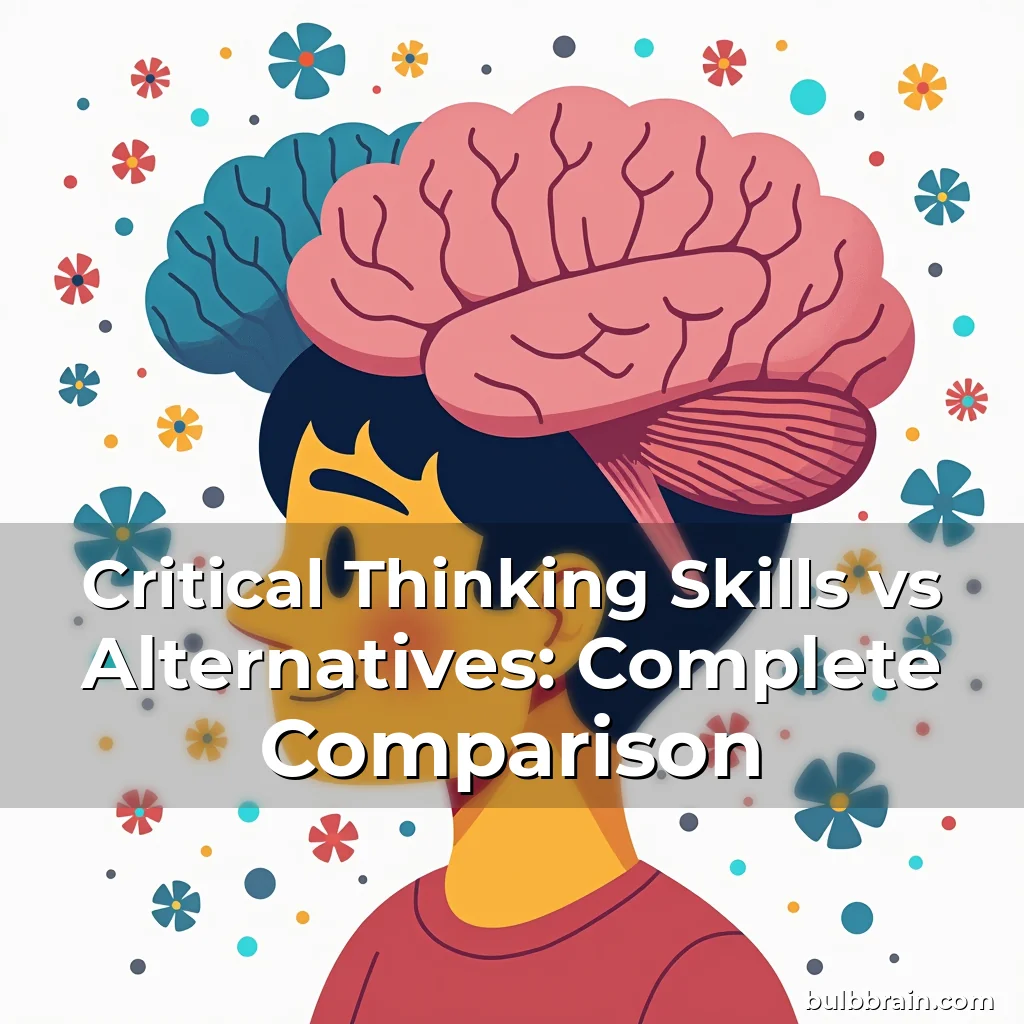
Critical Thinking Skills vs Alternatives: Complete Comparison
In an era where information is abundant yet often misleading, mastering critical thinking skills has become essential for navigating complex decisions and evaluating truth from noise. While many equate critical thinking with general intelligence or intuition, its true value lies in structured analysis, logical evaluation, and open-minded skepticism.
This guide explores how these vital cognitive tools differ from alternatives such as creative problem-solving, emotional intelligence, and even intuitive decision-making. By understanding their distinctions, you can better apply each skill set appropriately across personal, academic, and professional contexts.
The Core Principles of Critical Thinking
Critical thinking begins with questioning assumptions rather than accepting them at face value. This foundational principle encourages individuals to examine the validity of claims before forming conclusions.
It also involves recognizing biases that influence perception, whether they stem from cultural background, personal experiences, or ingrained beliefs. Awareness of these unconscious filters is crucial for objective judgment.
A key aspect of critical thinking is evidence-based reasoning. Instead of relying solely on anecdotal accounts or popular opinion, practitioners prioritize empirical data and verifiable sources when making assessments.
- Evidence Evaluation: Assessing the credibility, relevance, and reliability of information before drawing conclusions.
- Analytical Reasoning: Breaking down complex problems into smaller components to understand relationships between variables.
- Skeptical Inquiry: Maintaining doubt until sufficient proof supports any claim or theory being considered.
Distinguishing Critical Thinking From Creative Problem-Solving
While both processes involve analyzing situations, they operate under different objectives. Critical thinking focuses primarily on evaluating existing ideas whereas creativity centers around generating new ones.
Creative solutions often emerge from divergent thinking patterns, allowing exploration beyond conventional boundaries. In contrast, critical thinking employs convergent strategies aimed at refining and validating proposed solutions.
However, effective innovation requires balancing both approaches. Many breakthroughs result from applying rigorous analytical methods to novel concepts initially developed through creative brainstorming sessions.
Comparative Analysis With Emotional Intelligence
Emotional intelligence refers to identifying, understanding, and managing emotions effectively within oneself and others. Though related to self-awareness, it differs significantly from critical thinking’s primary goal of logical assessment.
Whereas emotional intelligence emphasizes empathy and social awareness, critical thinking prioritizes intellectual rigor over interpersonal sensitivity. Both are valuable but serve distinct functions in daily life scenarios.
Combining these abilities can lead to more balanced decision-making. For example, while critically evaluating facts remains paramount during negotiations, acknowledging emotional cues helps navigate discussions more smoothly.
Contrasting Intuitive Decision-Making Approaches
Intuition relies heavily on gut feelings formed through subconscious pattern recognition. Although quick responses may seem advantageous, they lack transparency compared to deliberate critical thought processes.
Critics argue that reliance on instinct increases vulnerability to cognitive biases affecting accuracy. However, experts suggest that well-developed intuition stems from accumulated experience paired with reflective practice.
Striking balance between intuition and systematic analysis proves beneficial especially in high-pressure environments requiring rapid judgments without compromising quality outcomes.
Practical Applications Across Different Fields
Business professionals leverage critical thinking daily when interpreting market trends, assessing financial reports, and strategizing competitive advantages. Their ability to discern valid insights amidst vast amounts of data determines organizational success.
In healthcare settings, medical practitioners utilize diagnostic reasoning based on symptoms observed versus preconceived notions about patient conditions. Accurate diagnosis hinges upon methodically ruling out possibilities using established protocols.
Academic researchers depend extensively on peer review mechanisms ensuring published work meets stringent standards of scientific integrity before reaching wider audiences.
Developing Stronger Analytical Capabilities
Growth in critical thinking capacity starts with cultivating curiosity towards unfamiliar topics. Actively seeking diverse perspectives fosters openness necessary for unbiased evaluations.
Regular engagement with challenging material strengthens neural pathways associated with higher-order cognition. Reading scholarly articles or participating in debate clubs exposes individuals to sophisticated argumentation techniques.
Mindfulness practices enhance metacognitive awareness by encouraging reflection after making decisions. Recognizing instances where assumptions influenced choices promotes continuous learning cycles.
Common Pitfalls To Avoid When Practicing Critical Thinking
Fallacies such as confirmation bias occur frequently when people selectively gather information supporting predetermined views instead of considering contradictory evidence objectively.
Overgeneralization represents another common mistake involving application of limited observations to broader populations without adequate justification.
Lack of contextual understanding leads to misinterpretations; failing to consider relevant factors surrounding issues results in flawed analyses regardless of intent behind initial inquiries.
Measuring Progress And Mastery Levels
Evaluating improvement typically involves tracking consistency in applying core principles across varied circumstances. Successful thinkers demonstrate adaptability maintaining effectiveness despite changing environmental demands.
Self-assessment checklists help identify areas needing development by highlighting recurring errors or hesitation during complex tasks requiring deep scrutiny.
Seeking feedback from peers or mentors provides external validation regarding strengths and weaknesses previously unrecognized by individual observers alone.
Conclusion
Critical thinking stands apart due to its emphasis on disciplined inquiry grounded in logic rather than emotion-driven reactions or impulsive judgments.
To cultivate proficiency, consistently challenge yourself by examining arguments presented in media consumption routines and engage actively with opposing viewpoints during conversations aiming toward mutual comprehension.
“`
Critical Thinking Skills vs Alternatives: Complete Comparison
In an era where information is abundant yet often misleading, mastering critical thinking skills has become essential for navigating complex decisions and evaluating truth from noise. While many equate critical thinking with general intelligence or intuition, its true value lies in structured analysis, logical evaluation, and open-minded skepticism.
This guide explores how these vital cognitive tools differ from alternatives such as creative problem-solving, emotional intelligence, and even intuitive decision-making. By understanding their distinctions, you can better apply each skill set appropriately across personal, academic, and professional contexts.
The Core Principles of Critical Thinking
Critical thinking begins with questioning assumptions rather than accepting them at face value. This foundational principle encourages individuals to examine the validity of claims before forming conclusions.
It also involves recognizing biases that influence perception, whether they stem from cultural background, personal experiences, or ingrained beliefs. Awareness of these unconscious filters is crucial for objective judgment.
A key aspect of critical thinking is evidence-based reasoning. Instead of relying solely on anecdotal accounts or popular opinion, practitioners prioritize empirical data and verifiable sources when making assessments.
- Evidence Evaluation: Assessing the credibility, relevance, and reliability of information before drawing conclusions.
- Analytical Reasoning: Breaking down complex problems into smaller components to understand relationships between variables.
- Skeptical Inquiry: Maintaining doubt until sufficient proof supports any claim or theory being considered.
Distinguishing Critical Thinking From Creative Problem-Solving
While both processes involve analyzing situations, they operate under different objectives. Critical thinking focuses primarily on evaluating existing ideas whereas creativity centers around generating new ones.
Creative solutions often emerge from divergent thinking patterns, allowing exploration beyond conventional boundaries. In contrast, critical thinking employs convergent strategies aimed at refining and validating proposed solutions.
However, effective innovation requires balancing both approaches. Many breakthroughs result from applying rigorous analytical methods to novel concepts initially developed through creative brainstorming sessions.
Comparative Analysis With Emotional Intelligence
Emotional intelligence refers to identifying, understanding, and managing emotions effectively within oneself and others. Though related to self-awareness, it differs significantly from critical thinking’s primary goal of logical assessment.
Whereas emotional intelligence emphasizes empathy and social awareness, critical thinking prioritizes intellectual rigor over interpersonal sensitivity. Both are valuable but serve distinct functions in daily life scenarios.
Combining these abilities can lead to more balanced decision-making. For example, while critically evaluating facts remains paramount during negotiations, acknowledging emotional cues helps navigate discussions more smoothly.
Contrasting Intuitive Decision-Making Approaches
Intuition relies heavily on gut feelings formed through subconscious pattern recognition. Although quick responses may seem advantageous, they lack transparency compared to deliberate critical thought processes.
Critics argue that reliance on instinct increases vulnerability to cognitive biases affecting accuracy. However, experts suggest that well-developed intuition stems from accumulated experience paired with reflective practice.
Striking balance between intuition and systematic analysis proves beneficial especially in high-pressure environments requiring rapid judgments without compromising quality outcomes.
Practical Applications Across Different Fields
Business professionals leverage critical thinking daily when interpreting market trends, assessing financial reports, and strategizing competitive advantages. Their ability to discern valid insights amidst vast amounts of data determines organizational success.
In healthcare settings, medical practitioners utilize diagnostic reasoning based on symptoms observed versus preconceived notions about patient conditions. Accurate diagnosis hinges upon methodically ruling out possibilities using established protocols.
Academic researchers depend extensively on peer review mechanisms ensuring published work meets stringent standards of scientific integrity before reaching wider audiences.
Developing Stronger Analytical Capabilities
Growth in critical thinking capacity starts with cultivating curiosity towards unfamiliar topics. Actively seeking diverse perspectives fosters openness necessary for unbiased evaluations.
Regular engagement with challenging material strengthens neural pathways associated with higher-order cognition. Reading scholarly articles or participating in debate clubs exposes individuals to sophisticated argumentation techniques.
Mindfulness practices enhance metacognitive awareness by encouraging reflection after making decisions. Recognizing instances where assumptions influenced choices promotes continuous learning cycles.
Common Pitfalls To Avoid When Practicing Critical Thinking
Fallacies such as confirmation bias occur frequently when people selectively gather information supporting predetermined views instead of considering contradictory evidence objectively.
Overgeneralization represents another common mistake involving application of limited observations to broader populations without adequate justification.
Lack of contextual understanding leads to misinterpretations; failing to consider relevant factors surrounding issues results in flawed analyses regardless of intent behind initial inquiries.
Measuring Progress And Mastery Levels
Evaluating improvement typically involves tracking consistency in applying core principles across varied circumstances. Successful thinkers demonstrate adaptability maintaining effectiveness despite changing environmental demands.
Self-assessment checklists help identify areas needing development by highlighting recurring errors or hesitation during complex tasks requiring deep scrutiny.
Seeking feedback from peers or mentors provides external validation regarding strengths and weaknesses previously unrecognized by individual observers alone.
Conclusion
Critical thinking stands apart due to its emphasis on disciplined inquiry grounded in logic rather than emotion-driven reactions or impulsive judgments.
To cultivate proficiency, consistently challenge yourself by examining arguments presented in media consumption routines and engage actively with opposing viewpoints during conversations aiming toward mutual comprehension.
“`

news is a contributor at BulbBrain. We are committed to providing well-researched, accurate, and valuable content to our readers.
You May Also Like

About news
Passionate about learning, cognitive science, and helping people unlock their full potential.