
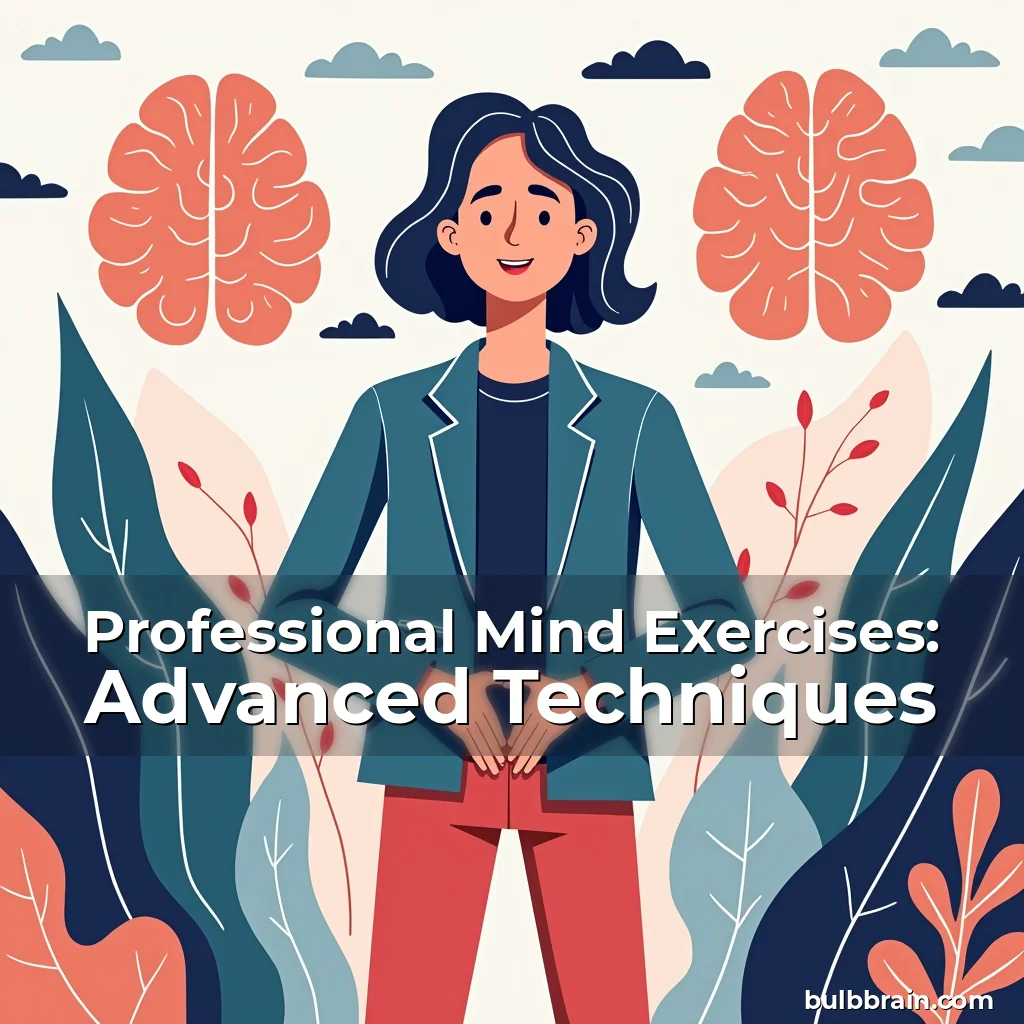
The Cognitive Gym: Mastering Mental Fitness Through Daily Practice
In an age where mental acuity is as crucial as physical health, modern individuals are increasingly turning to structured mind exercises to sharpen cognitive functions. This comprehensive exploration delves into advanced techniques that transcend basic memory drills and puzzles.
The human brain remains our most powerful tool, yet its potential often goes untapped without deliberate training. By integrating scientific principles with practical applications, these exercises offer tangible benefits beyond mere intellectual engagement.
Fundamental Neural Stimulation
Mind exercises begin with understanding how neural pathways develop through repetition and pattern recognition. Engaging regularly in focused tasks builds stronger connections between neurons.
This phenomenon, known as neuroplasticity, allows the brain to reorganize itself by forming new neural connections throughout life. These changes enhance cognitive flexibility and adaptability to novel situations.
Simple activities like crossword puzzles activate regions responsible for language processing while Sudoku challenges spatial reasoning abilities. Both exercises provide targeted stimulation without overwhelming the brain’s capacity.
A study published in the Journal of Neuroscience found participants who engaged in daily puzzle-solving showed increased gray matter density in areas associated with problem-solving skills after three months of consistent practice.
- Cognitive Load Management: Balancing difficulty levels ensures optimal challenge without causing frustration. Gradually increasing complexity maintains motivation and effectiveness.
- Sensory Integration: Combining visual, auditory, and tactile stimuli during exercises enhances information retention and application across different contexts.
Varying exercise types prevents cognitive fatigue and promotes holistic development. Mixing analytical tasks with creative ones creates synergistic effects on overall mental agility.
Consistency plays a critical role in maximizing long-term benefits. Regular sessions, even brief ones, contribute significantly to maintaining and improving cognitive function over time.
Advanced Memory Enhancement Strategies
Beyond traditional rote memorization methods, contemporary research highlights innovative approaches to strengthen working memory and recall capabilities. These strategies leverage psychological principles to optimize learning processes.
One effective technique involves creating vivid mental imagery linked to information being remembered. This method capitalizes on the brain’s natural inclination towards visual processing.
Implementing mnemonic devices such as the Method of Loci can dramatically increase recall efficiency. This ancient Greek technique utilizes spatial visualization to organize complex data structures mentally.
Research from Harvard University indicates that individuals trained in these memory enhancement techniques show improved performance on standardized tests requiring rapid information retrieval.
An alternative approach focuses on chunking information into meaningful units rather than trying to remember isolated facts. This segmentation reduces cognitive load and improves comprehension.
Combining these techniques with spaced repetition systems maximizes long-term retention. Digital tools now facilitate personalized review schedules based on individual forgetting curves.
Practicing active recall instead of passive reading engages deeper cognitive processes essential for lasting knowledge acquisition. Testing oneself frequently reinforces neural pathways associated with memory consolidation.
Emotional Intelligence Training
While many focus solely on logical cognition, developing emotional intelligence through specific mental exercises offers equally significant benefits. Understanding and managing emotions contributes to better decision-making and interpersonal relationships.
Regular mindfulness meditation has been shown to increase grey matter volume in brain regions related to emotion regulation. This physiological change correlates with enhanced self-awareness and empathy levels.
Engaging in perspective-taking exercises helps cultivate compassion and reduce biases. Imagining situations from others’ viewpoints strengthens social bonds and conflict resolution skills.
A meta-analysis published in Psychological Science demonstrated that individuals practicing regular emotional intelligence training exhibit lower stress responses and higher job satisfaction rates.
Incorporating gratitude journaling into daily routines rewires thought patterns toward positive reinforcement. Documenting daily appreciations trains the brain to notice and value constructive experiences.
Role-playing scenarios allow safe experimentation with various emotional states. This practice builds resilience against negative affect and fosters adaptive coping mechanisms.
Creative Thinking Development
Nurturing creativity requires deliberate practice in divergent thinking and idea generation. Structured exercises help overcome mental blocks that stifle innovation and problem-solving capacities.
Free association games encourage exploring unexpected connections between seemingly unrelated concepts. This process mimics how the brain generates novel solutions to complex problems.
Brainstorming sessions benefit from implementing constraints rather than eliminating them. Limitations actually fuel creative breakthroughs by forcing non-linear thinking.
The SCAMPER technique provides a systematic framework for generating innovations by applying seven fundamental operations to existing ideas or products.
Exposure to diverse cultural perspectives expands cognitive frameworks, allowing for richer interpretations of familiar subjects. Travel literature and international media serve as excellent sources for this kind of exposure.
Keeping an idea journal captures spontaneous thoughts before they fade. Reviewing entries later often reveals hidden patterns or promising avenues worth pursuing further.
Collaborative ideation sessions create synergy effects where group dynamics produce outcomes unattainable individually. Diverse team compositions particularly enhance creative output.
Focus & Attention Refinement
Honing attentional control through specialized exercises leads to remarkable improvements in concentration and task efficiency. In today’s distraction-filled environment, this skill becomes especially vital.
Beginning with simple breathing exercises establishes foundational awareness of present-moment sensations. This serves as a gateway to more complex attentional training practices.
Using the Pomodoro Technique divides work periods into manageable intervals separated by rest breaks, preventing burnout while maintaining productivity levels.
Dual-task training simultaneously demands attention in two distinct domains, strengthening executive functioning capabilities. Examples include listening to audiobooks while solving math problems.
Tai Chi Chuan incorporates slow, controlled movements that require sustained focus. Its meditative aspects complement the physical benefits in promoting mental clarity.
Selective attention exercises involve identifying specific targets amidst distracting elements, similar to the classic “spot-the-difference” games but applied to real-world scenarios.
Training the brain to filter out irrelevant information improves both academic performance and professional success. It enables efficient prioritization of tasks and resources.
Critical Thinking Fortification
Developing robust critical thinking skills empowers individuals to analyze information objectively and make well-reasoned decisions. Targeted mental exercises accelerate this developmental process.
Argument mapping visually represents logical structures, helping identify fallacies and inconsistencies within reasoning processes. This technique clarifies complex arguments at a glance.
Evaluating news articles using predefined criteria teaches discernment in distinguishing factual reporting from biased narratives. This ability is crucial in today’s digital landscape filled with misinformation.
Debates and Socratic questioning engage high-order cognitive functions necessary for nuanced analysis. Practicing these dialogues sharpens argument construction and refutation skills.
Recognizing logical fallacies through pattern identification trains the mind to detect flawed reasoning automatically. Common errors like ad hominem attacks become easily identifiable with sufficient practice.
Case studies involving ethical dilemmas promote moral reasoning and decision-making under uncertainty. These exercises prepare individuals for navigating complex real-world choices.
Reflective journaling after making important decisions facilitates metacognition, revealing underlying assumptions that may have influenced judgment processes.
Cognitive Resilience Building
Constructing mental fortitude against cognitive decline begins with proactive training regimens targeting executive functions. These strategies prove particularly beneficial for aging populations.
Working memory challenges gradually escalate in difficulty, reinforcing the brain’s capacity to hold and manipulate information effectively. Simple card games evolve into complex multi-step sequences over time.
Speed reading exercises condition the eyes to process text faster while maintaining comprehension levels. Specialized techniques emphasize peripheral vision utilization and eye movement optimization.
Memory palace training develops elaborate internal structures for organizing vast amounts of information. This method relies heavily on spatial visualization and narrative associations.
Puzzles that combine logic with linguistic elements, such as crosswords or cryptic clues, stimulate multiple brain regions simultaneously. This multidimensional engagement boosts overall cognitive flexibility.
Strategic board games demand foresight and contingency planning, enhancing planning abilities and risk assessment skills. Chess and Go exemplify games that challenge long-term thinking.
Regular physical exercise complements mental workouts by increasing cerebral blood flow and supporting neuronal growth. Aerobic activities appear most beneficial for cognitive preservation.
Integrated Mind Exercise Regimen
Create a balanced routine incorporating various cognitive domains ensures comprehensive mental development. A well-rounded program addresses multiple facets of intellectual capability.
Begin each session with a warm-up activity focusing on attention and presence. Short breathing exercises or progressive muscle relaxation prepare the brain for subsequent challenges.
Structure the core portion around alternating between analytical and creative tasks. For example, solve a mathematics problem followed by sketching abstract shapes based on random prompts.
Include periodic reviews of previously learned material to reinforce retention. Spaced repetition algorithms determine optimal timing for revisiting key concepts.
Conclude each session with reflective practices examining what was accomplished and areas needing improvement. This self-assessment phase completes the learning cycle effectively.
Adjust the regimen periodically according to personal progress and changing needs. Flexibility in the program ensures continued relevance and effectiveness over extended use.
Monitor progress through objective measures whenever possible. Keeping track of completion times, accuracy rates, and subjective experience ratings provides valuable feedback for refinement.
Conclusion
Mastering mental fitness requires commitment to ongoing development across multiple dimensions. The described exercises represent proven methods backed by neuroscience research.
By consistently applying these strategies, individuals can achieve measurable improvements in cognitive performance and emotional stability. The journey toward mental excellence unfolds incrementally through disciplined practice.

news is a contributor at BulbBrain. We are committed to providing well-researched, accurate, and valuable content to our readers.
You May Also Like
About news
Passionate about learning, cognitive science, and helping people unlock their full potential.