
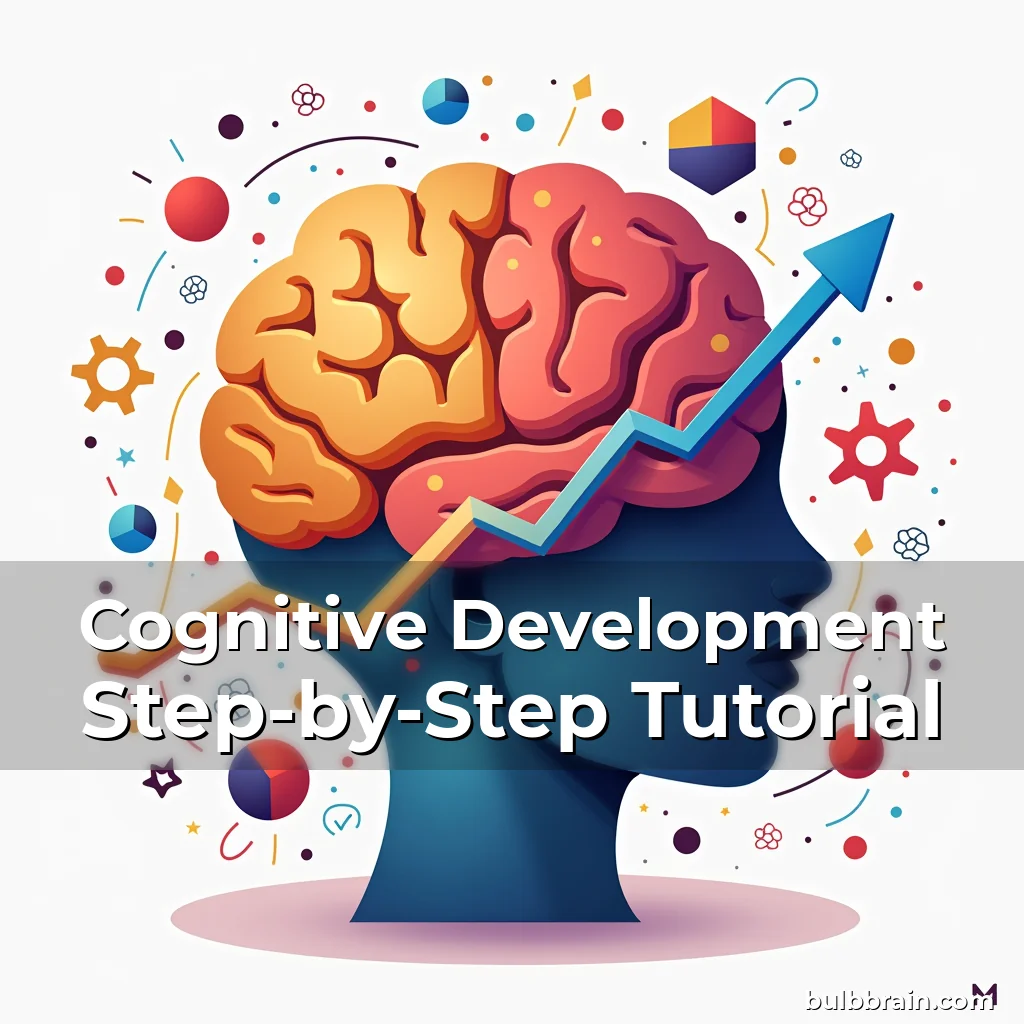
The Evolutionary Journey of Cognitive Growth: A Deep Dive into Human Mental Advancement
In an era defined by rapid technological advancements and information overload, understanding cognitive development has never been more crucial. This intricate process shapes how we think, learn, remember, reason, and solve problems—skills that are essential for navigating both our personal lives and professional landscapes.
The study of cognitive development spans across disciplines including psychology, neuroscience, education, and artificial intelligence research. It’s not merely about memorizing facts; rather, it encompasses the dynamic transformation of mental capacities from infancy through adulthood.
Fundamental Foundations: Building Blocks of Early Cognitive Skills
From birth, infants begin their remarkable journey towards cognitive mastery through simple sensory experiences. Their developing brains rapidly form neural connections as they interact with their environment, laying down pathways that will influence future learning capabilities.
These early interactions include visual tracking of moving objects, recognizing familiar faces, and responding to sounds. Such seemingly basic functions represent complex neurological processes occurring within the infant brain at an astonishing rate.
A critical period exists during which exposure to stimuli significantly impacts long-term cognitive outcomes. Research indicates that enriched environments during these early years can enhance memory formation and problem-solving abilities later in life.
- Sensory stimulation: Engaging multiple senses simultaneously strengthens neural networks responsible for perception and interpretation.
- Interactive play: Simple games involving object manipulation help develop spatial awareness and motor coordination skills.
- Language acquisition: Exposure to spoken language lays the groundwork for abstract thinking and communication abilities.
Stages of Cognitive Maturation: From Infancy to Adulthood
Developmental psychologists have identified distinct phases through which cognition progresses. These stages reflect increasing complexity in thought patterns, decision-making processes, and emotional regulation strategies.
Piaget’s theory remains foundational despite ongoing refinements. His model outlines four primary developmental periods characterized by specific cognitive milestones and limitations.
The sensorimotor stage (birth to age 2) emphasizes physical interaction with the world. During this phase, children develop object permanence—the understanding that objects continue to exist even when out of sight.
The preoperational stage (age 2-7) marks the emergence of symbolic thinking. Children begin using language effectively but still struggle with logical reasoning and conservation concepts.
In the concrete operational stage (age 7-11), children demonstrate improved logical thinking about tangible situations. They grasp principles like conservation and classification more readily than in earlier stages.
The formal operational stage (adolescence onwards) allows individuals to engage in hypothetical reasoning and consider multiple perspectives simultaneously.
Modern Perspectives on Cognitive Development
Contemporary researchers acknowledge that while Piaget’s framework provides useful benchmarks, individual variation plays a significant role. Factors such as genetics, culture, socioeconomic status, and educational opportunities shape each person’s cognitive trajectory uniquely.
Neuroscience studies reveal that synaptic pruning—a process where unused neural connections are eliminated—occurs continuously throughout childhood. This refinement enhances efficiency in processing information as the brain matures.
Dopamine production patterns change dramatically during adolescence, influencing risk-taking behaviors and reward-seeking activities associated with cognitive growth during this transitional period.
Mental Milestones: Key Turning Points in Cognition
Certain pivotal moments mark transitions between cognitive stages. One notable milestone is the ability to understand cause-and-effect relationships, typically emerging around ages 3-4.
Another significant turning point involves grasping the concept of time. While young children may perceive events linearly, older preschoolers start comprehending past-present-future distinctions more clearly.
Developing metacognitive skills—that is, becoming aware of one’s own thinking processes—is another crucial advancement. This self-awareness enables better strategy selection and error correction mechanisms.
The transition from concrete to formal operational thinking represents a fundamental shift in intellectual capacity. Individuals gain the ability to manipulate ideas symbolically without relying solely on physical representations.
Enhancing Cognitive Functionality Through Strategic Engagement
Active participation in mentally stimulating activities fosters continued cognitive development well beyond childhood. Activities ranging from puzzles to strategic board games promote various aspects of mental agility.
Lifelong learning initiatives contribute significantly to maintaining cognitive vitality. Enrolling in courses or workshops keeps neural pathways active and adaptable to new challenges.
Physical exercise also plays a vital role in supporting cognitive health. Regular aerobic activity increases blood flow to the brain, promoting neurogenesis—the creation of new neurons—in key regions like the hippocampus.
Mindfulness practices such as meditation have shown promise in improving attention span and reducing stress levels that might otherwise impair cognitive performance.
Nutritional Influences on Brain Development
Proper nutrition serves as the foundation upon which healthy cognitive development is built. Essential nutrients support neuronal function and facilitate optimal brain growth throughout different life stages.
Omega-3 fatty acids found in fish oil are particularly beneficial for brain health. Studies suggest they may enhance memory retention and protect against age-related decline.
Vitamin B12 deficiency has been linked to impaired cognitive functioning. Maintaining adequate levels through diet or supplementation supports overall mental acuity.
Hydration levels impact cognitive performance as well. Even mild dehydration can lead to reduced concentration and slower reaction times, affecting daily productivity.
Social Interaction as Catalysts for Intellectual Growth
Human beings are inherently social creatures whose cognitive abilities often flourish within interactive contexts. Social engagement stimulates multiple areas of the brain involved in communication and empathy.
Collaborative problem-solving exercises encourage perspective-taking and enhance creative thinking skills. Working with others toward common goals promotes flexible thinking approaches.
Emotional intelligence develops alongside cognitive maturity. Understanding and managing emotions improves interpersonal effectiveness and contributes to better decision-making.
Peer relationships provide safe spaces for experimentation and feedback, accelerating learning curves in various domains from academic subjects to artistic pursuits.
Technological Impact on Contemporary Cognitive Development
The digital revolution has introduced unprecedented opportunities—and challenges—for cognitive development. Screen-based media consumption affects attention spans differently compared to traditional reading formats.
While technology offers access to vast knowledge resources, excessive screen time correlates with decreased face-to-face social interaction, potentially impacting socio-emotional development.
Educational apps designed for cognitive training show promise in enhancing working memory and executive function skills among users of varying ages.
Balanced integration of digital tools with conventional learning methods appears most effective for fostering holistic cognitive growth without compromising social competencies.
Cultural Dimensions Shaping Cognitive Trajectories
Culture profoundly influences how individuals acquire and apply cognitive skills. Educational systems worldwide emphasize different types of thinking based on societal values and historical contexts.
Collectivist cultures often prioritize group harmony over individual achievement, shaping cognitive styles that favor consensus-building approaches to problem-solving.
Some societies place greater emphasis on rote memorization techniques whereas others encourage exploratory learning methods suited for innovation-driven economies.
Language differences affect conceptual frameworks, with certain languages enabling faster processing speeds for particular kinds of information due to grammatical structures.
Special Considerations: Supporting Diverse Cognitive Needs
Cognitive development manifests variably across populations, necessitating tailored approaches to nurture diverse potential. Recognizing individual differences ensures inclusive environments conducive to growth.
Learning disabilities require specialized instructional strategies that accommodate alternative ways of processing information. Accommodations should aim to reduce barriers without lowering expectations.
Gifted students benefit from appropriately challenging curricula that prevent boredom and sustain motivation through advanced material suitable for their skill level.
Supportive communities foster resilience in overcoming obstacles related to cognitive diversity, creating positive feedback loops that reinforce continuous improvement efforts.
Measuring Cognitive Progression: Tools and Techniques
Assessment instruments vary widely depending on the population being studied and the specific cognitive domain under examination. Standardized tests remain popular although increasingly criticized for limited scope.
Observational methods offer rich qualitative data regarding naturalistic behavior patterns indicative of underlying cognitive processes. Video recordings enable repeated analysis of developmental changes over time.
Neuropsychological evaluations employ targeted tasks measuring attention, memory, processing speed, and other core components relevant to cognitive functioning.
Longitudinal studies track participants over extended periods providing insights into normal versus accelerated/retarded developmental trajectories.
Future Directions in Cognitive Science Research
Advancements in neuroimaging technologies promise deeper understanding of brain plasticity during critical developmental windows. Functional MRI scans now capture real-time neural activity correlated with cognitive tasks.
Artificial intelligence applications simulate human-like reasoning processes offering novel perspectives on cognitive mechanisms previously difficult to quantify experimentally.
Personalized medicine approaches seek to tailor interventions based on genetic profiles identifying susceptibility factors that could influence cognitive outcomes.
Global collaboration among scientists accelerates discovery rates by pooling expertise from varied cultural backgrounds enriching theoretical models with diverse empirical evidence.
Conclusion
Cognitive development represents an extraordinary tapestry woven from biological predispositions, environmental influences, and experiential learning. Its multifaceted nature demands interdisciplinary exploration to fully appreciate its complexities.
To harness the full potential of cognitive growth, individuals should actively engage in lifelong learning endeavors, maintain balanced lifestyles incorporating physical exercise and nutritious diets, and cultivate meaningful social connections that stimulate intellectual curiosity.
“`

news is a contributor at BulbBrain. We are committed to providing well-researched, accurate, and valuable content to our readers.
You May Also Like
About news
Passionate about learning, cognitive science, and helping people unlock their full potential.