
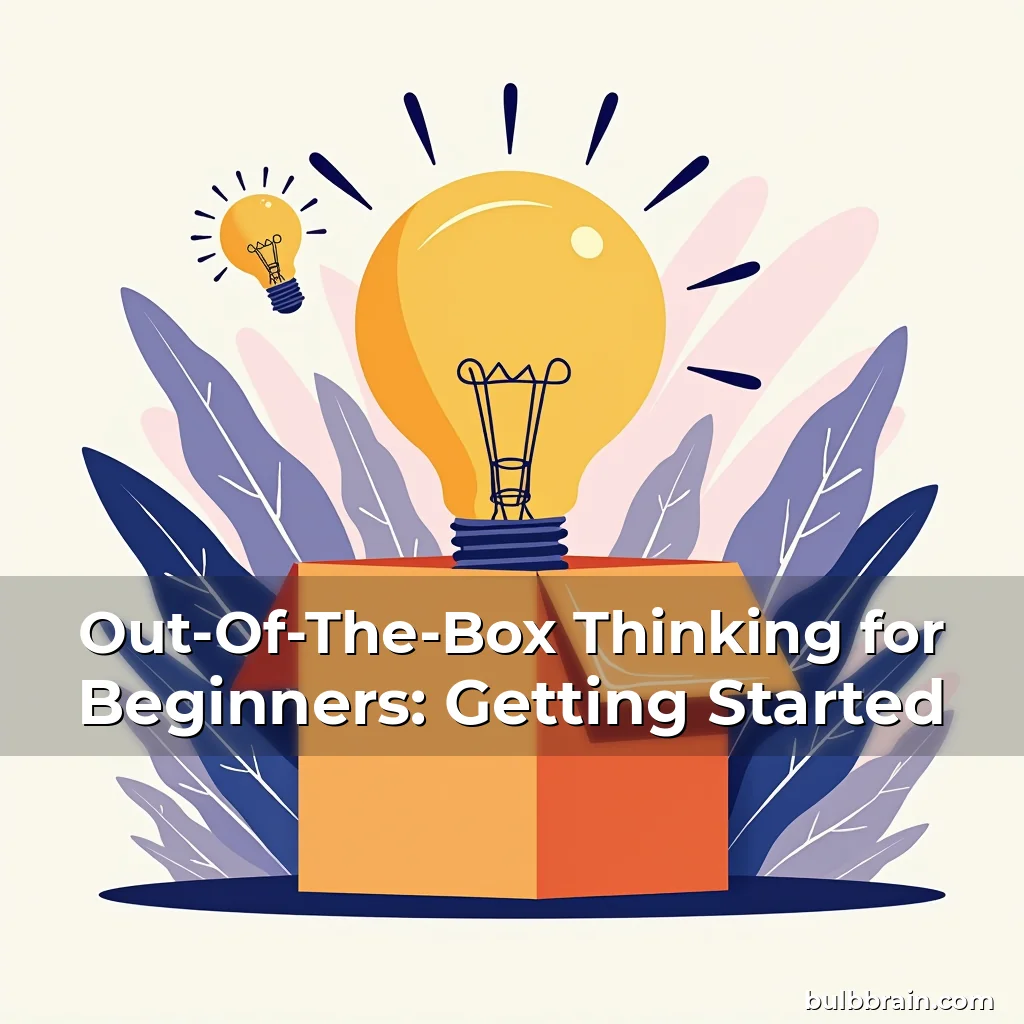
The Art of Unconventional Innovation: Cultivating Out-of-the-Box Thinking in Everyday Life
In an era where creative solutions define competitive advantage, out-of-the-box thinking isn’t merely beneficial—it’s essential for personal and professional growth. This mindset challenges conventional wisdom, enabling individuals to solve problems in novel ways that often appear counterintuitive at first glance.
Rather than relying solely on established methodologies, embracing alternative perspectives opens doors to groundbreaking discoveries across industries. Whether in entrepreneurship, education, or everyday decision-making, fostering creativity through unconventional approaches yields remarkable results when implemented strategically.
Understanding Creative Thinking Patterns
Creative problem-solving originates from cognitive processes distinct from traditional analytical methods. Neuroscientific research indicates that divergent thinking activates different brain regions associated with pattern recognition and association formation.
This mental approach allows connections between seemingly unrelated ideas, revealing opportunities hidden beneath surface-level perceptions. The key difference lies in how these two thinking styles process information—analytical thinking focuses inward while creative thinking seeks external relationships.
Mental flexibility forms the foundation of effective innovation. By training our brains to shift modes effortlessly between linear and lateral thought patterns, we enhance adaptability crucial for modern challenges.
- Divergent thinking: Explores many possible solutions by generating numerous responses to open-ended questions
- Convergent thinking: Narrows down options through logical evaluation to find optimal answers
Lateral thinking strategies involve redefining problems to discover new angles. Edward de Bono coined this term to describe creative thinking techniques that bypass traditional logic paths.
Associative linking strengthens neural pathways between disparate domains. Regular practice enhances the mind’s ability to make unexpected connections that fuel breakthrough innovations.
Fostering Mental Agility Through Daily Practices
Elevating cognitive versatility requires intentional lifestyle choices. Incorporating varied experiences expands perceptual boundaries, enhancing ability to see beyond standard interpretations.
One powerful technique involves engaging senses differently during routine activities. For instance, cooking could become a sensory exploration rather than just meal preparation.
Varying daily routines disrupts habitual thinking patterns. Simple changes like walking routes or work schedules stimulate fresh perspectives through environmental novelty.
Neuroplasticity and Brain Development
Studies show that engaging in novel activities increases gray matter density in prefrontal cortex areas related to executive function. A Harvard study found participants who regularly engaged in cross-disciplinary learning showed enhanced neuroplasticity after six months.
Adults can maintain cognitive agility well into later life stages through deliberate practice. Engaging in mentally stimulating tasks three times weekly promotes continued brain development comparable to younger age groups.
Regular meditation practices have been shown to increase grey matter volume in hippocampus regions linked to memory processing and emotional regulation—critical components for creative expression.
Cultivating Mindsets That Encourage Original Thought
Growth-oriented attitudes significantly influence creative potential. Embracing imperfection as part of the exploratory process reduces fear of failure—anxiety that commonly stifles innovative pursuits.
An accepting environment fosters experimentation without judgment. When individuals feel safe enough to explore unconventional ideas, they’re more likely to take risks leading to breakthrough innovations.
Incorporating playful elements into workflows maintains curiosity levels. Humor and spontaneous creativity activate right hemisphere functions necessary for imaginative problem-solving.
The concept of ‘beginner’s mind’ encourages approaching situations freshly regardless of prior experience. Practicing this awareness prevents assumptions from clouding objective observation.
Breaking Free From Cognitive Constraints
Societal norms
Feedback mechanisms gather input from relevant stakeholders maintaining alignment between
Also, confirm that the opening line starts with `
` is correctly placed. Avoid any additional text outside the `
The Art of Unconventional Innovation: Cultivating Out-of-the-Box Thinking in Everyday Life
In an era where creative solutions define competitive advantage, out-of-the-box thinking isn’t merely beneficial—it’s essential for personal and professional growth. This mindset challenges conventional wisdom, enabling individuals to solve problems in novel ways that often appear counterintuitive at first glance.
Rather than relying solely on established methodologies, embracing alternative perspectives opens doors to groundbreaking discoveries across industries. Whether in entrepreneurship, education, or everyday decision-making, fostering creativity through unconventional approaches yields remarkable results when implemented strategically.
Understanding Creative Thinking Patterns
Creative problem-solving originates from cognitive processes distinct from traditional analytical methods. Neuroscientific research indicates that divergent thinking activates different brain regions associated with pattern recognition and association formation.
This mental approach allows connections between seemingly unrelated ideas, revealing opportunities hidden beneath surface-level perceptions. The key difference lies in how these two thinking styles process information—analytical thinking focuses inward while creative thinking seeks external relationships.
Mental flexibility forms the foundation of effective innovation. By training our brains to shift modes effortlessly between linear and lateral thought patterns, we enhance adaptability crucial for modern challenges.
- Divergent thinking: Explores many possible solutions by generating numerous responses to open-ended questions
- Convergent thinking: Narrows down options through logical evaluation to find optimal answers
Lateral thinking strategies involve redefining problems to discover new angles. Edward de Bono coined this term to describe creative thinking techniques that bypass traditional logic paths.
Associative linking strengthens neural pathways between disparate domains. Regular practice enhances the mind’s ability to make unexpected connections that fuel breakthrough innovations.
Fostering Mental Agility Through Daily Practices
Elevating cognitive versatility requires intentional lifestyle choices. Incorporating varied experiences expands perceptual boundaries, enhancing ability to see beyond standard interpretations.
One powerful technique involves engaging senses differently during routine activities. For instance, cooking could become a sensory exploration rather than just meal preparation.
Varying daily routines disrupts habitual thinking patterns. Simple changes like walking routes or work schedules stimulate fresh perspectives through environmental novelty.
Neuroplasticity and Brain Development
Studies show that engaging in novel activities increases gray matter density in prefrontal cortex areas related to executive function. A Harvard study found participants who regularly engaged in cross-disciplinary learning showed enhanced neuroplasticity after six months.
Adults can maintain cognitive agility well into later life stages through deliberate practice. Engaging in mentally stimulating tasks three times weekly promotes continued brain development comparable to younger age groups.
Regular meditation practices have been shown to increase grey matter volume in hippocampus regions linked to memory processing and emotional regulation—critical components for creative expression.
Cultivating Mindsets That Encourage Original Thought
Growth-oriented attitudes significantly influence creative potential. Embracing imperfection as part of the exploratory process reduces fear of failure—anxiety that commonly stifles innovative pursuits.
An accepting environment fosters experimentation without judgment. When individuals feel safe enough to explore unconventional ideas, they’re more likely to take risks leading to breakthrough innovations.
Incorporating playful elements into workflows maintains curiosity levels. Humor and spontaneous creativity activate right hemisphere functions necessary for imaginative problem-solving.
The concept of ‘beginner’s mind’ encourages approaching situations freshly regardless of prior experience. Practicing this awareness prevents assumptions from clouding objective observation.
BREAKING FREE FROM COGNITIVE CONSTRAINTS
Societal norms
Feedback mechanisms gather input from relevant stakeholders maintaining alignment between created solutions and actual needs addressed effectively.
Adaptive learning programs modify educational approaches responding optimally to identified gaps in acquired skills and knowledge bases respectively.
Performance dashboards visually represent key performance indicators allowing easy tracking of progress towards stated benchmarks clearly identifiable at a glance.
CONCLUSION
Cultivating out-of-the-box thinking represents an ongoing journey marked by continuous discovery rather than reaching static destinations. This transformative process reshapes both individual perspectives and collective societal developments simultaneously.
By integrating these principles into daily life consciously practicing innovative approaches consistently nurtures long-term creative proficiency attainable through persistent application and mindful cultivation efforts sustainably.

news is a contributor at BulbBrain. We are committed to providing well-researched, accurate, and valuable content to our readers.
You May Also Like



About news
Passionate about learning, cognitive science, and helping people unlock their full potential.