
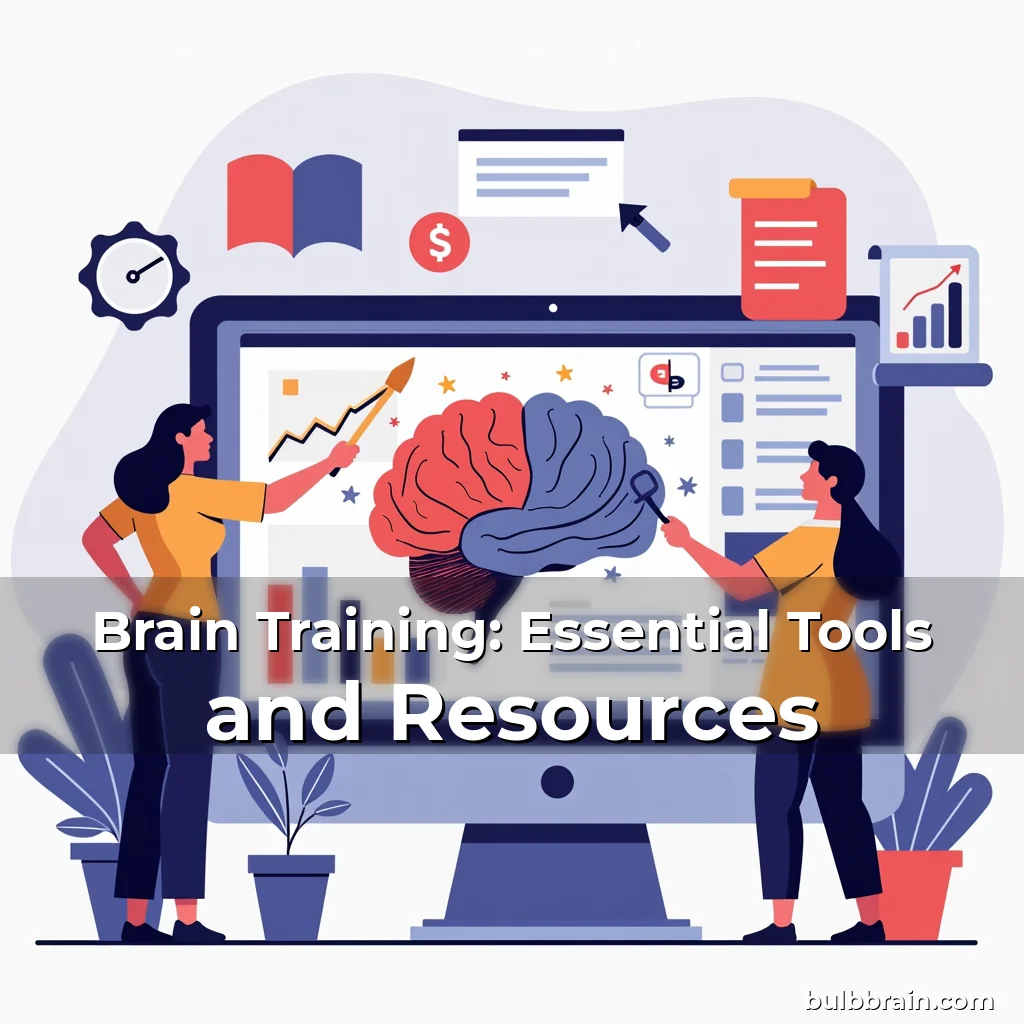
Brain Training: Essential Tools and Resources
In an era where cognitive health is increasingly recognized as vital to overall well-being, brain training has emerged as a powerful strategy to enhance mental agility and resilience. The concept isn’t merely about solving puzzles; it’s about fostering neural plasticity through deliberate practice that can benefit people across various age groups.
From students seeking academic edge to professionals aiming for sharper decision-making skills, brain training offers tailored approaches that cater to individual goals while promoting lifelong learning. As we delve deeper into this subject, you’ll discover how these practices are reshaping our understanding of human cognition and potential.
The Science Behind Brain Training
Neuroscience reveals that the adult brain remains remarkably adaptable, capable of forming new connections even decades after childhood. This phenomenon known as neuroplasticity forms the foundation of effective brain training programs designed to stimulate and strengthen neural pathways.
Studies have shown that consistent engagement with mentally stimulating activities increases gray matter density in regions associated with memory and executive function. These changes correlate with improved performance in tasks requiring attention span, problem-solving ability, and emotional regulation.
While some critics argue that general intelligence gains from such exercises might be limited, research indicates significant improvements in domain-specific skills when training targets particular cognitive functions systematically over time.
Popular Brain Training Platforms
A variety of digital platforms now offer structured programs aimed at enhancing different aspects of cognitive function. Lumosity, CogniFit, and Peak stand out among the most widely used applications that incorporate scientifically validated techniques.
These apps typically feature adaptive difficulty levels that adjust based on user performance, ensuring continuous challenge without overwhelming participants. They often include progress tracking features which help users monitor their development across weeks and months.
- Lumosity: Focuses primarily on improving working memory, attention, and processing speed through interactive games developed in collaboration with neuroscientists.
- CogniFit: Offers personalized assessments followed by targeted exercises designed to address specific cognitive weaknesses identified during initial evaluations.
Peak provides a more gamified approach with daily challenges that promote regular engagement while covering areas like logic, concentration, and memory enhancement. All three platforms emphasize consistency as key factor in achieving measurable results.
Traditional Methods That Still Work
Before the rise of technology-driven solutions, traditional methods proved equally effective in maintaining and improving cognitive abilities. Reading books, playing board games, and practicing musical instruments remain potent tools for mental stimulation today.
Reading enhances vocabulary, comprehension, and critical thinking skills while also increasing empathy through exposure to diverse perspectives presented in literature. Board games require strategic planning, risk assessment, and social interaction—all crucial elements of healthy cognitive development.
Musical instrument practice strengthens auditory discrimination, motor coordination, and spatial-temporal reasoning. Research suggests that musicians tend to develop stronger memory retention capabilities compared to non-musicians due to these combined factors.
Physical exercise complements these methods by boosting blood flow to the brain and releasing growth hormones essential for neuronal repair and regeneration. Combining physical activity with intellectual pursuits creates synergistic benefits rarely achieved through either method alone.
Targeted Approaches For Different Age Groups
Youth brain training focuses heavily on foundational skill development including literacy, numeracy, and basic logical reasoning. Educational toys like building blocks encourage spatial awareness and problem-solving abilities from early ages.
For adolescents undergoing rapid neurological changes, incorporating digital media responsibly becomes important. Video games with educational components can sharpen multitasking skills but must be balanced with offline activities to prevent excessive screen time dependency.
Adults pursuing professional advancement may benefit from specialized courses targeting analytical thinking or language acquisition. Business simulations provide practical experience in decision-making under pressure—an invaluable asset in corporate environments.
Elderly individuals looking to maintain cognitive vitality find value in reminiscence therapy sessions alongside structured mental exercises. Engaging memories through storytelling helps preserve long-term recall while reducing symptoms associated with dementia progression.
Beyond Games: Advanced Techniques And Strategies
Advanced practitioners often employ mnemonic devices as sophisticated memory aids beyond simple repetition strategies. Techniques like the Method of Loci involve associating information with familiar locations to facilitate retrieval later.
Visualization techniques enable better conceptual understanding by creating vivid mental images linked to abstract ideas. This method proves particularly useful in fields requiring complex data interpretation such as engineering or scientific research.
Cognitive behavioral therapy principles applied strategically can transform thought patterns related to learning processes. Identifying limiting beliefs about one’s capacity for improvement allows for gradual restructuring towards more productive mindsets.
Interleaving study materials—alternating between subjects or topics rather than focusing solely on one area—has been shown to improve long-term knowledge retention significantly when practiced consistently over extended periods.
Evaluating Effectiveness Of Brain Training Programs
Assessing whether a given program delivers promised outcomes requires careful consideration of both subjective experiences and objective measurements. Self-reported improvements might not always align perfectly with standardized test scores indicating actual change.
Scientific validation through peer-reviewed studies remains gold standard for evaluating effectiveness claims made by commercial providers. Independent replication of results across diverse populations adds credibility to any methodology being tested.
Longitudinal studies tracking participants over several years provide insight into sustained effects versus temporary gains observed shortly after completing intensive training phases.
Comparative analyses contrasting different modalities help identify which types of interventions yield best results for specific objectives—whether enhancing fluid intelligence or strengthening crystallized knowledge bases acquired through life experiences.
Integrating Brain Training Into Daily Life
Sustainable implementation depends largely on developing routines that seamlessly integrate mental exercises within existing schedules rather than treating them as separate obligations needing dedicated time slots.
Microlearning opportunities present themselves throughout everyday situations—from memorizing grocery lists en route home to calculating tips mentally instead of relying exclusively on calculators.
Social interactions naturally lend themselves to informal brain workouts through active listening exercises or debating current events using evidence-based arguments derived from recent news cycles.
Setting achievable milestones keeps motivation high by providing tangible indicators of progress measured against predefined benchmarks established initially before starting any new regimen.
Common Pitfalls To Avoid In Brain Training
Falling prey to confirmation bias can lead individuals astray believing they’ve mastered certain skills simply because they perceive slight improvements despite lacking concrete verification mechanisms.
Overreliance on single-platform approaches risks creating artificial ceilings preventing broader cognitive expansion since each system emphasizes distinct facets of mental capability differently.
Inconsistent participation undermines cumulative benefits expected from prolonged engagement necessitating commitment toward daily/weekly frequency standards recommended by experts in field.
Ignoring rest periods disrupts natural consolidation processes occurring during sleep cycles essential for translating raw input received during waking hours into usable knowledge stored permanently within neural networks.
Conclusion
As demonstrated throughout this exploration, brain training encompasses far more than casual puzzle-solving sessions—it represents holistic approach integrating science-backed methodologies aligned with personal developmental needs across lifespan stages.
To maximize returns from your investment in cognitive enhancement initiatives consider adopting multifaceted strategies combining technological innovations alongside timeless practices proven reliable over centuries through empirical observations gathered globally.

news is a contributor at BulbBrain. We are committed to providing well-researched, accurate, and valuable content to our readers.
You May Also Like



About news
Passionate about learning, cognitive science, and helping people unlock their full potential.