
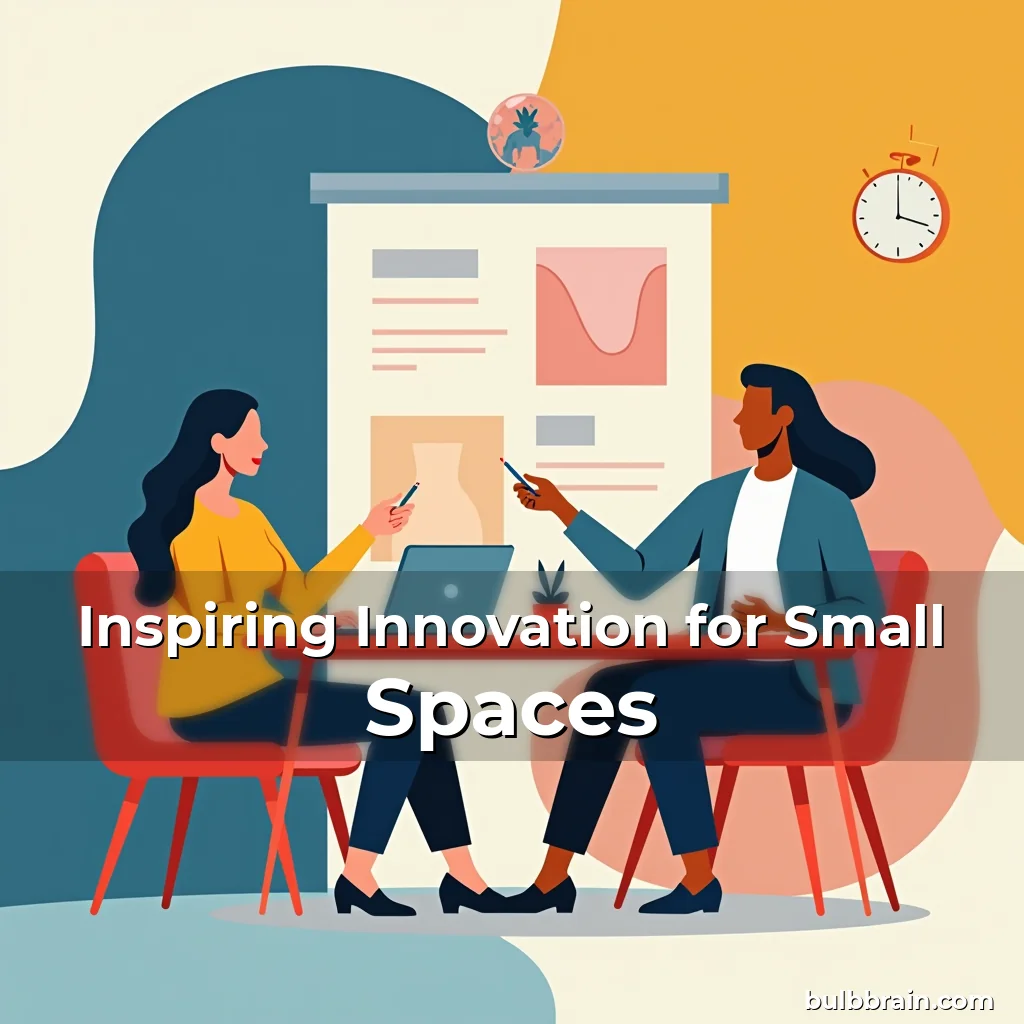
Inspiring Innovation for Small Spaces
In an era where space is often limited but creativity knows no bounds, inspiring innovation has become essential. Whether you’re designing a compact living room, optimizing a tiny workspace, or reimagining urban environments, small spaces are proving to be powerful catalysts for groundbreaking ideas.
The key lies not in expanding physical dimensions but in transforming how we perceive and utilize available areas. This mindset shift opens doors to solutions that redefine functionality, aesthetics, and sustainability within confined boundaries.
Understanding the Power of Constraints
Constraints can paradoxically fuel innovation by forcing individuals and teams to think differently. When resources are scarce, creative problem-solving becomes imperative rather than optional. This phenomenon is evident across various fields—from architecture to technology.
Limited space compels designers and engineers to prioritize efficiency without sacrificing quality. It pushes them toward developing multifunctional products and systems that maximize utility while minimizing footprint.
- Multifunctionality: Objects designed to serve dual purposes reduce clutter and enhance usability in tight quarters.
- Material Efficiency: Using lightweight yet durable materials allows for structural integrity without excessive bulk.
These principles aren’t exclusive to design; they apply equally well in business strategies. Companies operating under budget constraints often devise innovative marketing techniques or customer engagement models that rival those of larger competitors.
By embracing limitations as opportunities, individuals cultivate resilience and adaptability—traits crucial for thriving in any environment, whether personal or professional.
Fostering Creativity Through Limited Resources
Creative breakthroughs frequently emerge from situations marked by scarcity. Artists working with minimal tools have produced masterpieces that challenge conventional norms and push artistic boundaries further than ever before.
Similarly, entrepreneurs launching startups with modest capital have pioneered disruptive technologies and services that reshape entire industries. Their success hinges on resourcefulness rather than sheer financial investment.
This pattern holds true even in scientific research. Scientists facing equipment shortages have devised ingenious experiments using everyday items, leading to unexpected discoveries that might otherwise remain unexplored.
Limitations act as filters, refining ideas until only the most viable ones survive. They eliminate distractions caused by abundance and channel energy towards solving core problems effectively.
Cases Studies in Spatial Ingenuity
Several real-world examples illustrate how constraint-driven innovation transforms small spaces into hubs of productivity and inspiration. One notable case involves micro-apartment designs gaining popularity in densely populated cities like Tokyo and New York.
Architects specializing in these units employ sliding walls, foldable furniture, and modular storage systems to create flexible living arrangements. These features allow residents to convert their homes between different configurations depending on daily needs.
Achieving such versatility requires meticulous planning and execution. Every inch of space must fulfill multiple roles simultaneously without compromising comfort or practicality.
Other innovations include vertical gardens integrated into building facades, which provide greenery without requiring additional land area. Such initiatives demonstrate how environmental considerations can be harmonized with spatial efficiency.
Technological Advancements Enabling Compact Solutions
Rapid technological progress plays a pivotal role in making efficient use of small spaces possible. Smart home devices exemplify this trend by offering advanced functionalities through compact form factors.
Sensors embedded in household appliances enable automated adjustments based on usage patterns, reducing waste and enhancing convenience. For instance, smart thermostats learn occupants’ preferences over time, adjusting temperatures accordingly to conserve energy.
Advances in miniaturization also contribute significantly. Components once deemed too bulky for integration now fit seamlessly into modern gadgets, enabling greater portability and flexibility.
Digital platforms facilitate collaboration among remote workers who may lack traditional office settings. Virtual meeting rooms equipped with high-definition cameras and immersive audio ensure seamless communication regardless of location.
Educational Institutions Embracing Space-Smart Learning
Modern educational institutions increasingly recognize the value of compact learning environments when fostering student engagement and academic achievement. Classrooms designed around flexible seating arrangements encourage active participation and collaborative projects.
Schools adopting movable desks and chairs promote dynamic interactions between students and teachers alike. These setups support varied teaching methods ranging from group discussions to individual study sessions.
Interactive whiteboards combined with digital projectors transform static lectures into interactive experiences. Students gain hands-on exposure to complex subjects through visual demonstrations and simulations.
Moreover, incorporating outdoor classrooms provides natural light exposure beneficial for cognitive development. Green spaces near campuses offer relaxation zones reinforcing mental health benefits alongside academic growth.
Community Initiatives Promoting Shared Spaces
Urban communities worldwide are exploring shared space models aimed at maximizing collective utilization while minimizing individual overhead costs. Co-living arrangements provide affordable housing options by pooling resources among neighbors sharing common facilities.
Co-working spaces cater specifically to freelancers and small businesses seeking cost-effective office solutions without long-term commitments. These venues foster networking opportunities through regular events featuring guest speakers and skill-sharing workshops.
Parks and recreational centers strategically located within neighborhoods ensure equitable access to leisure activities promoting social cohesion and public wellness. Well-maintained infrastructure supports diverse age groups pursuing fitness goals together.
Public libraries evolving beyond mere book repositories now host maker labs stocked with 3D printers and laser cutters allowing patrons to prototype inventions collaboratively. Such amenities democratize innovation processes previously restricted to specialized laboratories.
Psychological Benefits of Innovative Thinking
Beyond tangible outcomes, cultivating an innovative mindset yields profound psychological advantages contributing positively to overall wellbeing. Individuals regularly challenged by novel tasks experience heightened levels of satisfaction derived from overcoming obstacles creatively.
Such challenges stimulate neural pathways associated with problem-solving abilities, sharpening analytical skills applicable across numerous domains including career advancement and interpersonal relationships.
Embracing uncertainty fosters emotional intelligence by encouraging empathy towards others navigating similar difficulties. This perspective enables constructive dialogue rooted in understanding instead of judgment.
Regular practice reinforces self-efficacy—the belief in one’s capacity to influence future events—which correlates strongly with increased motivation levels necessary for sustained success.
Cultural Shifts Supporting Creative Problem Solvers
Societal attitudes toward failure play critical roles shaping cultural landscapes conducive to innovation. Cultures valuing perseverance despite setbacks empower individuals to experiment freely without fear of reprisal.
Recognition programs honoring unconventional thinkers reinforce positive reinforcement loops rewarding risk-taking behaviors instrumental in driving progress forward. Awards celebrating grassroots inventors highlight potential residing outside mainstream corporate structures.
Media portrayals influencing perceptions deserve careful scrutiny since inaccurate depictions could discourage aspiring innovators believing genius stems solely from innate talent rather than persistent effort.
Establishing mentorship networks connecting experienced professionals with novices creates supportive ecosystems nurturing emerging talents ready to make impactful contributions society-wide.
Future Trends Shaping Innovation Horizons
Emerging trends indicate growing emphasis placed upon sustainable practices aligning closely with principles of mindful consumption advocated by minimalist lifestyles. Circular economy models prioritizing reuse over disposal resonate particularly well amid rising concerns regarding climate change impacts.
Artificial intelligence applications promise transformative changes affecting virtually every sector including healthcare diagnostics, transportation logistics, and personalized education curricula tailored precisely according to learner profiles.
Biotechnology advancements present exciting possibilities concerning regenerative medicine capable of repairing damaged tissues potentially extending human lifespan considerably beyond current expectations.
Quantum computing capabilities poised to revolutionize data processing speeds will undoubtedly alter paradigms governing encryption security protocols currently safeguarding global communications infrastructures against cyber threats.
Conclusion
Innovation thrives in environments characterized by both limitation and opportunity. By redefining what constitutes sufficient space or adequate resources, we unlock unprecedented avenues for creativity and discovery across disciplines spanning science, artistry, commerce, and governance alike.
Whether adapting existing frameworks or pioneering entirely new methodologies, each contribution matters immensely toward advancing knowledge collectively benefiting humanity’s ongoing journey towards enlightenment and prosperity.

news is a contributor at BulbBrain. We are committed to providing well-researched, accurate, and valuable content to our readers.
You May Also Like



About news
Passionate about learning, cognitive science, and helping people unlock their full potential.