
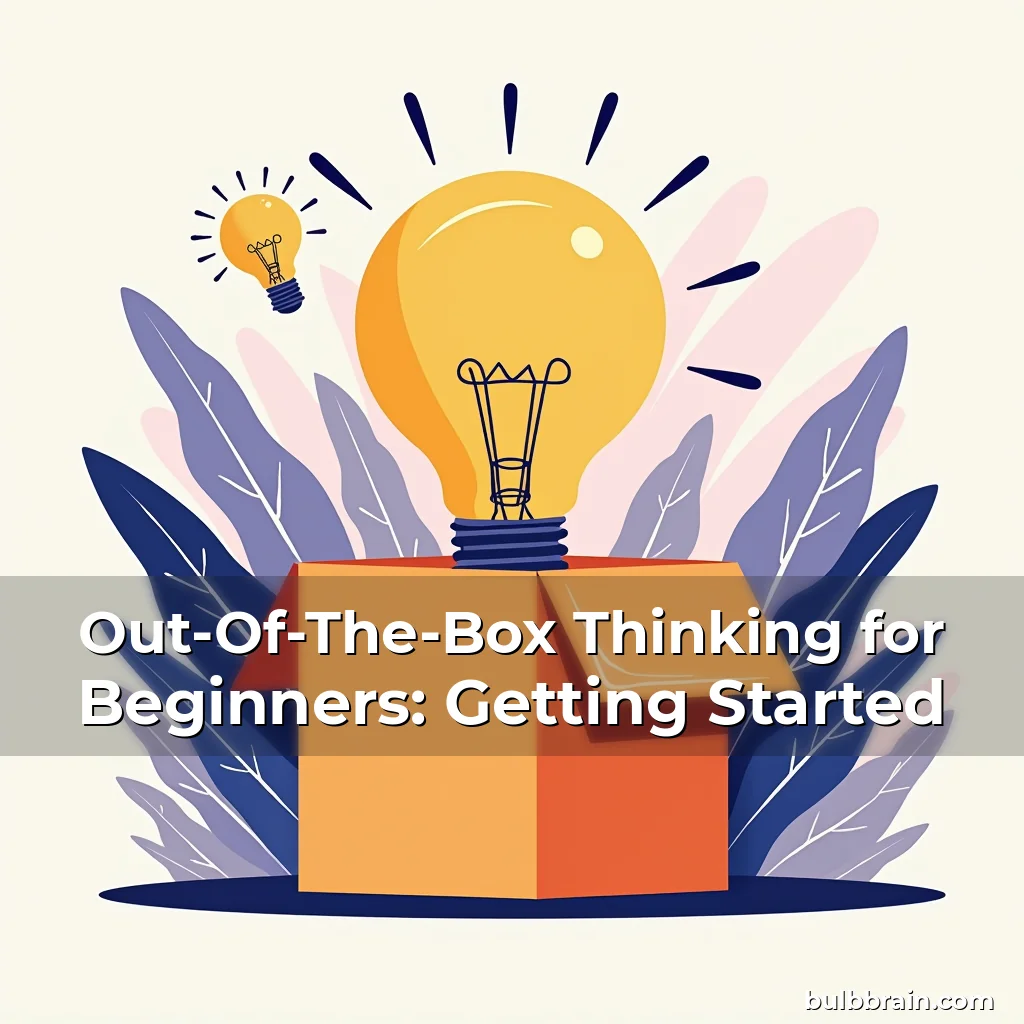
Unlocking Creativity: The Art of Out-of-the-Box Thinking
In an era dominated by routine and structure, out-of-the-box thinking emerges as a beacon of innovation. This cognitive approach challenges conventional wisdom, urging individuals to explore unconventional solutions. For those seeking creative breakthroughs, mastering this mindset can transform problems into opportunities.
The journey begins with understanding what makes traditional problem-solving inadequate. Conventional methods often rely on established patterns that may not address emerging complexities. By embracing alternative perspectives, we unlock new dimensions of possibility and progress.
The Foundations of Lateral Thinking
Lateral thinking is the cornerstone of out-of-the-box creativity. Unlike vertical thinking which follows logical sequences, lateral approaches seek connections between unrelated ideas. This method fosters originality by encouraging exploration beyond standard frameworks.
Consider how brainstorming sessions work best when participants avoid judgment during idea generation. Removing constraints allows the mind to make unexpected associations crucial for innovation. A single spark from these unstructured discussions can ignite groundbreaking inventions.
One key principle involves challenging assumptions that limit potential outcomes. Many business strategies fail because they operate within self-imposed boundaries rather than questioning their validity. Identifying these limitations opens doors to radical rethinking.
- Question Everything: Regularly assess whether current practices are based on outdated information or inherited norms. This habit prevents stagnation through continuous evaluation.
- Embrace Ambiguity: Accept uncertainty as part of discovery processes instead of viewing it as a threat. Creative breakthroughs often emerge precisely at points where clarity seems distant.
Cultivating a Mindset for Innovation
Fostering innovative thinking requires deliberate practice and environmental support. Organizations that encourage risk-taking create cultures where novel ideas flourish naturally. These environments prioritize experimentation over perfectionism.
Individual development also plays critical roles in nurturing creativity. Engaging with diverse disciplines exposes people to varied methodologies that enrich problem-solving capabilities. Cross-pollination of knowledge leads to fresh perspectives.
A crucial aspect involves managing fear of failure effectively. Fear stifles initiative but can be mitigated through small successes built progressively. Celebrating minor achievements reinforces confidence necessary for daring innovations.
Patience becomes essential during this cultivation phase since true creativity rarely manifests instantly. It develops gradually through consistent engagement with imaginative exercises and reflective practices.
Navigating Cognitive Biases
Becoming aware of mental shortcuts helps overcome barriers to unconventional thought. Confirmation bias, for example, causes us to favor data aligning with existing beliefs while ignoring contradictory evidence. Recognizing such tendencies enables more balanced decision-making.
Anchoring effects occur when initial impressions disproportionately influence subsequent judgments. In business contexts, first estimates often skew final decisions despite better alternatives being available later. Awareness allows conscious recalibration away from premature conclusions.
Diversification of inputs significantly reduces reliance on flawed heuristics. Exposing oneself to different viewpoints dilutes confirmation biases’ impact. Actively seeking dissenting opinions creates conditions favorable for objective analysis.
Mindfulness techniques aid in identifying automatic thought patterns before they solidify into rigid convictions. Meditation improves attention control, making it easier to notice biased reasoning processes occurring subconsciously.
Taking Risks Strategically
Risk management forms integral parts of successful innovation journeys. Calculated risks differ fundamentally from reckless gambles; they involve informed choices backed by thorough research. Strategic risk-taking maintains balance between boldness and prudence.
Evaluating potential consequences objectively ensures preparedness against adverse outcomes. Scenario planning assists in visualizing various possibilities including worst-case scenarios alongside optimistic projections. Such foresight builds resilience required for navigating uncertainties.
Learning from past experiences enhances future risk assessments substantially. Documenting both triumphs and setbacks provides invaluable lessons applicable across domains. Iterative learning cycles refine predictive accuracy continuously.
Support systems play vital roles in sustaining courageous initiatives. Surrounding oneself with mentors who understand calculated risk-taking provides guidance through complex decisions. Collaborative networks offer shared resources beneficial during high-stakes ventures.
Encouraging Divergent Thought Processes
Promoting divergent thinking involves creating spaces conducive to free association without immediate criticism. Techniques like mind mapping visually represent relationships among seemingly disparate elements facilitating novel combinations. These tools enhance conceptual fluidity.
Exposure to art forms stimulates non-linear modes of cognition. Music composition teaches pattern recognition skills transferable to analytical tasks. Visual arts develop spatial awareness aiding in multidimensional problem solving.
Play-based activities nurture spontaneity essential for generating unusual ideas. Games requiring improvisation sharpen adaptability useful in dynamic situations. Incorporating playful elements into professional settings increases flexibility under pressure.
Regular reflection periods allow consolidation of scattered thoughts into coherent narratives. Journaling captures fleeting inspirations ensuring nothing gets lost amidst daily routines. Continuous documentation supports long-term idea refinement processes.
Building Collaborative Innovation Environments
Effective collaboration hinges upon establishing inclusive communication channels. Open-door policies foster transparency reducing misunderstandings caused by hidden agendas. Trust-building measures ensure everyone feels safe contributing authentically.
Structured yet flexible meeting formats maximize productivity without stifling spontaneity. Time-bound agenda items prevent tangents while leaving room for serendipitous discoveries. Balancing orderliness with openness achieves optimal synergy levels.
Recognizing individual strengths complements team dynamics beautifully. Assigning roles according to talents optimizes collective output quality. Complementary skill sets create holistic solutions exceeding isolated efforts.
Continuous feedback loops maintain momentum towards common goals. Constructive critiques guide improvements whereas positive reinforcement sustains motivation. Adaptive leadership styles accommodate evolving needs dynamically.
Measuring Progress Toward Innovative Goals
Establishing clear benchmarks enables accurate assessment of growth trajectories. SMART criteria provide structured frameworks measuring tangible advancements systematically. Tracking milestones keeps teams aligned toward strategic objectives.
Data analytics reveal trends indicating effectiveness of implemented strategies. Quantitative metrics highlight areas needing adjustment promptly. Qualitative analyses uncover deeper insights about underlying issues affecting performance.
Regular reviews ensure alignment between ongoing efforts and broader visions. Periodic reassessments validate continued relevance of chosen directions. Adjustments made proactively prevent misalignment escalating into significant deviations.
Growth indicators extend beyond mere output volumes encompassing process enhancements too. Improvements in efficiency ratios signify meaningful evolution regardless of absolute numbers achieved.
Overcoming Common Obstacles
Identifying resistance sources clarifies pathways forward effectively. Cultural norms sometimes discourage deviation from accepted procedures even when change proves beneficial. Understanding root causes informs targeted interventions addressing core concerns.
Sometimes inertia results from lack of visible benefits rather than outright opposition. Demonstrating incremental advantages through pilot programs generates credibility supporting larger transformations. Proof of concept minimizes perceived risks associated with change.
Insufficient time allocations frequently undermine commitment levels. Prioritization matrices help allocate energy judiciously focusing efforts where returns promise highest impacts. Efficient resource distribution maximizes overall gains achievable within constraints.
Resource scarcity demands inventive approaches to problem resolution. Repurposing existing assets creatively avoids unnecessary expenditures. Cost-effective solutions maintain quality standards without compromising financial viability.
Conclusion
Mastering out-of-the-box thinking transforms ordinary minds into extraordinary innovators capable of reshaping industries. Through intentional practice combined with supportive ecosystems, anyone can cultivate remarkable creative abilities.
Begin today by consciously applying one strategy discussed above. Small steps consistently taken lead to profound changes over time. Embrace curiosity relentlessly pursuing knowledge wherever it might take you next.
“`
“`
Unlocking Creativity: The Art of Out-of-the-Box Thinking
In an era dominated by routine and structure, out-of-the-box thinking emerges as a beacon of innovation. This cognitive approach challenges conventional wisdom, urging individuals to explore unconventional solutions. For those seeking creative breakthroughs, mastering this mindset can transform problems into opportunities.
The journey begins with understanding what makes traditional problem-solving inadequate. Conventional methods often rely on established patterns that may not address emerging complexities. By embracing alternative perspectives, we unlock new dimensions of possibility and progress.
The Foundations of Lateral Thinking
Lateral thinking is the cornerstone of out-of-the-box creativity. Unlike vertical thinking which follows logical sequences, lateral approaches seek connections between unrelated ideas. This method fosters originality by encouraging exploration beyond standard frameworks.
Consider how brainstorming sessions work best when participants avoid judgment during idea generation. Removing constraints allows the mind to make unexpected associations crucial for innovation. A single spark from these unstructured discussions can ignite groundbreaking inventions.
One key principle involves challenging assumptions that limit potential outcomes. Many business strategies fail because they operate within self-imposed boundaries rather than questioning their validity. Identifying these limitations opens doors to radical rethinking.
- Question Everything: Regularly assess whether current practices are based on outdated information or inherited norms. This habit prevents stagnation through continuous evaluation.
- Embrace Ambiguity: Accept uncertainty as part of discovery processes instead of viewing it as a threat. Creative breakthroughs often emerge precisely at points where clarity seems distant.
Cultivating a Mindset for Innovation
Fostering innovative thinking requires deliberate practice and environmental support. Organizations that encourage risk-taking create cultures where novel ideas flourish naturally. These environments prioritize experimentation over perfectionism.
Individual development also plays critical roles in nurturing creativity. Engaging with diverse disciplines exposes people to varied methodologies that enrich problem-solving capabilities. Cross-pollination of knowledge leads to fresh perspectives.
A crucial aspect involves managing fear of failure effectively. Fear stifles initiative but can be mitigated through small successes built progressively. Celebrating minor achievements reinforces confidence necessary for daring innovations.
Patience becomes essential during this cultivation phase since true creativity rarely manifests instantly. It develops gradually through consistent engagement with imaginative exercises and reflective practices.
Navigating Cognitive Biases
Becoming aware of mental shortcuts helps overcome barriers to unconventional thought. Confirmation bias, for example, causes us to favor data aligning with existing beliefs while ignoring contradictory evidence. Recognizing such tendencies enables more balanced decision-making.
Anchoring effects occur when initial impressions disproportionately influence subsequent judgments. In business contexts, first estimates often skew final decisions despite better alternatives being available later. Awareness allows conscious recalibration away from premature conclusions.
Diversification of inputs significantly reduces reliance on flawed heuristics. Exposing oneself to different viewpoints dilutes confirmation biases’ impact. Actively seeking dissenting opinions creates conditions favorable for objective analysis.
Mindfulness techniques aid in identifying automatic thought patterns before they solidify into rigid convictions. Meditation improves attention control, making it easier to notice biased reasoning processes occurring subconsciously.
Taking Risks Strategically
Risk management forms integral parts of successful innovation journeys. Calculated risks differ fundamentally from reckless gambles; they involve informed choices backed by thorough research. Strategic risk-taking maintains balance between boldness and prudence.
Evaluating potential consequences objectively ensures preparedness against adverse outcomes. Scenario planning assists in visualizing various possibilities including worst-case scenarios alongside optimistic projections. Such foresight builds resilience required for navigating uncertainties.
Learning from past experiences enhances future risk assessments substantially. Documenting both triumphs and setbacks provides invaluable lessons applicable across domains. Iterative learning cycles refine predictive accuracy continuously.
Support systems play vital roles in sustaining courageous initiatives. Surrounding oneself with mentors who understand calculated risk-taking provides guidance through complex decisions. Collaborative networks offer shared resources beneficial during high-stakes ventures.
Encouraging Divergent Thought Processes
Promoting divergent thinking involves creating spaces conducive to free association without immediate criticism. Techniques like mind mapping visually represent relationships among seemingly disparate elements facilitating novel combinations. These tools enhance conceptual fluidity.
Exposure to art forms stimulates non-linear modes of cognition. Music composition teaches pattern recognition skills transferable to analytical tasks. Visual arts develop spatial awareness aiding in multidimensional problem solving.
Play-based activities nurture spontaneity essential for generating unusual ideas. Games requiring improvisation sharpen adaptability useful in dynamic situations. Incorporating playful elements into professional settings increases flexibility under pressure.
Regular reflection periods allow consolidation of scattered thoughts into coherent narratives. Journaling captures fleeting inspirations ensuring nothing gets lost amidst daily routines. Continuous documentation supports long-term idea refinement processes.
Building Collaborative Innovation Environments
Effective collaboration hinges upon establishing inclusive communication channels. Open-door policies foster transparency reducing misunderstandings caused by hidden agendas. Trust-building measures ensure everyone feels safe contributing authentically.
Structured yet flexible meeting formats maximize productivity without stifling spontaneity. Time-bound agenda items prevent tangents while leaving room for serendipitous discoveries. Balancing orderliness with openness achieves optimal synergy levels.
Recognizing individual strengths complements team dynamics beautifully. Assigning roles according to talents optimizes collective output quality. Complementary skill sets create holistic solutions exceeding isolated efforts.
Continuous feedback loops maintain momentum towards common goals. Constructive critiques guide improvements whereas positive reinforcement sustains motivation. Adaptive leadership styles accommodate evolving needs dynamically.
Measuring Progress Toward Innovative Goals
Establishing clear benchmarks enables accurate assessment of growth trajectories. SMART criteria provide structured frameworks measuring tangible advancements systematically. Tracking milestones keeps teams aligned toward strategic objectives.
Data analytics reveal trends indicating effectiveness of implemented strategies. Quantitative metrics highlight areas needing adjustment promptly. Qualitative analyses uncover deeper insights about underlying issues affecting performance.
Regular reviews ensure alignment between ongoing efforts and broader visions. Periodic reassessments validate continued relevance of chosen directions. Adjustments made proactively prevent misalignment escalating into significant deviations.
Growth indicators extend beyond mere output volumes encompassing process enhancements too. Improvements in efficiency ratios signify meaningful evolution regardless of absolute numbers achieved.
Overcoming Common Obstacles
Identifying resistance sources clarifies pathways forward effectively. Cultural norms sometimes discourage deviation from accepted procedures even when change proves beneficial. Understanding root causes informs targeted interventions addressing core concerns.
Sometimes inertia results from lack of visible benefits rather than outright opposition. Demonstrating incremental advantages through pilot programs generates credibility supporting larger transformations. Proof of concept minimizes perceived risks associated with change.
Insufficient time allocations frequently undermine commitment levels. Prioritization matrices help allocate energy judiciously focusing efforts where returns promise highest impacts. Efficient resource distribution maximizes overall gains achievable within constraints.
Resource scarcity demands inventive approaches to problem resolution. Repurposing existing assets creatively avoids unnecessary expenditures. Cost-effective solutions maintain quality standards without compromising financial viability.
Conclusion
Mastering out-of-the-box thinking transforms ordinary minds into extraordinary innovators capable of reshaping industries. Through intentional practice combined with supportive ecosystems, anyone can cultivate remarkable creative abilities.
Begin today by consciously applying one strategy discussed above. Small steps consistently taken lead to profound changes over time. Embrace curiosity relentlessly pursuing knowledge wherever it might take you next.
“`

news is a contributor at BulbBrain. We are committed to providing well-researched, accurate, and valuable content to our readers.
You May Also Like


About news
Passionate about learning, cognitive science, and helping people unlock their full potential.