
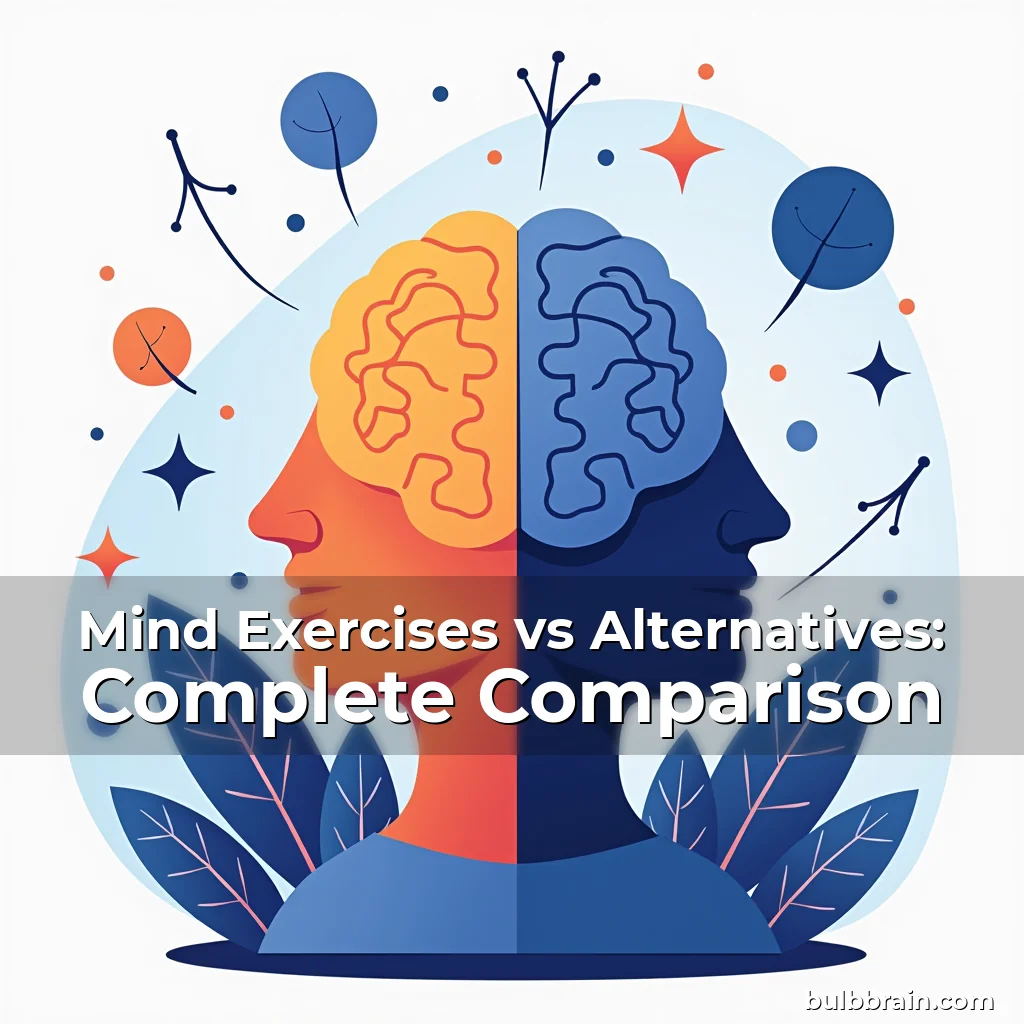
Mind Exercises vs Alternatives: Complete Comparison
The human mind is an intricate system that requires regular maintenance much like any other complex machine. While physical exercise has long been recognized as essential for bodily health, mental stimulation through targeted exercises offers equally vital benefits for cognitive function. This comparison explores various forms of mind exercises alongside alternative approaches to brain training.
Understanding the differences between these methods helps individuals choose what works best for their personal goals and lifestyle needs. Whether seeking improved concentration, enhanced memory retention, or stress reduction techniques, there are numerous options available across different disciplines.
The Science Behind Mind Exercises
Research consistently shows that engaging in structured mental activities can significantly boost neural plasticity – our brain’s ability to form new connections and pathways. Neuroscientists have identified how certain types of intellectual engagement promote growth in grey matter regions associated with learning and memory.
A study published by Harvard Medical School found participants who regularly practiced memory games showed increased hippocampal volume after six months compared to control groups. This demonstrates the tangible impact such exercises can have on actual brain structure over time.
- Cognitive Reserve Theory: Regular mental challenges create a buffer against age-related decline by building up reserves of brain power
- Dopamine Release: Solving puzzles stimulates dopamine production which enhances motivation and pleasure from problem-solving tasks
- Synaptic Pruning: Mental workouts help eliminate weaker neuronal connections while strengthening frequently used ones
These biological processes underpin why consistent mental exercise leads to better cognitive performance across multiple domains. However, understanding exactly how each type contributes uniquely remains crucial when comparing alternatives.
Evaluating Different Types of Cognitive Training Programs
Various commercial programs promise cognitive enhancement ranging from Lumosity to CogniFit. These typically involve daily sessions targeting working memory, attention span, processing speed, and executive functions through gamified formats.
While some users report noticeable improvements in mental clarity, independent research findings remain mixed regarding long-term effectiveness. A meta-analysis published in Nature found only moderate evidence supporting sustained gains beyond three months post-program completion.
Comparing Commercial Platforms
Lumosity claims its adaptive algorithm tailors difficulty levels based on user progress tracking. Their platform includes over 60 scientifically validated games designed by neuroscientists at the University of California.
In contrast, BrainHQ focuses heavily on clinical validation with studies involving thousands of participants across diverse age ranges. Their program emphasizes real-world applications rather than purely recreational gameplay elements.
A third option like Peak targets younger demographics with social features allowing friends to compete in weekly challenges. This gamification aspect may enhance adherence rates but could also introduce distractions during focused practice periods.
When evaluating these platforms, considering factors like cost structures, time commitment requirements, and accessibility across devices becomes critical for informed decision-making.
Traditional Techniques Versus Modern Approaches
Classical mental exercises such as memorizing poetry or solving crosswords date back centuries yet retain relevance today. They offer low-cost entry points without requiring digital subscriptions or specialized equipment.
Newer methodologies leverage technology to personalize experiences using AI algorithms that adapt challenge levels dynamically. For example, apps track individual progress curves and adjust difficulty accordingly to maintain optimal engagement levels.
- Paper-Based Methods: Require minimal resources but lack built-in feedback mechanisms common in digital counterparts
- Technology-Aided Tools: Provide instant analytics and customizable progression paths but may increase screen-time exposure
- Hybrid Models: Combine traditional skill-building with tech-enhanced tracking systems for balanced approach
This divergence highlights trade-offs between simplicity and sophistication depending on personal preferences and availability of resources. Choosing between them often depends on individual circumstances rather than objective superiority.
Alternative Brain Enhancement Strategies
Physical exercise stands out as a powerful alternative due to its dual impact on both body and mind. Aerobic activity increases blood flow to cerebral tissues promoting neurogenesis – the creation of new neurons primarily within the hippocampus region.
Studies show that even moderate-intensity walking routines can elevate BDNF (Brain-Derived Neurotrophic Factor) levels which supports synaptic plasticity and cell survival. This physiological change correlates strongly with improved recall abilities observed in elderly populations participating in regular fitness regimens.
Nutritional Impact on Cognitive Function
Emerging research indicates dietary choices influence mental acuity as profoundly as mental exercises themselves. Omega-3 fatty acids found abundantly in fish oil supplements support membrane fluidity necessary for efficient neurotransmission.
Vitamin D deficiency has been linked to impaired cognitive function particularly among adults over forty-five years old. Supplementation combined with adequate sun exposure appears beneficial although precise dosages require medical consultation before implementation.
The Mediterranean diet pattern emphasizing whole grains, legumes, fruits, vegetables along with healthy fats offers substantial protection against cognitive deterioration. Adherents commonly exhibit lower incidence rates of dementia compared to those following Western-style diets high in processed foods.
Combining nutritional strategies with traditional mental exercises creates synergistic effects enhancing overall brain health outcomes more effectively than either method alone.
Psychological Interventions for Mental Fitness
Mindfulness meditation practices have gained significant traction recently for improving emotional regulation and reducing anxiety symptoms. Research suggests regular mindfulness practitioners demonstrate greater gray matter density in areas responsible for self-awareness and introspection.
Breathing exercises like box breathing or alternate nostril pranayama activate parasympathetic nervous responses that counteract chronic stress accumulation. Practitioners often notice heightened focus and reduced irritability after several weeks of consistent application.
- Transcendental Meditation: Involves silently repeating mantras to achieve deep relaxation states reported to reduce cortisol levels
- Loving-kindness Meditation: Focuses on cultivating compassion towards oneself and others leading to stronger interpersonal relationships
- Body Scan Meditation: Encourages full-body awareness helping identify tension patterns contributing to poor sleep quality
Integrating these psychological tools into daily life provides measurable benefits complementing conventional cognitive training efforts. The cumulative effect reinforces holistic well-being dimensions beyond mere academic improvement metrics.
Social Engagement as Cognitive Stimulation
Engaging in meaningful conversations with peers activates multiple language centers simultaneously creating richer neural networks. Social interactions demand rapid information processing skills useful for maintaining sharp communication abilities.
Group learning environments foster collaborative knowledge exchange where diverse perspectives contribute novel solutions to shared problems. This dynamic process strengthens analytical capabilities applicable across professional contexts.
- Discussion Groups: Stimulate lateral thinking through debate scenarios challenging preconceived notions
- Book Clubs: Promote sustained reading habits reinforcing vocabulary expansion and narrative comprehension
- Workshops: Offer hands-on experimentation opportunities translating theoretical concepts into practical applications
Maintaining active social circles correlates positively with delayed onset of Alzheimer’s disease according to longitudinal studies spanning decades. Quality interaction frequency matters more than quantity when assessing protective effects.
Fostering genuine connections through shared interests builds resilience against isolation-induced cognitive decline risks prevalent among aging populations.
Educational Pursuits Beyond Formal Learning
Learning new languages engages both hemispheres of the brain forging additional linguistic pathways that enhance multitasking capacities. Fluency acquisition involves mastering grammar rules, pronunciation techniques, and cultural nuances simultaneously.
Playing musical instruments demands coordination between auditory perception systems and motor execution sequences. Instrumentalists often display superior spatial-temporal reasoning abilities compared to non-musicians.
Taking up visual arts like painting or sculpture develops fine motor control precision while encouraging abstract thinking processes. Creativity cultivation reduces rigid thought patterns fostering innovative problem-solving approaches.
These educational endeavors represent accessible means for continuous mental development aligning closely with lifelong learning philosophies embraced globally nowadays.
Strategies for Optimal Implementation
Creating personalized routines combining varied stimuli maximizes neural activation diversity preventing adaptation fatigue from repetitive tasks. Rotating between different exercise modalities sustains interest levels required for long-term consistency.
Tracking progress through journal entries or app-based dashboards allows identification of peak performance windows ideal for scheduling intense practice sessions. Analyzing success trends reveals which methods yield most benefit individually.
Establishing accountability partnerships with like-minded individuals fosters mutual encouragement during challenging phases. Group commitments raise motivation thresholds making goal achievement feel less daunting.
Regularly revisiting objectives ensures alignment between current practices and evolving aspirations. Flexibility in adjusting strategies accommodates changing priorities without losing sight of core developmental aims.
Conclusion
The landscape of cognitive enhancement encompasses diverse methodologies each offering distinct advantages tailored to particular needs. From classic paper-and-pencil drills to cutting-edge virtual reality simulations, numerous avenues exist for nurturing mental faculties.
By critically examining available options against empirical evidence and personal circumstances, individuals can curate bespoke brain-training regimens optimized for sustainable progress. Embracing variety prevents stagnation while ensuring continued neurological growth throughout lifespan stages.
“` “`html
Mind Exercises vs Alternatives: Complete Comparison
The human mind is an intricate system that requires regular maintenance much like any other complex machine. While physical exercise has long been recognized as essential for bodily health, mental stimulation through targeted exercises offers equally vital benefits for cognitive function. This comparison explores various forms of mind exercises alongside alternative approaches to brain training.
Understanding the differences between these methods helps individuals choose what works best for their personal goals and lifestyle needs. Whether seeking improved concentration, enhanced memory retention, or stress reduction techniques, there are numerous options available across different disciplines.
The Science Behind Mind Exercises
Research consistently shows that engaging in structured mental activities can significantly boost neural plasticity – our brain’s ability to form new connections and pathways. Neuroscientists have identified how certain types of intellectual engagement promote growth in grey matter regions associated with learning and memory.
A study published by Harvard Medical School found participants who regularly practiced memory games showed increased hippocampal volume after six months compared to control groups. This demonstrates the tangible impact such exercises can have on actual brain structure over time.
- Cognitive Reserve Theory: Regular mental challenges create a buffer against age-related decline by building up reserves of brain power
- Dopamine Release: Solving puzzles stimulates dopamine production which enhances motivation and pleasure from problem-solving tasks
- Synaptic Pruning: Mental workouts help eliminate weaker neuronal connections while strengthening frequently used ones
These biological processes underpin why consistent mental exercise leads to better cognitive performance across multiple domains. However, understanding exactly how each type contributes uniquely remains crucial when comparing alternatives.
Evaluating Different Types of Cognitive Training Programs
Various commercial programs promise cognitive enhancement ranging from Lumosity to CogniFit. These typically involve daily sessions targeting working memory, attention span, processing speed, and executive functions through gamified formats.
While some users report noticeable improvements in mental clarity, independent research findings remain mixed regarding long-term effectiveness. A meta-analysis published in Nature found only moderate evidence supporting sustained gains beyond three months post-program completion.
Comparing Commercial Platforms
Lumosity claims its adaptive algorithm tailors difficulty levels based on user progress tracking. Their platform includes over 60 scientifically validated games designed by neuroscientists at the University of California.
In contrast, BrainHQ focuses heavily on clinical validation with studies involving thousands of participants across diverse age ranges. Their program emphasizes real-world applications rather than purely recreational gameplay elements.
A third option like Peak targets younger demographics with social features allowing friends to compete in weekly challenges. This gamification aspect may enhance adherence rates but could also introduce distractions during focused practice periods.
When evaluating these platforms, considering factors like cost structures, time commitment requirements, and accessibility across devices becomes critical for informed decision-making.
Traditional Techniques Versus Modern Approaches
Classical mental exercises such as memorizing poetry or solving crosswords date back centuries yet retain relevance today. They offer low-cost entry points without requiring digital subscriptions or specialized equipment.
Newer methodologies leverage technology to personalize experiences using AI algorithms that adapt challenge levels dynamically. For example, apps track individual progress curves and adjust difficulty accordingly to maintain optimal engagement levels.
- Paper-Based Methods: Require minimal resources but lack built-in feedback mechanisms common in digital counterparts
- Technology-Aided Tools: Provide instant analytics and customizable progression paths but may increase screen-time exposure
- Hybrid Models: Combine traditional skill-building with tech-enhanced tracking systems for balanced approach
This divergence highlights trade-offs between simplicity and sophistication depending on personal preferences and availability of resources. Choosing between them often depends on individual circumstances rather than objective superiority.
Alternative Brain Enhancement Strategies
Physical exercise stands out as a powerful alternative due to its dual impact on both body and mind. Aerobic activity increases blood flow to cerebral tissues promoting neurogenesis – the creation of new neurons primarily within the hippocampus region.
Studies show that even moderate-intensity walking routines can elevate BDNF (Brain-Derived Neurotrophic Factor) levels which supports synaptic plasticity and cell survival. This physiological change correlates strongly with improved recall abilities observed in elderly populations participating in regular fitness regimens.
Nutritional Impact on Cognitive Function
Emerging research indicates dietary choices influence mental acuity as profoundly as mental exercises themselves. Omega-3 fatty acids found abundantly in fish oil supplements support membrane fluidity necessary for efficient neurotransmission.
Vitamin D deficiency has been linked to impaired cognitive function particularly among adults over forty-five years old. Supplementation combined with adequate sun exposure appears beneficial although precise dosages require medical consultation before implementation.
The Mediterranean diet pattern emphasizing whole grains, legumes, fruits, vegetables along with healthy fats offers substantial protection against cognitive deterioration. Adherents commonly exhibit lower incidence rates of dementia compared to those following Western-style diets high in processed foods.
Combining nutritional strategies with traditional mental exercises creates synergistic effects enhancing overall brain health outcomes more effectively than either method alone.
Psychological Interventions for Mental Fitness
Mindfulness meditation practices have gained significant traction recently for improving emotional regulation and reducing anxiety symptoms. Research suggests regular mindfulness practitioners demonstrate greater gray matter density in areas responsible for self-awareness and introspection.
Breathing exercises like box breathing or alternate nostril pranayama activate parasympathetic nervous responses that counteract chronic stress accumulation. Practitioners often notice heightened focus and reduced irritability after several weeks of consistent application.
- Transcendental Meditation: Involves silently repeating mantras to achieve deep relaxation states reported to reduce cortisol levels
- Loving-kindness Meditation: Focuses on cultivating compassion towards oneself and others leading to stronger interpersonal relationships
- Body Scan Meditation: Encourages full-body awareness helping identify tension patterns contributing to poor sleep quality
Integrating these psychological tools into daily life provides measurable benefits complementing conventional cognitive training efforts. The cumulative effect reinforces holistic well-being dimensions beyond mere academic improvement metrics.
Social Engagement as Cognitive Stimulation
Engaging in meaningful conversations with peers activates multiple language centers simultaneously creating richer neural networks. Social interactions demand rapid information processing skills useful for maintaining sharp communication abilities.
Group learning environments foster collaborative knowledge exchange where diverse perspectives contribute novel solutions to shared problems. This dynamic process strengthens analytical capabilities applicable across professional contexts.
- Discussion Groups: Stimulate lateral thinking through debate scenarios challenging preconceived notions
- Book Clubs: Promote sustained reading habits reinforcing vocabulary expansion and narrative comprehension
- Workshops: Offer hands-on experimentation opportunities translating theoretical concepts into practical applications
Maintaining active social circles correlates positively with delayed onset of Alzheimer’s disease according to longitudinal studies spanning decades. Quality interaction frequency matters more than quantity when assessing protective effects.
Fostering genuine connections through shared interests builds resilience against isolation-induced cognitive decline risks prevalent among aging populations.
Educational Pursuits Beyond Formal Learning
Learning new languages engages both hemispheres of the brain forging additional linguistic pathways that enhance multitasking capacities. Fluency acquisition involves mastering grammar rules, pronunciation techniques, and cultural nuances simultaneously.
Playing musical instruments demands coordination between auditory perception systems and motor execution sequences. Instrumentalists often display superior spatial-temporal reasoning abilities compared to non-musicians.
Taking up visual arts like painting or sculpture develops fine motor control precision while encouraging abstract thinking processes. Creativity cultivation reduces rigid thought patterns fostering innovative problem-solving approaches.
These educational endeavors represent accessible means for continuous mental development aligning closely with lifelong learning philosophies embraced globally nowadays.
Strategies for Optimal Implementation
Creating personalized routines combining varied stimuli maximizes neural activation diversity preventing adaptation fatigue from repetitive tasks. Rotating between different exercise modalities sustains interest levels required for long-term consistency.
Tracking progress through journal entries or app-based dashboards allows identification of peak performance windows ideal for scheduling intense practice sessions. Analyzing success trends reveals which methods yield most benefit individually.
Establishing accountability partnerships with like-minded individuals fosters mutual encouragement during challenging phases. Group commitments raise motivation thresholds making goal achievement feel less daunting.
Regularly revisiting objectives ensures alignment between current practices and evolving aspirations. Flexibility in adjusting strategies accommodates changing priorities without losing sight of core developmental aims.
Conclusion
The landscape of cognitive enhancement encompasses diverse methodologies each offering distinct advantages tailored to particular needs. From classic paper-and-pencil drills to cutting-edge virtual reality simulations, numerous avenues exist for nurturing mental faculties.
By critically examining available options against empirical evidence and personal circumstances, individuals can curate bespoke brain-training regimens optimized for sustainable progress. Embracing variety prevents stagnation while ensuring continued neurological growth throughout lifespan stages.
“`

news is a contributor at BulbBrain. We are committed to providing well-researched, accurate, and valuable content to our readers.
You May Also Like

About news
Passionate about learning, cognitive science, and helping people unlock their full potential.