
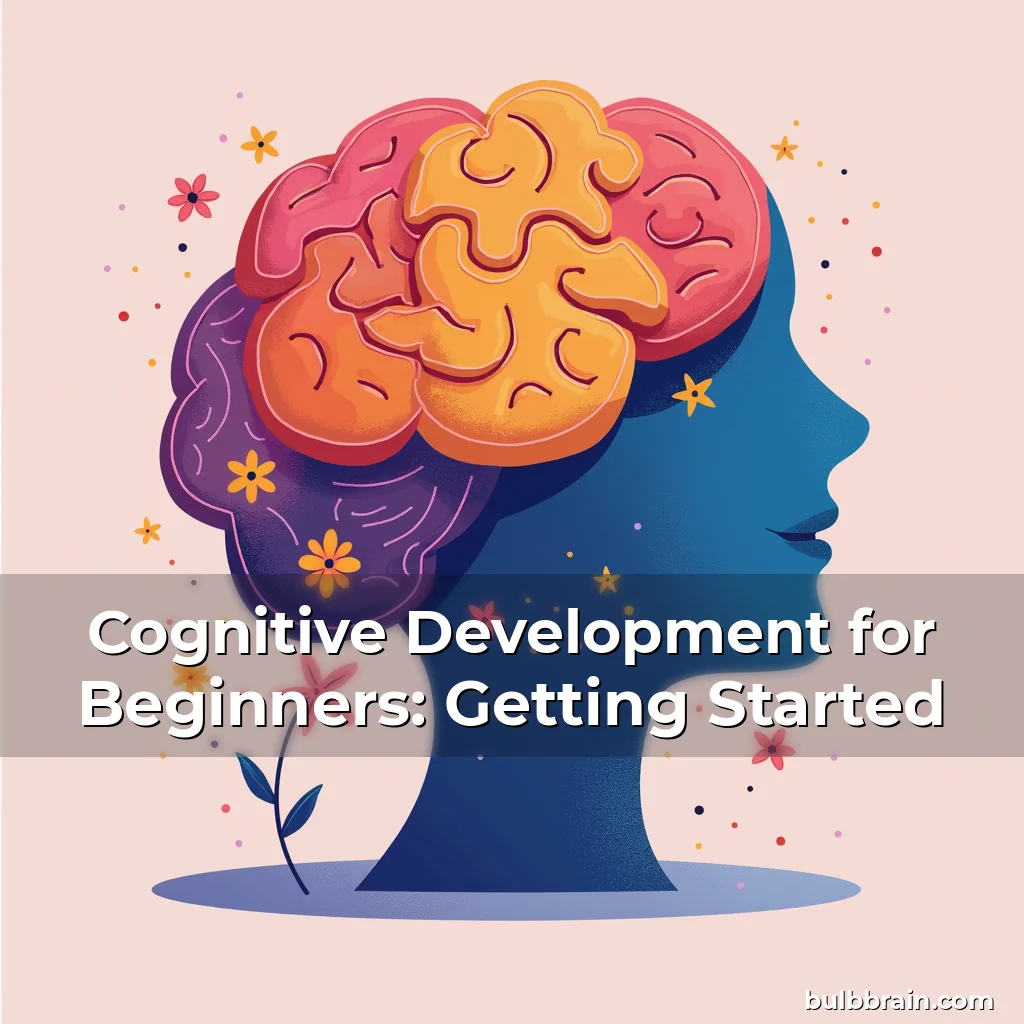
Cognitive Development for Beginners: Getting Started
Cognitive development refers to how humans acquire knowledge, think, understand, learn, remember, and problem-solve from infancy through adulthood. It encompasses the growth of mental processes such as memory, attention, perception, language, reasoning, and decision-making.
This journey is influenced by biological factors, environmental stimuli, social interactions, and educational experiences. Understanding cognitive development helps individuals optimize learning strategies at every stage of life.
The Foundations of Cognitive Growth
From birth, infants begin processing sensory information and forming neural connections that lay the groundwork for future intellectual abilities. These early experiences shape brain architecture in profound ways.
Sensory input plays a crucial role during these formative years. Simple actions like grasping an object or recognizing faces activate complex neurological pathways essential for later cognitive functions.
Secure attachment relationships between caregivers and children foster emotional safety which enhances exploratory behaviors vital for learning new skills and concepts.
Early exposure to diverse environments stimulates brain plasticity—the ability of the brain to change and adapt throughout life. This plasticity peaks in early childhood but remains present across different developmental stages.
Stages of Cognitive Maturation
Piaget’s theory of cognitive development identifies four key phases that mark distinct shifts in how individuals perceive and interact with their world. Each stage represents significant advancements in thought patterns and understanding.
The sensorimotor stage (birth to age 2) focuses primarily on physical exploration and developing object permanence—the realization that objects continue to exist even when out of sight.
During the preoperational stage (ages 2 to 7), children begin using symbols and language but still struggle with logical thinking and conservation concepts like quantity preservation.
The concrete operational stage (ages 7 to 11) marks improved logical reasoning within tangible contexts while abstract thinking remains limited until adolescence.
In the formal operational stage (age 12 onwards), individuals develop the capacity for hypothetical-deductive reasoning and can engage with abstract ideas independently.
- Object Permanence: A critical milestone achieved around 8 months old where babies recognize that unseen objects still exist.
- Symbolic Thinking: Emerges in toddlerhood allowing representation of things beyond immediate experience through drawings or speech.
- Conservation Concepts: Children grasp principles like volume and number equivalence typically between ages 6-7 according to Piagetian research.
- Hypothetical Reasoning: Teenagers gain ability to consider possibilities systematically rather than only focusing on current realities.
Nurturing Intellectual Potential Through Environment
A stimulating environment rich in varied activities promotes optimal cognitive development. Exposure to books, puzzles, music, art, and nature encourages multi-dimensional brain engagement.
Interacting with peers at similar developmental levels fosters collaborative problem-solving skills that enhance both social competence and analytical capabilities.
Parents play pivotal roles in shaping cognitive trajectories by modeling curiosity, asking open-ended questions, and providing constructive feedback.
Leveraging technology appropriately offers interactive tools that support reading comprehension, mathematical reasoning, and digital literacy without compromising traditional skill-building methods.
Language Acquisition and Cognitive Advancement
Language serves as a fundamental building block for higher-order thinking processes. Vocabulary expansion correlates strongly with improvements in conceptual understanding and executive functioning.
Bilingualism has been shown to strengthen cognitive flexibility, working memory, and metalinguistic awareness—skills beneficial across academic disciplines and daily life tasks.
Reading aloud regularly to young children establishes strong phonological foundations while simultaneously exposing them to narrative structures that cultivate imagination and empathy.
Engaging in meaningful conversations about stories builds comprehension skills and teaches children to articulate thoughts clearly—a precursor to effective communication and argumentation.
The Role of Play in Mental Growth
Play acts as natural catalysts for cognitive progress across all developmental periods. Pretend play specifically develops symbolic representation, creativity, and perspective-taking abilities.
Structured games requiring strategy, turn-taking, and rule-following enhance problem-solving acumen while promoting self-regulation and impulse control.
Outdoor play stimulates spatial reasoning and gross motor coordination which are linked to better academic performance particularly in mathematics and science subjects.
Combining imaginative elements with real-world applications through construction toys facilitates hands-on learning experiences that reinforce STEM concepts intuitively.
Fostering Executive Function Skills
Executive function encompasses core cognitive abilities including inhibition, working memory, and flexible thinking necessary for goal-directed behavior. Strengthening these capacities supports lifelong success.
Activities like mindfulness meditation have demonstrated effectiveness in improving attentional control and reducing impulsive responses in both children and adults.
Teaching organizational techniques such as time management systems help build structure around complex tasks making them more manageable for learners of any age group.
Regular practice with puzzles, mazes, and logic problems strengthens pattern recognition skills that underpin advanced mathematical thinking and scientific inquiry.
Technology’s Impact on Modern Cognition
Digital devices offer unprecedented access to educational resources yet require careful integration to avoid overstimulation or diminished attention spans. Balancing screen time with active learning is essential.
Educational apps designed around gamified learning platforms provide personalized instruction tailored to individual strengths and weaknesses in various subject areas.
Virtual reality simulations allow immersive experiential learning opportunities previously unavailable through conventional teaching methodologies alone.
However excessive reliance on technology may hinder face-to-face interaction crucial for developing emotional intelligence and interpersonal relationship skills.
Cognitive Aging and Lifelong Learning
Maintaining mental vitality throughout aging requires continuous stimulation through novel challenges, social engagement, and purposeful activity participation. The concept of neuroplasticity applies across entire lifespan.
Lifelong education programs targeting older populations demonstrate that acquiring new skills late in life maintains cognitive sharpness comparable to younger cohorts who started earlier.
Social connection remains vital for preserving cognitive health; isolation increases risk of dementia whereas regular interaction preserves neural networks responsible for memory recall.
Physical exercise combined with mentally demanding pursuits creates synergistic effects boosting overall brain resilience against degenerative diseases associated with aging.
Practical Strategies for Enhancing Cognitive Abilities
Adopting healthy lifestyle choices forms foundation for optimal cognitive function. Quality sleep, balanced nutrition, and routine physical activity collectively contribute significantly to mental clarity and alertness.
Implementing spaced repetition study techniques improves long-term retention rates compared to cramming sessions focused solely on short-term memorization goals.
Engaging in cross-disciplinary learning exposes minds to diverse perspectives fostering innovative solutions applicable across professional fields and personal interests alike.
Cultivating a growth mindset emphasizing effort over innate talent motivates persistent improvement towards mastery rather than seeking temporary perfection in isolated domains.
Conclusion
Cognitive development is a dynamic process shaped by myriad influences spanning biology, environment, culture, and personal experiences. Recognizing its complexity empowers individuals to make informed decisions regarding learning approaches at each life phase.
To maximize potential, embrace curiosities openly, seek challenging experiences deliberately, and maintain consistent efforts toward expanding intellectual horizons regardless of chronological age constraints.

news is a contributor at BulbBrain. We are committed to providing well-researched, accurate, and valuable content to our readers.
You May Also Like


About news
Passionate about learning, cognitive science, and helping people unlock their full potential.