
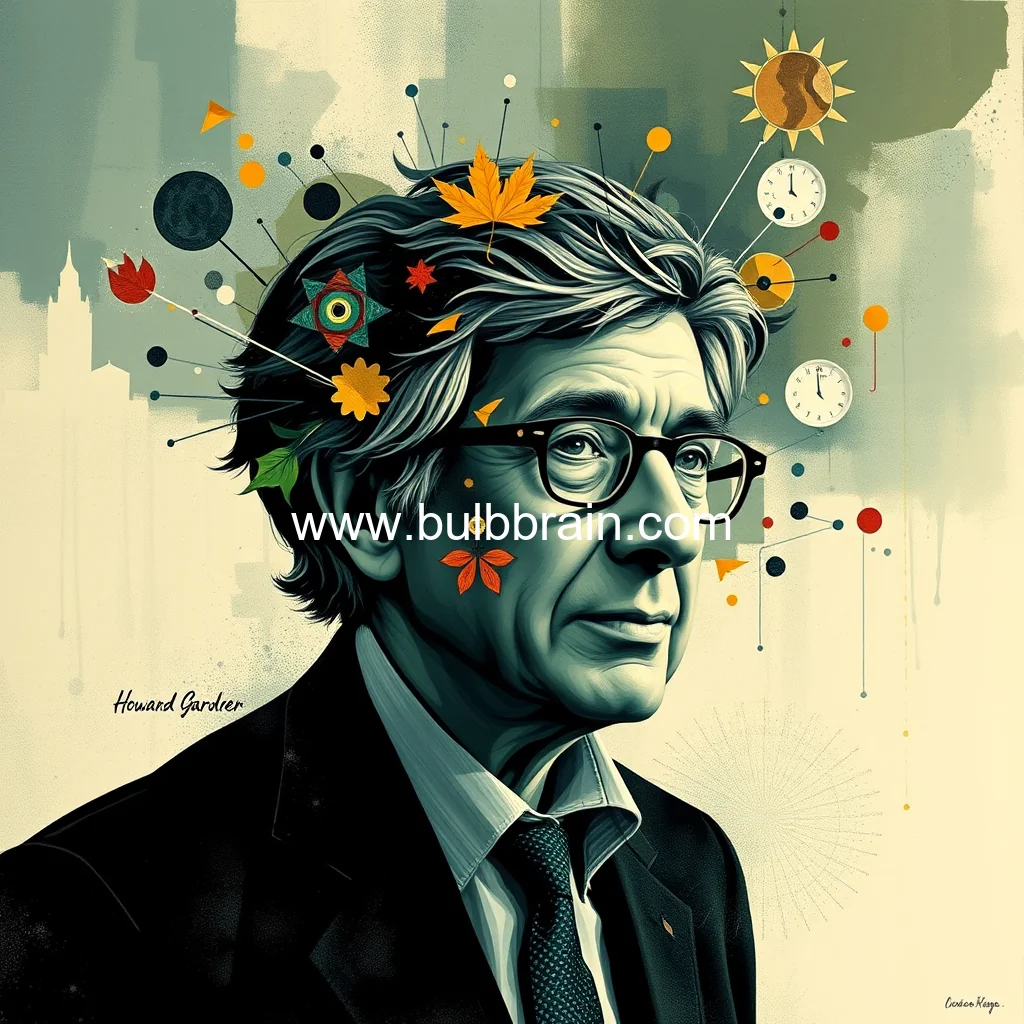
His work focuses on multiple intelligences theory, which posits that there are multiple types of intelligence, rather than a single, universal intelligence.
The Multiple Intelligences Theory
Gardner’s theory challenges the traditional view that there is only one type of intelligence, as proposed by Howard Gardner’s work. This theory suggests that there are multiple types of intelligence, each with its own unique characteristics and strengths.
Gardner’s groundbreaking theory of multiple intelligences revolutionizes our understanding of human intelligence and cognitive strengths.
Gardner is a renowned expert in the field of education and has been recognized for his work in the field.
The Essential Howard Gardner on Education
A Comprehensive Guide to Intelligence and Cognitive Strengths
The Essential Howard Gardner on Education is a book that distills the author’s ideas on intelligence, cognitive strengths, and thinking into one comprehensive guide. Gardner, a renowned expert in the field of education, has written over 30 books and over 1000 articles, making him one of the most prolific writers in his field.
Key Takeaways
However, the theory has been subject to criticism and controversy over the years. Critics argue that the theory is too broad and lacks empirical evidence to support its claims. Despite these criticisms, Gardner’s theory remains a widely accepted and influential framework for understanding human intelligence.
The Origins of Gardner’s Theory of Multiple Intelligences
In 1983, Howard Gardner, a renowned psychologist, introduced his theory of multiple intelligences (MI). Gardner’s theory posits that there are multiple types of intelligence, rather than a single, general intelligence factor.
The Problem with Overemphasis on Computational Thinking
Computational thinking is a valuable skill, but it’s not a replacement for human creativity and problem-solving abilities. Overemphasizing computational thinking can lead to a lack of emphasis on other essential skills, such as critical thinking, creativity, and emotional intelligence. Key skills that are often overlooked in the Gardner’s approach:
- • Critical thinking
- • Creativity
- • Emotional intelligence
- • Social skills
- • Communication skills
- • Improved academic performance
- • Enhanced creativity and innovation
- Increased social and emotional intelligence
- • Better preparation for the workforce
- • Increased adaptability and resilience
- • Scientists and engineers rely on critical thinking and creativity to develop new technologies and solve complex problems.
The Power of the Mind
Gardner’s first book, “The Power of the Mind,” is a collection of essays that explore the human mind and its potential. He discusses the importance of self-awareness, the role of imagination, and the power of positive thinking. Gardner argues that the mind is a powerful tool that can be harnessed to achieve success and happiness. Key takeaways from “The Power of the Mind”: + The importance of self-awareness in personal growth + The role of imagination in shaping our reality + The power of positive thinking in overcoming obstacles
The Art of Living
Gardner’s second book, “The Art of Living,” is a collection of essays that explore the human experience and the importance of living in the present moment. He discusses the value of mindfulness, the importance of relationships, and the need to let go of negative thoughts and emotions.
Goodman’s book, “The Structure of Art,” is a seminal work that has had a lasting impact on the art world.
You Might Also Enjoy: The transformative role of interactive learning in educationThe Influence of Theoretical Foundations
The theoretical foundations of his work were deeply rooted in the ideas of several influential thinkers. Piaget’s theory of cognitive development, for example, posited that children progress through a series of stages as they acquire knowledge and understanding. This idea has had a lasting impact on the way we think about learning and development. Piaget’s theory emphasizes the importance of active learning and hands-on experience in the learning process. It also highlights the role of social interaction and collaboration in the development of cognitive abilities. Goodman’s work, on the other hand, focused on the nature of art and its relationship to language and cognition. His book, “The Structure of Art,” is a seminal work that has had a lasting impact on the art world. Goodman’s theory posits that art is not just a matter of aesthetics, but also involves cognitive processes such as perception, attention, and memory. His work has influenced the way we think about the role of the artist and the viewer in the creative process. Bruner’s work, meanwhile, focused on the role of language in shaping our understanding of the world.
They found that creativity was not just about intelligence, but also about the ability to find meaning and purpose in life. This experience had a profound impact on Gardner’s theory of multiple intelligences.
The Early Years of Howard Gardner
Howard Gardner was born in 1943 in Brooklyn, New York. He grew up in a family of modest means, but his parents encouraged his curiosity and love of learning. Gardner’s early education was marked by a strong emphasis on the arts and humanities. He attended the University of Chicago, where he studied psychology and philosophy.
The Development of Multiple Intelligences
Gardner’s work with brain damaged patients was instrumental in shaping his theory of multiple intelligences. During his research, he discovered that people with different types of brain damage had different strengths and weaknesses. For example, patients with damage to the left hemisphere of the brain had difficulty with language and spatial reasoning, while those with damage to the right hemisphere had difficulty with spatial reasoning and visual-spatial skills. Key findings from Gardner’s research: + People with different types of brain damage had different strengths and weaknesses. + Language and spatial reasoning were linked to specific brain areas.
He emphasizes that he would focus on the things that bring people together, rather than the things that drive them apart.
The Problem of Divisiveness
The world is facing a growing sense of divisiveness, where people are increasingly polarized and disconnected from one another.
Gardner’s father survived the Holocaust, and many of his relatives did not. Gardner is a pessimist but tries to be optimistic and pass on his optimistic mindset to his children. Detailed Explanation Gardner’s family history has had a profound impact on his worldview. Growing up, he was exposed to the harsh realities of the Holocaust, which left an indelible mark on his life. The fact that his father survived, while many relatives perished, is a stark reminder of the fragility of life and the importance of resilience. This experience has shaped Gardner’s perspective on life, leading him to adopt a pessimistic outlook. However, despite his pessimistic tendencies, Gardner has made a conscious effort to adopt an optimistic mindset. He recognizes that a negative outlook can be paralyzing and suffocating, especially when it comes to raising his children. Gardner wants to provide his children with a sense of security and hope, which an optimistic mindset can offer. By embracing optimism, Gardner aims to shield his children from the harsh realities of life and encourage them to face challenges with confidence and resilience. One of the most significant ways Gardner passes on his optimistic mindset to his children is through storytelling.
The Power of Gardner’s Guidance
In these trying times, Gardner’s guidance is more crucial than ever. His books offer valuable insights and practical advice to help you unlock your full potential and make a positive impact. Gardner’s guidance is not just about providing solutions; it’s about empowering you to take control of your life and make informed decisions that align with your values and goals.
Understanding Gardner’s Philosophy
Gardner’s philosophy is built on the idea that everyone has the potential to make a positive difference in the world. He believes that by understanding our strengths, weaknesses, and passions, we can unlock our full potential and achieve our goals. This philosophy is not limited to personal growth; it also applies to our relationships, communities, and the world at large.
Key Principles of Gardner’s Philosophy
- Self-awareness: Understanding your strengths, weaknesses, and passions is essential to unlocking your full potential. Personal growth: Continuously learning and developing new skills is crucial for personal growth and self-improvement. Empowerment: Taking control of your life and making informed decisions is key to achieving your goals and making a positive impact. * Community: Building strong relationships and connections with others is vital for personal growth and success. ### Applying Gardner’s Principles in Your Life**
- Improve your relationships: By understanding your strengths, weaknesses, and passions, you can build stronger, more meaningful relationships with others.
news is a contributor at BulbBrain. We are committed to providing well-researched, accurate, and valuable content to our readers.
You May Also Like
The Benefits of a Balanced Approach
A balanced approach to education would prioritize the development of these essential skills, alongside computational thinking. This would enable students to excel in a wide range of subjects and activities, and prepare them for success in an increasingly complex and dynamic world. Benefits of a balanced approach:
The Importance of Human Skills in the Digital Age
In today’s digital age, it’s more important than ever to recognize the value of human skills, such as critical thinking, creativity, and emotional intelligence. These skills are essential for success in a wide range of fields, from science and technology to the arts and humanities. Examples of human skills in action:
Applying Gardner’s Principles in Your Life
Gardner’s principles can be applied in various aspects of your life, from personal growth and relationships to career development and community involvement. By incorporating these principles into your daily life, you can:




About news
Passionate about learning, cognitive science, and helping people unlock their full potential.