
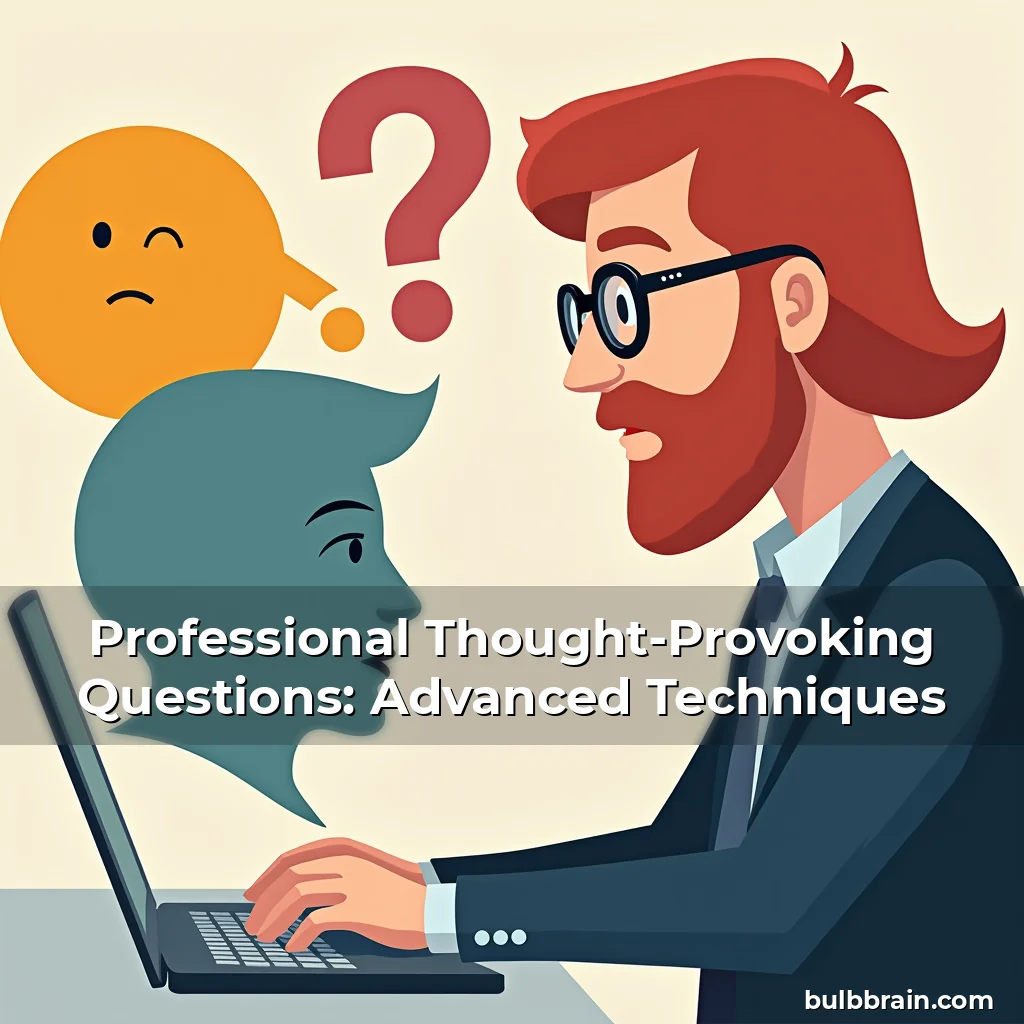
The Art of Deeper Inquiry: Mastering Thought-Provoking Questions
In an age where information flows at light speed and distractions abound, cultivating curiosity has become both an art form and a survival skill. The ability to ask thought-provoking questions isn’t merely academic; it’s a transformative tool that can reshape personal growth, professional development, and meaningful relationships.
This guide explores advanced techniques for crafting questions that cut through surface-level chatter, challenge assumptions, and spark profound conversations across diverse contexts—from business strategy meetings to intimate family discussions.
Understanding the Power of Deep Questioning
Cognitive psychology reveals that asking open-ended questions activates different brain regions than simple yes/no queries. This neurological response encourages deeper processing and enhances memory retention by up to 68% according to recent neuroscience studies.
Thoughtful questioning doesn’t just extract information—it creates space for new perspectives to emerge. When we ask penetrating questions, we invite others to examine their beliefs, values, and decisions from fresh angles.
- Neurological engagement: Open-ended questions stimulate prefrontal cortex activity, enhancing critical thinking capabilities.
- Behavioral impact: Strategic questioning can shift someone’s mindset within minutes by reframing problems as opportunities.
Beyond Surface-Level Inquiries
Most people default to basic questioning patterns that rarely yield breakthroughs. Recognizing these limitations is the first step toward developing more effective inquiry strategies.
Simple interrogatives like “What happened?” often lead to shallow responses focused solely on immediate events rather than underlying causes or implications. To move beyond this, consider rephrasing standard questions using frameworks such as the Socratic Method or the Five Whys technique.
For instance, instead of asking “Why did you make that decision?”, try “What were the key factors influencing your choice when considering long-term consequences?” This subtle shift invites richer analysis while maintaining respect for the respondent’s autonomy.
Adopting structured question formats ensures consistency without stifling creativity—there’s a delicate balance between methodology and spontaneity in effective questioning.
Crafting Impactful Question Frameworks
Established questioning models provide reliable blueprints but require customization to suit specific situations. The classic journalistic approach—”Who, What, When, Where, Why, How”—can be expanded into a powerful diagnostic tool when applied strategically.
Consider integrating probing elements into each component of the traditional model: “Who was involved in this situation? What specific actions took place? When did things begin shifting significantly? Where might systemic issues have contributed to the outcome?” These variations create layered explorations that uncover hidden dimensions.
The five whys technique offers another systematic way to peel back layers of understanding. Rather than stopping after one “why,” persistently追问 until reaching root causes—an approach particularly useful in problem-solving scenarios.
However, over-reliance on formulaic approaches may limit creative insight. Experienced questioners know when to follow established methods and when to break free from them based on conversational dynamics.
Tailoring Questions to Contextual Nuances
Effective questioning requires sensitivity to context—including cultural norms, power dynamics, and emotional undercurrents present in every interaction. A blunt inquiry might work well in a boardroom discussion but could feel intrusive during private counseling sessions.
Recognize that some topics carry inherent sensitivities that demand careful handling. For example, discussing income disparities with colleagues requires tact, whereas exploring philosophical dilemmas among peers allows greater intellectual freedom.
Developing situational awareness involves observing nonverbal cues, assessing relationship dynamics, and respecting boundaries. Skilled questioners adapt their language style accordingly, adjusting depth and directness based on perceived comfort levels.
Mastery comes from balancing analytical rigor with interpersonal intelligence—a combination that enables meaningful dialogue without causing defensiveness or discomfort.
Fostering Intellectual Curiosity Through Questions
Achieving optimal results from questioning relies heavily on cultivating genuine curiosity rather than simply extracting information. People respond more authentically to inquiries driven by sincere interest rather than strategic intent.
Demonstrating active listening skills reinforces this authenticity. Nodding attentively, paraphrasing key points, and asking clarifying questions signal true engagement rather than mere obligation to participate.
Genuine curiosity also manifests through body language—leaning forward slightly, maintaining eye contact, and displaying micro-expressions that reflect mental processing rather than judgmental reactions.
When approached sincerely, even complex subjects become accessible conversation topics. People are naturally inclined to share knowledge when they perceive their contributions as valued.
Encouraging Creative Thinking Through Structured Prompts
Specially designed questions act as cognitive catalysts that help individuals see connections previously obscured by routine thinking patterns. These prompts encourage lateral thinking and unconventional solutions.
Metaphorical questions often produce unexpected insights by forcing minds to think outside conventional categories. Asking “How would a tree solve this problem?” might reveal novel approaches buried beneath familiar paradigms.
Hypothetical scenarios serve similar purposes by creating safe spaces for experimentation. “If resources weren’t limited, what innovative solution would you pursue?” allows exploration of ideas constrained only by imagination.
Combining metaphorical and hypothetical questioning expands the range of potential discoveries, making it easier to identify overlooked possibilities.
Overcoming Common Barriers to Effective Questioning
Many barriers preventing deep questioning stem from ingrained habits formed over years of passive consumption rather than active participation. Breaking these patterns demands conscious effort and practice.
Prioritization plays a crucial role in overcoming resistance. Focusing initially on low-stakes interactions helps build confidence before tackling more challenging conversations involving high-emotion topics.
Some individuals struggle with silence following their questions. Learning to sit comfortably with pauses allows respondents time to formulate thoughtful answers rather than rushing into superficial replies.
Patience becomes essential as both questioner and responder navigate unfamiliar territory together—this collaborative process often yields the most valuable insights.
Refining Your Questioning Style Through Practice
Like any communication skill, mastery of impactful questioning develops through consistent application and reflection. Keeping records of successful exchanges provides tangible evidence of progress over time.
Analyzing past conversations helps identify patterns—what types of questions generated insightful responses versus those that elicited defensive reactions. This self-assessment informs future improvements.
Seeking feedback from trusted sources adds objective perspective. While some people hesitate to criticize their questioning styles, constructive input accelerates growth far faster than isolated practice alone.
Varying question structures prevents stagnation. Rotating between narrative-based (“Tell me about…”), hypothesis-driven (“What if…”), and reflective (“Have you considered…”) formats maintains freshness and effectiveness.
Building Confidence in Questioning Conversations
Confidence in asking questions grows organically as practitioners witness positive outcomes from their inquiries. Documenting moments when good questions led to meaningful revelations reinforces this growing competence.
Starting small builds momentum gradually. Initiating with minor curiosities—like asking a colleague about their weekend project—creates comfortable entry points before progressing to weightier matters.
Embracing vulnerability fosters authentic connection. Admitting uncertainty or expressing genuine interest demonstrates humility rather than weakness, encouraging reciprocal openness.
Reframing fear of being judged as opportunity for learning transforms apprehension into motivation. Every awkward moment contains lessons waiting to be discovered.
Conclusion
The journey towards mastering thought-provoking questions is ongoing—one marked by continuous discovery rather than final achievement. Each exchange presents new challenges and opportunities for refinement.
To maintain momentum, establish regular practice routines incorporating varied question types across different aspects of life. With persistence, anyone can develop the capacity to ask questions that illuminate paths otherwise invisible to ordinary perception.
“`

news is a contributor at BulbBrain. We are committed to providing well-researched, accurate, and valuable content to our readers.
You May Also Like

About news
Passionate about learning, cognitive science, and helping people unlock their full potential.