
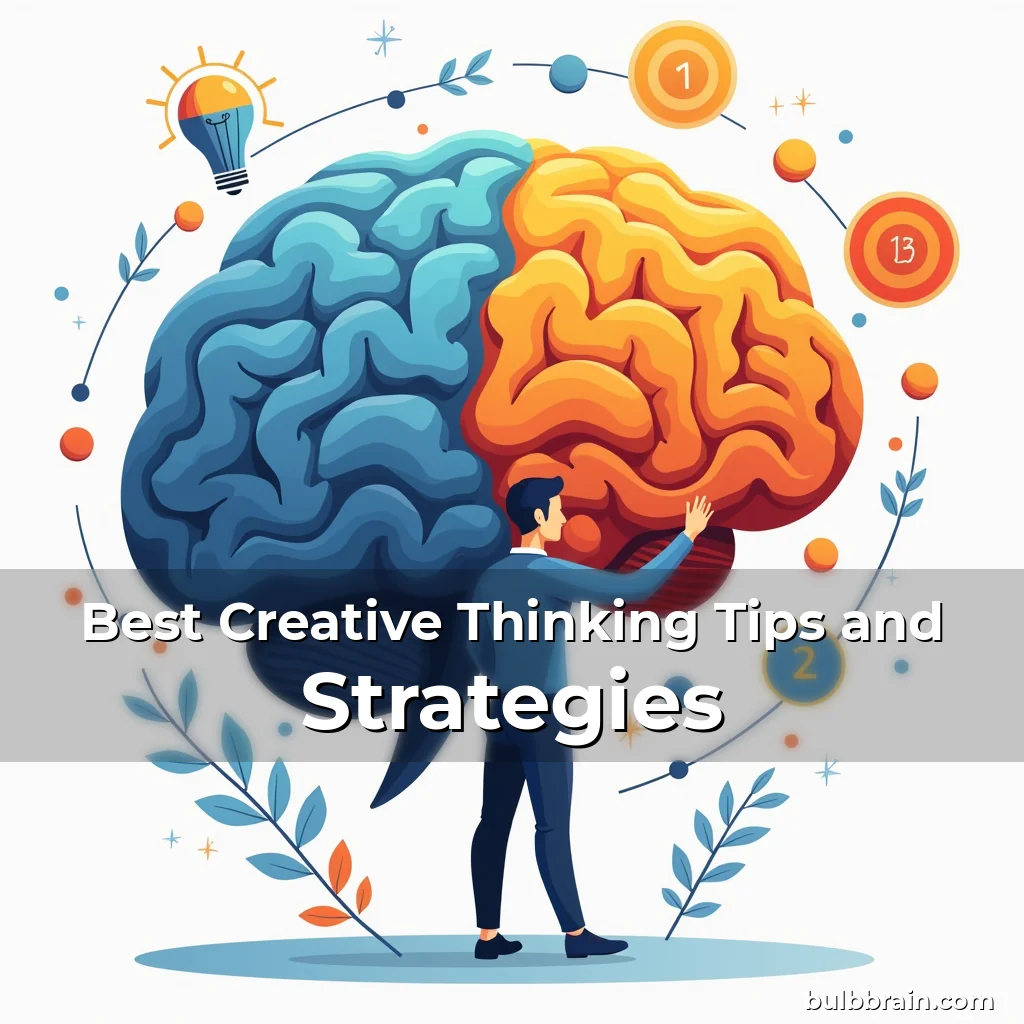
Fuel Your Imagination: Mastering the Art of Creative Thinking
Creative thinking isn’t confined to artists or writers—it’s a powerful tool reshaping industries, solving global challenges, and driving personal growth. In a world dominated by rapid technological change and complex problems, the ability to think outside the box is no longer optional.
This guide dives deep into the science, psychology, and practical applications of creative thinking. Whether you’re an entrepreneur, student, or simply curious about unlocking your potential, these strategies will transform how you approach challenges and opportunities.
The Science Behind Creative Thinking
Creative thinking is rooted in neurological processes that combine logic, emotion, and intuition. Studies show that creativity activates regions in the brain responsible for memory retrieval, pattern recognition, and emotional processing simultaneously.
Research published in *Nature Neuroscience* reveals that creative individuals often exhibit heightened connectivity between distant brain networks, enabling them to see relationships others miss. This “cognitive flexibility” is trainable and grows stronger with intentional practice.
- Default Mode Network (DMN):** Responsible for daydreaming and free association, this network generates novel ideas during restful states like meditation or showering.
- Executive Control Network:** Filters and refines raw ideas, turning chaos into coherent solutions.
Breaking Down Barriers to Creativity
Creativity thrives in freedom, yet many factors stifle it. Fear of failure, rigid routines, and over-reliance on past experiences create invisible walls that block innovative thought.
To dismantle these barriers, start by redefining failure as feedback. Psychological safety—the belief that mistakes won’t lead to punishment—is linked to higher team creativity, according to Harvard Business Review research.
The Role of Constraints in Spurring Innovation
Paradoxically, constraints can fuel creativity. Designers use limited materials to force unconventional solutions, while entrepreneurs operate within tight budgets to innovate cost-effectively. These limitations push the mind toward resourcefulness rather than complacency.
Consider Apple’s early development of the iPhone. Engineers faced strict hardware limits, yet this challenge drove breakthroughs in multitouch interface design and app ecosystems. Constraints act as catalysts, redirecting energy toward ingenuity.
Daily Practices to Cultivate Creativity
Incorporate small rituals into your routine to prime your mind for creative insight. Morning journaling, random walk meditations, or even doodling in meetings can spark unexpected connections.
A Stanford University study found that people who engaged in “divergent thinking” exercises—like listing unrelated uses for a paperclip—showed improved problem-solving abilities weeks later. Consistency matters more than intensity.
Leveraging Analogies and Cross-Disciplinary Insights
Great innovators borrow frameworks from other domains. Steve Jobs famously studied calligraphy before designing Apple’s typography, proving that cross-pollination fuels groundbreaking ideas.
Analogical thinking involves asking, “What is this similar to?” For example, engineers studying bird flight patterns developed airplane wings. This method transforms abstract concepts into tangible solutions.
- Biological Inspiration:** Biomimicry, like Velcro inspired by burrs, demonstrates nature’s influence on human invention.
- Historical Parallels:** Analyzing historical conflicts can reveal patterns useful for modern business strategy.
Harnessing the Power of Rest and Subconscious Processing
Creative breakthroughs often occur unexpectedly—during sleep, showers, or casual conversations. This phenomenon, called incubation, allows the subconscious to work through problems without conscious effort.
Psychologists suggest taking deliberate breaks after intense focus sessions. A 20-minute walk or nap can reset neural pathways, making fresh perspectives more accessible. Many scientists attribute eureka moments to this unconscious processing phase.
Building a Creative Ecosystem Around You
Your environment significantly impacts creative output. Surround yourself with diverse stimuli: art, music, literature, and people from differing backgrounds. Exposure to novelty expands cognitive horizons.
Create a workspace that balances order and spontaneity. While organized tools aid productivity, leaving room for visual clutter—a whiteboard filled with sketches or sticky notes—encourages serendipitous discovery.
Social Dynamics and Collaborative Creativity
Creative teams outperform solo thinkers in tackling complex problems. Diverse group members bring contrasting viewpoints, challenging assumptions and generating richer solutions.
However, collaboration requires careful management. A MIT study found that optimal group sizes range between three to five people, balancing participation without stifling individual contribution. Establish clear goals and rotating roles to maintain momentum.
Overcoming Cognitive Biases That Block Creativity
Mental shortcuts, though efficient, often hinder creative thinking. Confirmation bias leads us to ignore contradictory evidence, while functional fixedness prevents seeing objects’ alternative uses.
Combat these biases by deliberately seeking disconfirming information. Ask, “What am I missing?” before finalizing decisions. Practicing perspective-taking—imagining another person’s viewpoint—also broadens understanding.
Tools and Technologies for Modern Thinkers
From AI-powered ideation apps to virtual reality brainstorming platforms, technology now amplifies human creativity. Tools like Miro enable collaborative mind mapping, while Midjourney and DALL·E assist in visual concept generation.
Beware of relying too heavily on algorithms. Let machines handle repetitive tasks, but preserve the uniquely human qualities of empathy, storytelling, and ethical judgment in your creative process.
Measuring and Refining Your Creative Process
Track progress through metrics like idea quantity, prototype iterations, or project completion rates. Keep a reflection journal noting which methods yield results and which stall productivity.
Experiment with different approaches: timed brainstorming sessions, constraint-based challenges, or interdisciplinary workshops. What works for one person may fail for another—personalize your toolkit relentlessly.
The Future of Creative Thinking
As artificial intelligence becomes increasingly capable, human creativity will shift toward areas requiring emotional depth, moral reasoning, and cultural nuance. Our role evolves from creating products to curating meaningful experiences.
Educational systems must adapt by integrating creativity training alongside STEM subjects. Finland’s education model, emphasizing play and exploration, offers a blueprint for nurturing future innovators.
Conclusion
Creative thinking is neither innate talent nor luck—it’s a skill honed through mindful practice, environmental shaping, and intellectual curiosity. By embracing uncertainty, questioning norms, and leveraging both human and machine capabilities, anyone can become a master thinker.
Start today: set aside 10 minutes to jot down wild ideas, explore a new hobby, or engage in a conversation outside your comfort zone. Every step forward builds the creative muscle you need to thrive in an ever-changing world.

news is a contributor at BulbBrain. We are committed to providing well-researched, accurate, and valuable content to our readers.
You May Also Like


About news
Passionate about learning, cognitive science, and helping people unlock their full potential.