
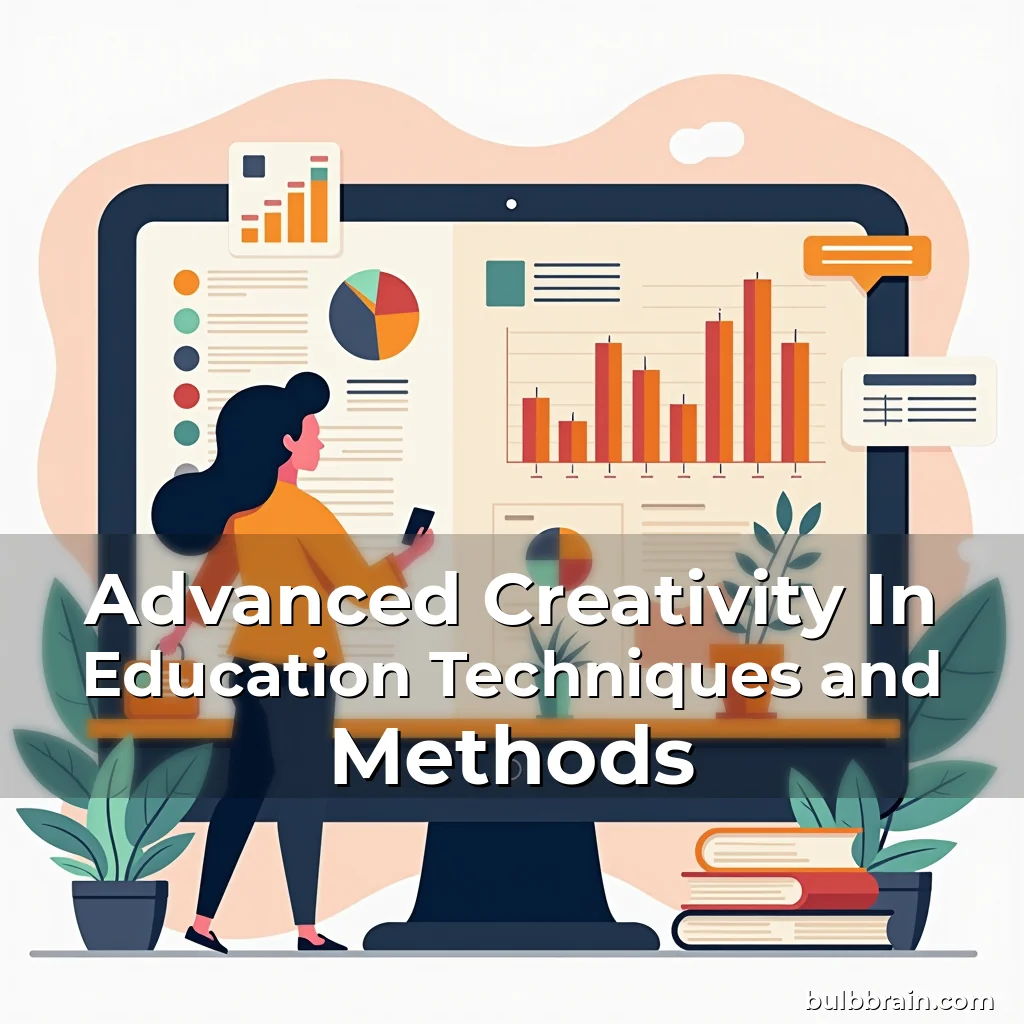
The Spark Within: Cultivating Creativity as the Heartbeat of Modern Education
In an era defined by rapid technological advancement and evolving workforce demands, creativity has emerged not merely as a desirable trait but as a fundamental skill essential for success. The traditional model of rote memorization and standardized testing is being challenged by educators who recognize that fostering creative thinking equips students with the adaptability required to navigate an unpredictable future.
Creativity in education transcends art classes and brainstorming sessions; it’s woven into every subject area, from mathematics to history. This shift towards integrating creative practices across disciplines signals a profound transformation in how we approach learning and development.
Reimagining Learning Spaces: Beyond Textbooks and Rote Memorization
Modern classrooms are undergoing a radical transformation where rigid structures give way to dynamic environments designed to spark curiosity and innovation. These spaces prioritize student agency, allowing learners to explore topics through hands-on projects, collaborative problem-solving, and inquiry-based approaches rather than passive absorption of information.
A key element of these reimagined learning spaces is flexibility—both physical and pedagogical. Movable furniture arrangements enable spontaneous group work while digital tools provide access to global resources and interactive simulations that make abstract concepts tangible.
- Makerspaces: Dedicated areas equipped with 3D printers, coding kits, and craft materials encourage experimentation without fear of failure.
- Flipped Classrooms: Students engage with core content at home via video lessons, freeing class time for deep exploration and application through creative exercises.
This evolution challenges long-held assumptions about what constitutes effective teaching. Rather than focusing solely on content delivery, educators now act as facilitators guiding students toward discovering knowledge through active engagement.
Fostering Creative Thinking: Strategies That Work Across Grade Levels
Educators employ various techniques tailored specifically to nurture creative thinking skills at different developmental stages. For younger children, play-based learning becomes instrumental in developing imagination and problem-solving abilities through imaginative role-play scenarios and open-ended construction activities.
As students progress academically, project-based learning emerges as particularly effective in cultivating creativity within structured academic frameworks. By tackling real-world problems relevant to their lives, students learn to think critically while applying diverse perspectives creatively.
One such example involves environmental science units where middle schoolers design sustainable cities using recycled materials—an exercise that integrates STEM principles with artistic expression and ecological awareness simultaneously.
The Neuroscience Behind Creativity: Why It Matters for Learning
Research in neuroscience reveals fascinating insights into how our brains process creative ideas during learning experiences. When individuals engage in novel tasks requiring divergent thinking—the hallmark of creativity—they activate neural networks associated with memory retrieval, emotional processing, and pattern recognition.
Studies show increased activity in both hemispheres of the brain when people solve complex problems creatively compared to those relying strictly on logical analysis alone. This bilateral activation suggests that creativity enhances overall cognitive function beyond just artistic domains.
Moreover, creative learning experiences have been linked to improved retention rates due to deeper conceptual understanding fostered by making personal connections between new information and existing knowledge frameworks.
Bridging Disciplines: Interdisciplinary Approaches to Teaching Creativity
Interdisciplinary curricula offer powerful avenues for embedding creativity seamlessly across subjects instead of confining it only within arts programs. Mathematics teachers might incorporate storytelling elements when explaining geometric proofs, while literature instructors could analyze scientific texts through narrative lenses.
An innovative example comes from schools implementing STEAM (Science, Technology, Engineering, Arts, Math) initiatives that explicitly integrate artistic components into traditionally technical fields. Such integrations challenge stereotypes about which subjects require creative thinking while enriching student comprehension through varied modes of representation.
Schools adopting this interdisciplinary mindset often report higher levels of student motivation since they perceive relevance in their studies through cross-subject applications that mirror authentic life situations.
Assessment Revolution: Measuring Creative Achievement Effectively
Traditional assessment models heavily weighted toward standardized tests fail to capture nuanced aspects of creative achievement accurately. In response, educational institutions are increasingly embracing alternative evaluation methods aligned better with assessing creative competencies.
Rubrics emphasizing originality, risk-taking propensity, and iterative refinement processes replace conventional grading scales focused purely on correctness or speed. Portfolios containing multimedia artifacts created over extended periods serve as compelling evidence of ongoing growth trajectories in creative capacities.
Digital platforms allow for peer assessments where students evaluate each other’s contributions based on criteria related to creativity itself rather than simply right answers. This promotes metacognitive reflection alongside constructive feedback mechanisms crucial for continued improvement.
Teacher Empowerment: Building Capacity for Creative Instruction
Effective implementation of creative pedagogy requires substantial support systems ensuring teachers feel confident navigating uncharted instructional territories successfully. Professional development opportunities centered around experiential learning workshops help educators internalize strategies applicable across varying contexts.
School leadership plays pivotal roles here too by modeling openness towards experimental teaching methodologies and celebrating instances where unconventional approaches yield positive outcomes despite initial uncertainties regarding efficacy metrics.
Creating communities among educators dedicated exclusively to sharing successes and addressing challenges encountered while implementing creative instruction fosters collective resilience against potential pushback from stakeholders resistant to change.
Parental Engagement: Nurturing Creativity Outside Classroom Walls
Parents significantly influence whether young minds develop strong creative inclinations or become overly reliant upon formulaic solutions. Encouraging family-oriented activities promoting imaginative exploration outside formal schooling hours reinforces classroom efforts effectively.
Simple yet impactful actions include providing ample opportunity for free-form drawing sessions, encouraging participation in local theater productions, or even supporting kitchen experiments exploring basic chemistry concepts safely at home—all contributing meaningfully towards nurturing inventive dispositions.
Open communication channels between parents and teachers ensure consistency in reinforcing values surrounding creativity so that expectations remain harmonized regardless of setting—be it inside school walls or within domestic environments.
Toward A Future Where Every Student Thrives Through Creativity
The journey toward fully realizing the transformative power of creativity in education remains ongoing but already yields promising results globally. As more schools adopt holistic approaches prioritizing inventive thinking alongside analytical skills, we witness emerging generations demonstrating unprecedented levels of resourcefulness facing contemporary challenges.
To continue advancing this vision, sustained investment must be directed towards training educators thoroughly in creative methodologies while also dismantling systemic barriers preventing equitable access to quality creative learning experiences universally available irrespective of socioeconomic backgrounds.
By valuing creativity not as an extracurricular luxury but as integral component shaping tomorrow’s leaders, innovators, and problem solvers today—we invest wisely in humanity’s collective future prosperity rooted firmly in boundless human ingenuity.

news is a contributor at BulbBrain. We are committed to providing well-researched, accurate, and valuable content to our readers.
You May Also Like
About news
Passionate about learning, cognitive science, and helping people unlock their full potential.