
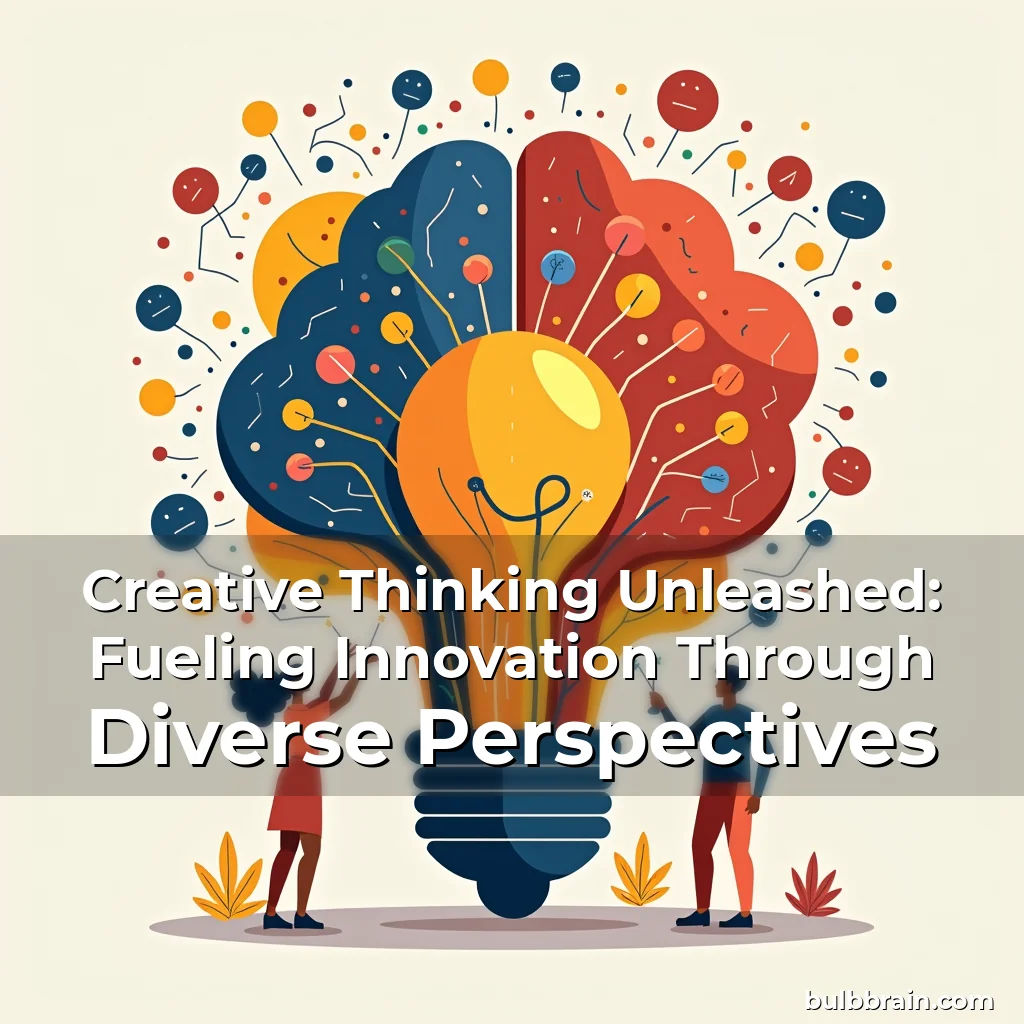
The Unleashing of Cognitive Spark: Mastering Creative Thinking in a Routine World
In an era defined by rapid technological advancements and information overload, creative thinking has emerged as both a survival skill and a competitive advantage. This cognitive process transcends mere imagination; it represents a structured approach to problem-solving that challenges conventional wisdom.
The ability to think creatively is not reserved for artists or inventors alone. It’s a vital competency across professions ranging from engineering to education, shaping how we navigate complexity and innovate solutions in our daily lives.
The Neuroscience Behind Creativity
Creative thinking originates at the neurological level through complex interactions between different brain regions. Studies show that when engaged in creative tasks, there’s increased activity in the default mode network, which allows for free association and idea generation.
This neural network interacts with the executive control network responsible for logical processing. Their collaboration forms what researchers call the “cognitive flexibility,” enabling us to switch between divergent thinking and analytical evaluation.
Key findings indicate:
- The prefrontal cortex regulates creativity by managing attention and decision-making processes
- Dopamine levels significantly influence creative output, with higher concentrations enhancing originality
- Neuroplasticity allows creative skills to develop and strengthen over time through practice
Interestingly, sleep plays a crucial role in consolidating ideas generated during wakefulness. REM sleep specifically facilitates the reorganization of memories, often leading to unexpected connections and breakthroughs.
These biological foundations highlight why creative thinking isn’t merely an abstract concept but a scientifically grounded cognitive function that can be cultivated and optimized.
Fostering a Creative Mindset
Cultivating creativity requires deliberate effort beyond innate talent. Research indicates that individuals who maintain a consistent routine of mental stimulation are more likely to exhibit innovative thinking patterns.
A core principle involves embracing ambiguity rather than seeking immediate resolution. By allowing oneself to explore multiple perspectives without judgment, new pathways emerge naturally within the mind’s landscape.
Mindfulness practices have shown particular effectiveness in enhancing creative capacities. Techniques such as meditation reduce rumination while increasing awareness of subtle environmental cues that spark inspiration.
Engaging regularly with diverse disciplines helps expand cognitive frameworks. Cross-pollinating knowledge from fields as varied as biology, music, and philosophy creates fertile ground for novel associations and syntheses.
Strategies for Enhancing Creative Thought
Structured approaches can dramatically improve creative capabilities when applied consistently. One effective method involves setting aside dedicated time for unstructured exploration before transitioning to focused work sessions.
Keeping a visual journal filled with sketches, quotes, and interesting observations serves as a repository for potential ideas waiting to be developed further. These records act as prompts that stimulate deeper inquiry and connection-making.
Exposure to nature has been proven to enhance creativity by reducing stress and restoring mental energy. Spending even brief periods outdoors activates the brain’s capacity for imaginative thinking and pattern recognition.
Collaborative brainstorming environments foster innovation through social interaction. Group dynamics create friction that generates new possibilities while collective intelligence amplifies individual contributions.
The Role of Constraints in Innovation
Limits paradoxically fuel creativity by forcing the mind to find alternative solutions. Designers and engineers frequently use constraint-based thinking to generate unconventional yet practical outcomes.
Setting artificial boundaries within projects encourages out-of-the-box thinking. For instance, limiting resources or timelines often leads to more efficient and elegant solutions than open-ended scenarios would allow.
Historically, some of humanity’s greatest innovations arose under conditions of scarcity. The invention of Velcro, for example, was inspired by observing burrs clinging to animal fur during a walk in the woods.
Embracing constraints transforms them from obstacles into catalysts for ingenuity. When faced with limitations, the brain becomes more receptive to non-traditional approaches and novel combinations of existing elements.
Navigating Obstacles to Creative Thinking
Modern society presents numerous barriers to sustained creative thought. Constant digital connectivity fragments attention spans while algorithms curate experiences that reinforce existing viewpoints rather than challenge them.
Social conditioning also influences creative expression. Fear of judgment or failure often inhibits people from sharing unconventional ideas, creating self-imposed limitations on their potential.
Criticism, especially when poorly delivered, can stifle creativity by triggering defensive mechanisms. Constructive feedback however, framed appropriately, becomes a powerful tool for refinement and growth.
Educational systems sometimes prioritize standardized testing over exploratory learning, inadvertently discouraging risk-taking behaviors essential for developing creative thinking skills.
Creativity in Professional Contexts
Businesses increasingly recognize the value of fostering creative cultures. Companies like Google and IDEO implement flexible work arrangements designed to nurture innovation among employees.
Design thinking methodologies provide structured frameworks for applying creative principles in organizational settings. This human-centered approach emphasizes empathy, ideation, and prototyping as key stages in problem-solving.
Leadership plays a critical role in cultivating creativity within teams. Supportive managers who encourage experimentation and tolerate calculated risks create environments where innovation thrives.
Measuring creative output remains challenging due to its intangible nature. However, tracking metrics related to idea generation frequency and implementation success provides useful indicators of progress.
The Future of Creative Thinking
As technology continues evolving, so too does the landscape of creative thinking. Artificial intelligence now assists humans in generating artistic works and solving complex problems previously considered uniquely human domains.
Virtual reality offers unprecedented opportunities for immersive creative experiences. Artists and designers utilize these tools to construct interactive worlds that push the boundaries of traditional mediums.
Global interconnectedness expands access to diverse cultural perspectives, enriching the wellspring of available inspirations. This cross-cultural exchange fosters hybrid ideas that might never have emerged within isolated contexts.
Despite these advances, the fundamental aspects of creative thinking remain unchanged. Core competencies such as curiosity, persistence, and openness continue to define successful innovators regardless of technological context.
Conclusion
Creative thinking is a dynamic capability shaped by both inherent traits and learned strategies. Understanding its neuroscience, nurturing the right mindset, and employing effective techniques empower individuals to unlock their full inventive potential.
To thrive in today’s world, embrace creative thinking as an ongoing journey rather than a destination. Cultivate your unique perspective, stay curious, and let imagination guide you toward discovering extraordinary solutions hidden within everyday experiences.

news is a contributor at BulbBrain. We are committed to providing well-researched, accurate, and valuable content to our readers.
You May Also Like



About news
Passionate about learning, cognitive science, and helping people unlock their full potential.