
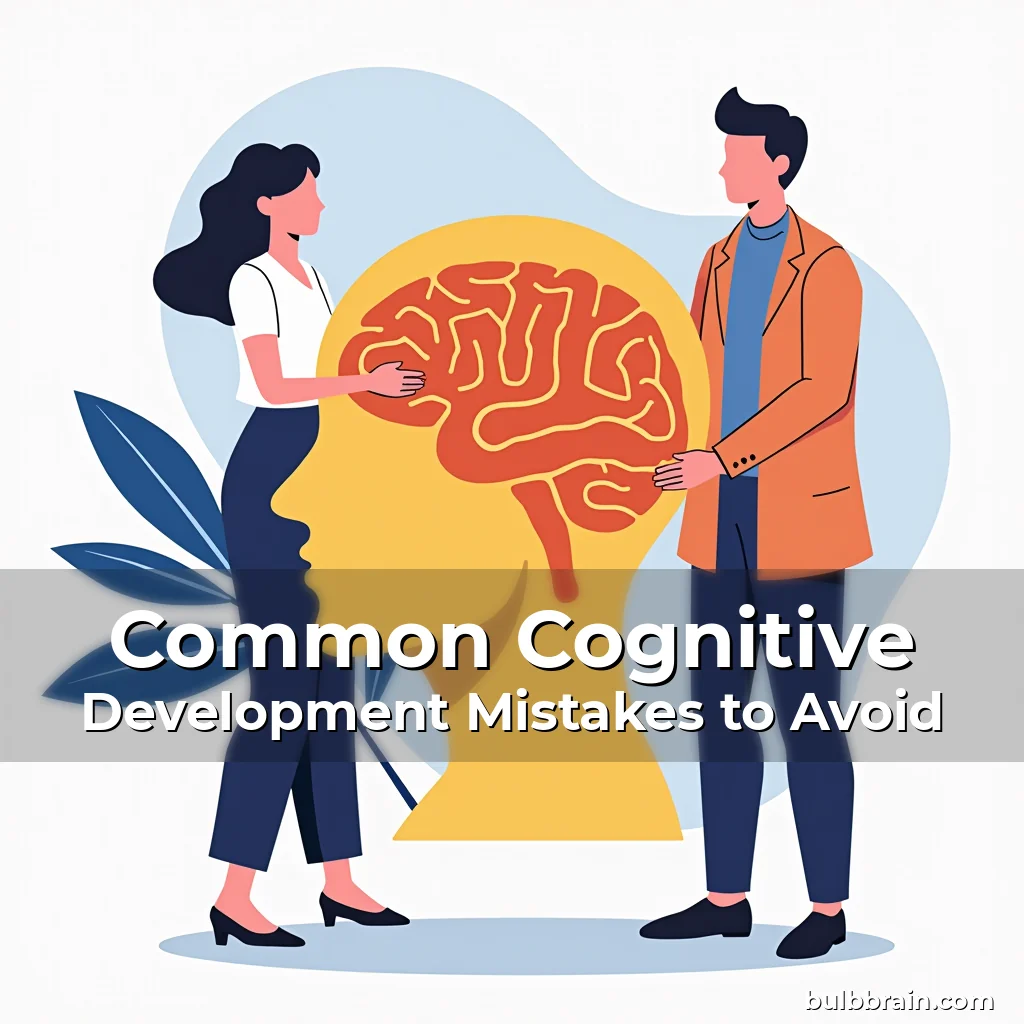
Common Cognitive Development Mistakes to Avoid
Cognitive development is a complex process that shapes how we think, learn, and solve problems. However, many people unknowingly make mistakes that hinder their progress. Understanding these errors can lead to smarter strategies for growth.
Avoiding common pitfalls allows individuals to unlock their full potential and achieve better outcomes across various life domains. This guide explores key missteps in cognitive development and offers practical solutions to overcome them.
The Dangers of Overloading Memory
Overloading working memory with too much information at once can overwhelm the brain’s processing capacity. This leads to confusion, frustration, and reduced learning efficiency.
Mindful chunking techniques help organize information into manageable units. Spaced repetition systems also enhance long-term retention without overwhelming immediate recall.
- Prioritize essential concepts: Focus on core principles rather than trying to memorize everything simultaneously.
- Leverage visual aids: Diagrams, mind maps, and flowcharts transform abstract ideas into concrete representations.
Underestimating the Power of Sleep
Sleep plays an essential role in consolidating memories and strengthening neural connections. Chronic sleep deprivation impairs attention span and problem-solving abilities.
Dedicated rest periods allow the brain to reorganize learned material through a process called synaptic pruning. Adults need between 7-9 hours while children require significantly more.
Research from Stanford University found that students who maintained regular sleep schedules performed 30% better academically than those with irregular patterns.
Creating consistent bedtime routines helps regulate circadian rhythms and improves overall cognitive performance over time.
Neglecting Active Engagement Techniques
Passive consumption of information limits understanding depth and application ability. Engaging actively with material through questioning enhances comprehension levels dramatically.
Techniques like teaching others, self-quizzing, and summarizing concepts in your own words promote deeper processing of information. These methods create stronger mental associations.
- Frequent retrieval practice: Testing yourself regularly strengthens memory traces compared to passive rereading.
- Interleaving topics: Mixing different subjects during study sessions builds flexible thinking skills and prevents rote memorization.
The Myth of Multitasking
Multitasking creates cognitive fragmentation by forcing the brain to constantly switch contexts. This reduces efficiency and increases error rates when performing tasks.
Focus requires uninterrupted concentration which enables deep work states where productivity soars. Digital distractions especially disrupt this state for modern knowledge workers.
- Create focused environments: Eliminate notifications and use website blockers to maintain attention spans.
- Batch similar tasks: Group related activities together to minimize context switching overheads.
Inadequate Feedback Loops
Without timely feedback, learners cannot identify gaps in their understanding or correct misconceptions promptly. This stagnates growth and reinforces incorrect assumptions.
Constructive criticism provides direction for improvement while reinforcing accurate conceptual frameworks. Peer review and mentorship programs offer structured ways to obtain such input.
- Self-assessment tools: Regular quizzes and reflection journals help track personal progress objectively.
- Seek diverse perspectives: Different viewpoints expose blind spots and challenge preconceived notions effectively.
Ignoring Emotional Intelligence Components
Cognitive development isn’t purely intellectual; emotional regulation impacts decision-making processes significantly. Unmanaged stress hormones interfere with executive functions.
Practicing mindfulness meditation has been shown to increase gray matter density in areas responsible for emotion control and attention management. Breathing exercises reduce cortisol spikes before challenging tasks.
- Emotional awareness training: Recognizing feelings as they arise improves impulse control and judgment accuracy.
- Stress inoculation therapy: Gradually exposing oneself to mild stressors builds resilience against future challenges.
Bias Against Nonlinear Thinking Patterns
Linear progression models often fail to accommodate natural cognitive fluctuations. Everyone experiences periodic plateaus despite continued effort due to biological factors.
Accepting nonlinear growth paths reduces pressure from unrealistic expectations. Tracking incremental improvements maintains motivation even during slow phases.
- Reframe setbacks: View temporary declines as necessary recalibrations rather than failures.
- Set micro-goals: Breaking objectives into smaller steps makes progress measurable and achievable daily.
Undervaluing Social Interaction Benefits
Human connection stimulates neuroplasticity through shared experiences and collaborative problem solving. Isolation impedes language acquisition and social cognition development.
Group discussions encourage perspective-taking which broadens worldviews substantially. Teaching concepts to peers solidifies understanding more effectively than solo study.
- Join study groups: Collective brainstorming generates creative solutions not possible individually.
- Engage in debates: Constructive argumentation sharpens analytical thinking skills continuously.
Conclusion
Recognizing common mistakes in cognitive development opens pathways to intentional growth strategies. Awareness alone transforms passive learning into active mastery.
Implementing these corrective measures consistently leads to sustained mental agility and sharper critical thinking capabilities across all aspects of life.

news is a contributor at BulbBrain. We are committed to providing well-researched, accurate, and valuable content to our readers.
You May Also Like

About news
Passionate about learning, cognitive science, and helping people unlock their full potential.