
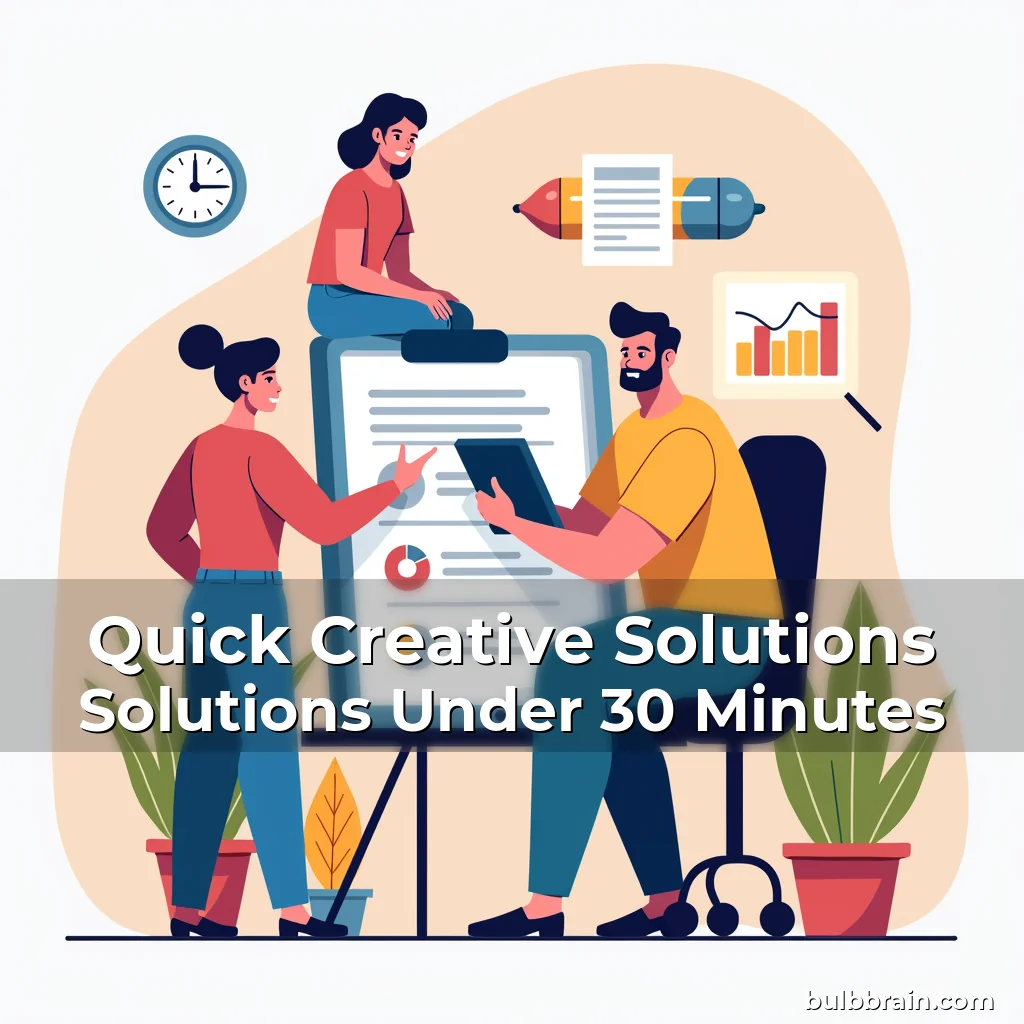
Lighting Up Innovation: Quick Creative Solutions for Everyday Challenges
In an era where efficiency is king, creative problem-solving has become a crucial skill that transcends industries and professions. Whether you’re troubleshooting a technical glitch at work or reimagining your home decor, the ability to think outside the box can turn obstacles into opportunities.
The modern world presents us with countless challenges that demand innovative approaches. From simple fixes around the house to complex business dilemmas, creative solutions are often the key to unlocking progress and growth.
The Power of Mindset Shifts
Creative problem-solving begins with a fundamental shift in perspective. Instead of viewing problems as insurmountable barriers, we can see them as invitations to innovate and grow. This mindset change allows our minds to explore alternative paths and consider unconventional ideas.
A positive attitude towards challenges fosters resilience and adaptability. When faced with difficulties, individuals who embrace creativity tend to find better long-term solutions than those who stick strictly to conventional methods.
Consider how many breakthrough inventions were born from someone’s willingness to look at things differently. Thomas Edison famously said, “I have not failed. I’ve just found 10,000 ways that won’t work.” His approach exemplifies the power of reframing failure as part of the discovery process.
By cultivating curiosity and openness, we open ourselves up to new possibilities. Simple changes like asking questions, exploring different angles, or taking regular breaks can significantly enhance our capacity for creative thinking.
Tools That Spark Creativity
Various tools exist specifically designed to stimulate imagination and facilitate idea generation. These range from physical items like sketchbooks and brainstorming boards to digital applications that help organize thoughts visually.
Traditional techniques such as mind mapping allow users to connect related concepts in non-linear fashion, making abstract connections more tangible. Digital platforms offer similar benefits through interactive diagrams and collaborative features.
Mind maps encourage lateral thinking by showing relationships between seemingly unrelated topics. They help break down complex issues into manageable components while highlighting potential synergies among various elements.
Digital tools provide additional advantages such as real-time collaboration and easy editing capabilities. Platforms like Miro or Lucidchart enable teams across locations to contribute simultaneously without geographical constraints.
- Physical Tools: Sketch pads, sticky notes, whiteboards support hands-on exploration suitable for visual learners.
- Digital Resources: Apps like Trello and Notion streamline organization while keeping track of evolving project goals.
Choosing the right tool depends largely on individual preferences and team dynamics. Some people thrive with tactile experiences whereas others prefer digital convenience when managing multiple projects simultaneously.
Combining both types of resources often yields best results; using analog sketches alongside digital records creates redundancy ensuring nothing gets lost during transitions phases between conceptualization stages.
Leveraging Constraints for Greater Innovation
Constraints might initially seem limiting but they actually serve as catalysts for innovation rather than hindrances. Limitations force creators to prioritize essential functions over unnecessary embellishments leading toward more focused outcomes.
This principle applies universally whether designing products under budget limitations or developing marketing campaigns within tight deadlines. Embracing restrictions can lead surprising discoveries previously overlooked due lack of necessity.
Historically notable examples include Steve Jobs’ decision to remove floppy disks from Macintosh computers despite initial resistance. His belief in simplicity drove radical design choices now considered industry standards.
Modern day scenarios reflect same phenomenon: minimalist websites loading faster than feature-laden counterparts; mobile apps prioritizing core functionalities instead trying pack everything possible into limited screen space.
When working within boundaries, it’s vital maintain clear objectives while remaining flexible enough adjust strategies accordingly. Balancing structure with spontaneity ensures meaningful innovations emerge naturally from imposed conditions.
Fostering Collaborative Environments
Collaboration amplifies creative output by bringing together diverse perspectives capable of generating richer solutions than any single person could achieve alone. Group settings foster cross-pollination of ideas creating unexpected combinations worthy further investigation.
Establishing inclusive cultures encourages participation from all levels regardless experience level. When everyone feels valued contributions matter equally chances increase finding optimal answers collectively versus individually.
Structured methodologies like Design Thinking incorporate empathy exercises early development cycles ensuring final products resonate deeply with target audiences thereby increasing adoption rates significantly.
Regular team-building activities reinforce trust necessary successful cooperation especially amidst high-pressure situations requiring quick decisions based partial information sets.
Virtual environments require extra effort cultivate same sense belonging however asynchronous communication options coupled periodic sync-ups maintains continuity even remotely distributed groups.
Harnessing Technology for Enhanced Problem-Solving
Advancements technology continually expand horizons available tools enhancing traditional creative processes dramatically improving speed accuracy achieving remarkable feats once deemed impossible manually.
Artificial intelligence particularly useful pattern recognition identifying trends humans might overlook enabling data-driven decisions backed solid evidence reducing reliance gut instincts alone.
Cloud computing facilitates seamless sharing storage allowing access latest versions files anywhere anytime promoting continuous refinement ongoing projects irrespective location differences.
Augmented reality provides immersive simulations testing prototypes virtually before committing actual production costs saving substantial financial resources potentially avoiding costly mistakes later stages implementation.
Blockchain technology introduces transparency security layers verifying authenticity creations protecting intellectual property rights crucial maintaining competitive edge markets saturated counterfeit goods.
As these technologies evolve integration becomes increasingly critical determining success future endeavors reliant efficient execution strategic utilization emerging capabilities.
Cultivating A Culture Of Continuous Improvement
Ongoing learning remains cornerstone sustained creativity fostering environment perpetual growth rather static achievement milestones. Encouraging experimentation rewards risk-taking reinforces culture innovation central organizational identity.
Implementing feedback loops ensures improvements remain relevant addressing current needs adapting swiftly changing landscapes. Regular retrospectives identify gaps refine processes aligning continuously with evolving expectations stakeholders involved.
Promoting autonomy empowers employees make decisions impacting daily operations building ownership responsibility ultimately driving higher engagement productivity overall satisfaction workplace.
Recognition programs celebrate achievements reinforcing behaviors aligned desired outcomes. Public acknowledgment successes motivates peers pursue excellence similarly contributing collective advancement goals company.
Investment professional development shows commitment nurturing talents equipping workforce skills required navigate complexities tomorrow’s challenges successfully.
Overcoming Common Obstacles To Creativity
Despite best intentions several factors commonly hinder full expression original thought. Identifying sources interference enables targeted interventions restoring clarity focus needed generate fresh insights effectively.
Time pressure frequently cited reason stifling spontaneous ideation forcing rushed conclusions devoid depth substance. Prioritizing quality quantity prevents compromising integrity outputs merely meeting arbitrary deadlines set externally.
Perfectionism manifests paralyzing fear inadequacy preventing attempts altogether. Reframing imperfections as stepping stones improvement rather flaws diminishes anxiety associated trial-error methodology inherent creative journey.
Social pressures influence conformity norms discouraging deviation established conventions. Establishing safe spaces express divergent opinions reduces apprehension experimenting novel approaches increasing likelihood discovering groundbreaking solutions otherwise missed entirely.
Bias affects judgment clouding objectivity evaluating proposals fairly. Conscious awareness blind spots promotes fairness inclusiveness resulting balanced assessments reflecting true merit ideas presented regardless originators backgrounds.
Conclusion
Creative problem-solving isn’t just about finding answers—it’s about transforming challenges into catalysts for innovation and personal growth. By embracing new perspectives, utilizing appropriate tools, and fostering supportive environments, anyone can unlock their innate creative potential.
Whether you’re tackling everyday hurdles or aiming for revolutionary breakthroughs, remember that every great solution starts with a single question. Cultivate curiosity, stay adaptable, and let your imagination guide you toward extraordinary results.
“`

news is a contributor at BulbBrain. We are committed to providing well-researched, accurate, and valuable content to our readers.
You May Also Like



About news
Passionate about learning, cognitive science, and helping people unlock their full potential.