
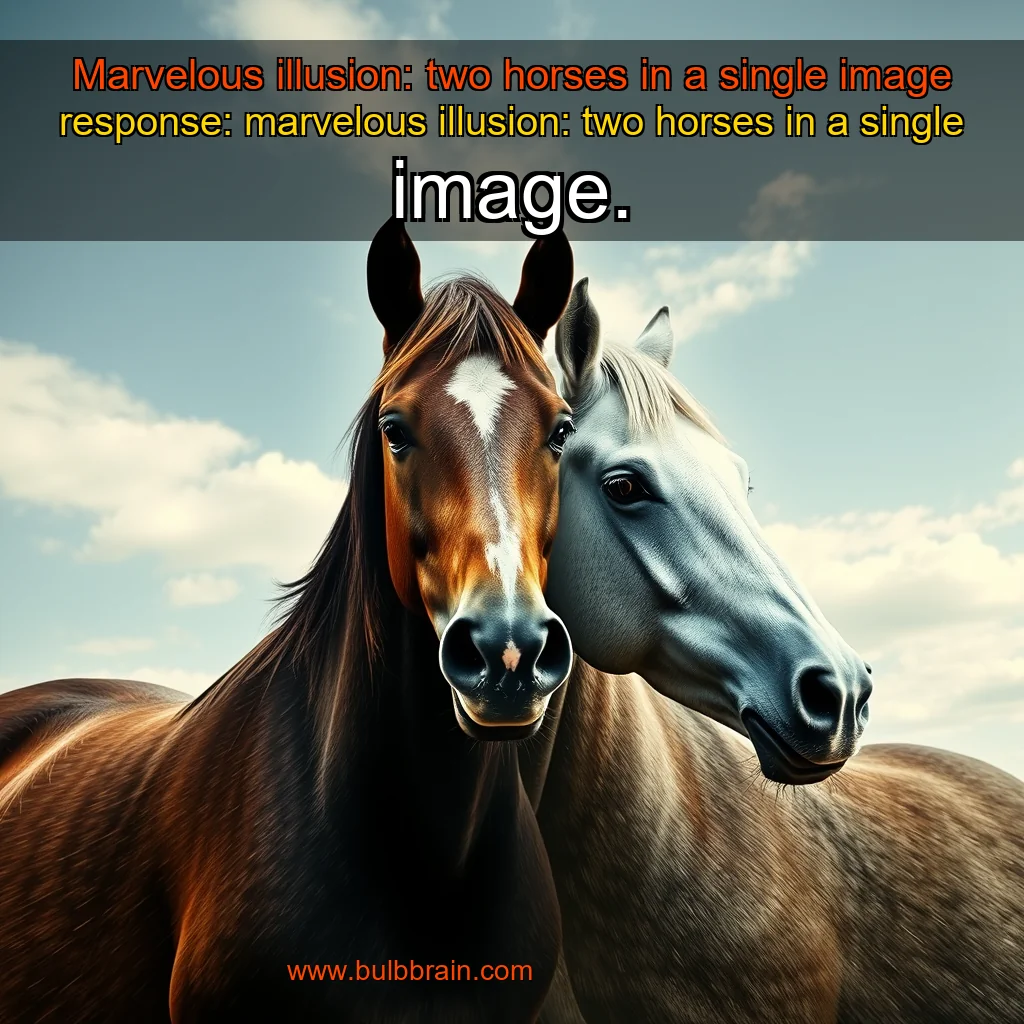
The optical illusion relies on the clever use of language and visual manipulation. The image appears to show a horse with a visible body and a horse’s head, but when the words “horse” are considered, the actual image reveals a horse with its body and head, which is actually the words “horse” written in a horse’s body. The solution requires the reader to reframe the image in a way that allows them to see the words “horse” hidden in plain sight. This clever optical illusion challenges readers to think creatively and use language in a way that reveals a hidden message or meaning. The optical illusion is often used in art and design to create a sense of surprise and wonder. Artists and designers use the principle of optical illusions to create visually striking images that challenge the viewer’s perception and understanding of the world. This optical illusion is a prime example of how language and visual manipulation can be used to create a sense of surprise and wonder. By challenging the reader’s perception and requiring them to reframe the image, the optical illusion encourages the reader to think creatively and consider the ways in which language and visual elements can be used to convey meaning and create a sense of surprise. The optical illusion can be used to create a sense of intrigue and curiosity in the viewer. When the words “horse” are considered, the image appears to be a simple illustration of a horse, but when the words are taken into account, the image reveals a more complex and nuanced meaning.
Here are some common illusions that will make you question your perception of reality.
The Power of Color Illusions
Color is a fundamental aspect of our visual experience, and it’s often used to create illusions that deceive our brain. Here are some examples:
Moreover, solving optical illusions can boost creativity and problem-solving skills, as it requires critical thinking and logical reasoning.
The Science Behind Optical Illusions
Optical illusions are a result of the way our brains process visual information. The human brain is wired to recognize patterns, and when it encounters a visual stimulus, it tries to make sense of it by creating a mental representation. However, this process can be influenced by various factors, such as past experiences, emotions, and expectations. As a result, our brains can create illusions that are not necessarily reflective of reality.
How Optical Illusions Affect the Brain
The Benefits of Solving Optical Illusions
Solving optical illusions offers numerous cognitive and mental benefits. Some of the benefits include:
This disconnect can lead to the perception of impossible or unrealistic scenes, such as a two-dimensional shape appearing three-dimensional or a person’s face being distorted.
Step 1: Introduction to Optical Illusions
Optical illusions are a fascinating phenomenon where our brain’s visual processing can lead to misinterpretations of visual information. These misinterpretations occur due to the brain’s tendency to rely on past experiences, context, and cognitive shortcuts, resulting in a disconnect between perception and reality.
Step 2: The Role of Visual Cues
Visual cues such as color, light, shading, and perspective play a significant role in our brain’s interpretation of visual information. These cues are processed in a hierarchical manner, with early stages of processing focusing on basic features like line orientation and edge detection, and later stages integrating this information to create a coherent representation of the visual scene.
Step 3: The Influence of Past Experiences and Context
Our past experiences and context significantly influence the way we interpret visual cues. For example, if we have experience with a particular shape or object, our brain may be more likely to recognize it as such, even if the visual cues are not perfectly aligned.
End of Article FOLLOW US ON SOCIAL MEDIA

news is a contributor at BulbBrain. We are committed to providing well-researched, accurate, and valuable content to our readers.
You May Also Like


About news
Passionate about learning, cognitive science, and helping people unlock their full potential.