
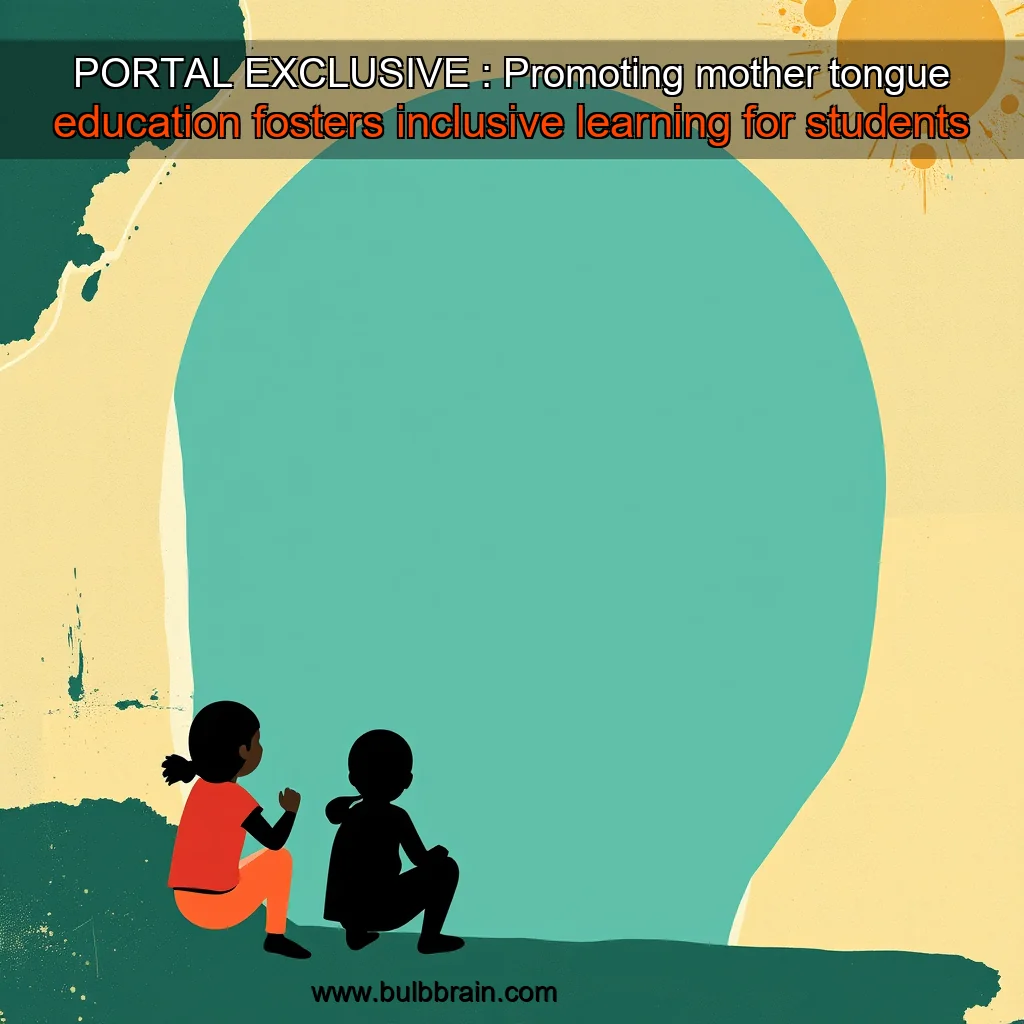
Here’s a detailed overview of the NEP 202P 2020’s stance on mother tongue-based education.
The Significance of Mother Tongue-Based Education
Mother tongue-based education is a pedagogical approach that focuses on teaching students in their native language. This approach has been shown to have numerous benefits, including improved language skills, enhanced cultural awareness, and increased academic achievement. Improved Language Skills: Research has consistently shown that students who learn in their mother tongue exhibit better language skills, including reading, writing, and speaking abilities. Enhanced Cultural Awareness: Mother tongue-based education helps students develop a deeper understanding of their cultural heritage and traditions. * Increased Academic Achievement: Studies have found that students who learn in their mother tongue tend to perform better academically, particularly in subjects such as mathematics and science.**
The NEP 2020’s Stance on Mother Tongue-Based Education
The National Education Policy 2020 recognizes the importance of mother tongue-based education and provides a framework for its implementation. The policy emphasizes the need for schools to offer mother tongue-based education as an option for students.
The Power of Language in Learning
The National Education Policy 2020 (NEP) emphasizes the significance of language in the learning process. According to the policy, children can grasp complex concepts more easily when taught in their mother tongue or home language.
Early language exposure is crucial for cognitive and socio-emotional development in children.
The Importance of Early Language Exposure
The National Education Policy 2020 (NEP 2020) emphasizes the significance of early language exposure for children’s cognitive and socio-emotional development. Research has consistently shown that children’s brains are wired to learn new languages between the ages of two and eight.
Proficiency in the mother tongue is essential for effective communication in various contexts.
Proficiency in the mother tongue is essential for effective communication in various contexts.
The Power of Mother Tongue Proficiency
Understanding the Impact on Cognitive Development
Proficiency in the mother tongue has a profound impact on cognitive development.
Learning in the Mother Tongue Empowers Students and Enhances Education.
The Power of Mother Tongue in Education
The mother tongue is the language that a child learns first and is most familiar with. It is the language that is spoken at home, in the community, and in everyday life. The emotional bond created when students study in their mother tongue makes education a deeply personal adventure. Students feel empowered and more in control when learning in a language they understand well.
Benefits of Mother Tongue Education
A Springboard for Learning Additional Languages
A solid foundation in the mother tongue serves as a springboard for learning additional languages. Students who learn in their mother tongue are more likely to succeed in learning other languages. This is because they have a strong understanding of language structures, grammar, and vocabulary.
The Importance of Language Immersion
Language immersion is a key component of mother tongue education. Immersion involves surrounding students with the language they are learning, either through language classes, media, or community involvement.
This approach is often referred to as the “Language of Instruction” (LOI) model. The LOI model has been implemented in various parts of the country, with the aim of improving learning outcomes and promoting linguistic diversity.
The Benefits of the Language of Instruction (LOI) Model
The LOI model has been shown to have numerous benefits for students, particularly those from diverse linguistic backgrounds. Some of the key advantages of this approach include:

news is a contributor at BulbBrain. We are committed to providing well-researched, accurate, and valuable content to our readers.
You May Also Like



About news
Passionate about learning, cognitive science, and helping people unlock their full potential.