
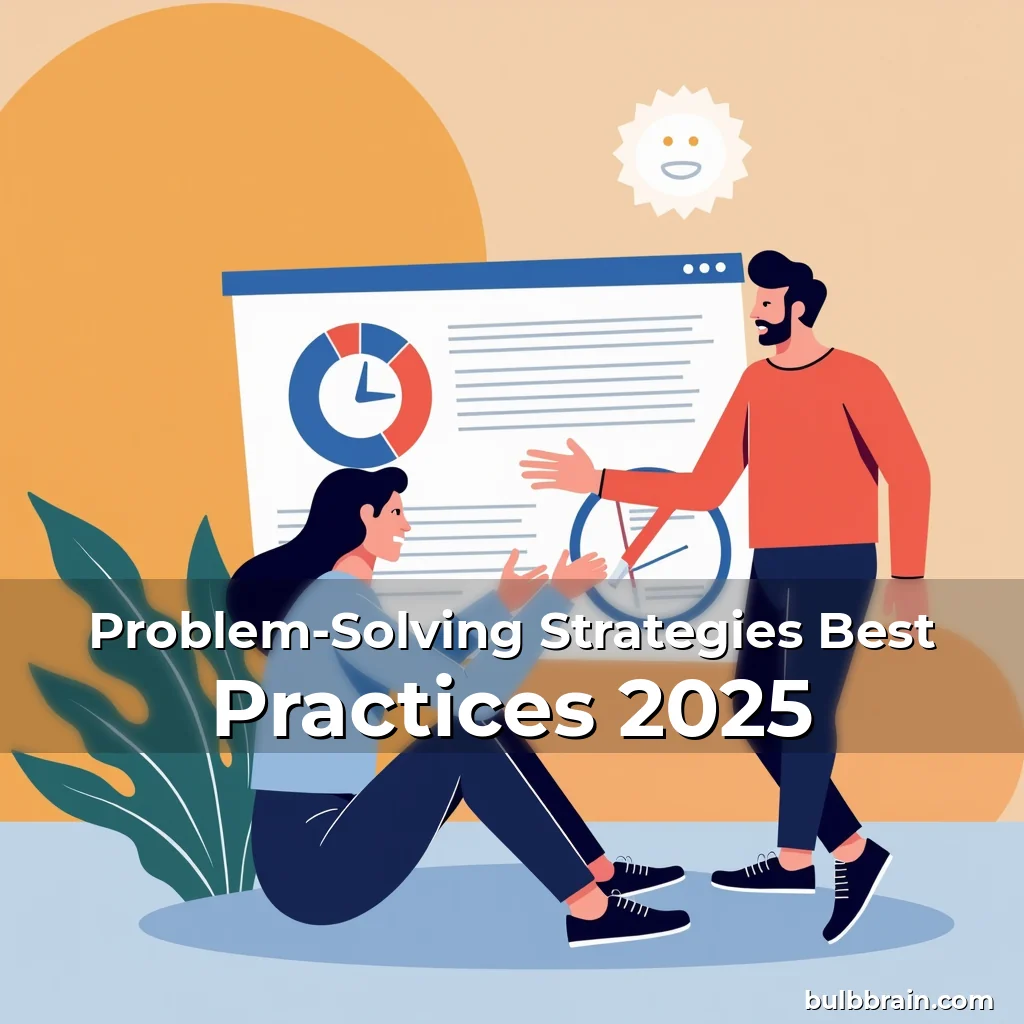
Mastering Problem-Solving Strategies: A Mindset Shift for Modern Challenges
In today’s fast-paced world, effective problem-solving isn’t just a skill—it’s a necessity. Whether you’re tackling daily hurdles or complex business dilemmas, having robust strategies can transform obstacles into opportunities.
This guide explores innovative approaches, frameworks, and mindset shifts designed to help individuals and teams navigate challenges systematically, creatively, and efficiently.
The Foundation of Strategic Problem-Solving
At its core, strategic problem-solving begins with clarity. Define the issue precisely before jumping to solutions. Ambiguity breeds poor decisions, whereas clear goals provide direction.
Break problems into smaller components to manage complexity. This approach prevents overwhelm and allows focused attention on individual aspects of the challenge.
- Identify the Root Cause: Use questions like “Why did this happen?” repeatedly to trace issues back to their origins.
- Prioritize Objectives: Rank what matters most to align efforts with outcomes that truly matter.
Cognitive Biases: Silent Saboteurs of Problem-Solving
Our brains are wired to shortcut thinking, often leading us astray. Confirmation bias, overconfidence, and anchoring are just a few biases that distort judgment.
Awareness of these pitfalls allows deliberate countermeasures. For instance, actively seeking dissenting opinions combats confirmation bias effectively.
How Biases Influence Decisions
Studies show up to 75% of professionals unknowingly fall prey to cognitive traps during high-stakes decisions. Recognizing these biases early reduces costly mistakes.
Treating problems objectively means pausing to evaluate assumptions rather than rushing toward familiar answers.
Leveraging Creative Thinking for Unconventional Solutions
Creativity isn’t reserved for artists—innovative thinkers apply divergent思维 to reframe problems uniquely. Techniques like mind mapping and role-playing simulate fresh perspectives.
Benchmarking against unrelated industries sparks unexpected connections. What works in aerospace could inspire breakthroughs in healthcare.
- Divergent vs. Convergent Thinking: Generate many options
- Random Stimulus Method: Introduce random objects or ideas to trigger novel associations.
Structured Frameworks: From SWOT to Design Thinking
Methodologies like SWOT (Strengths, Weaknesses, Opportunities, Threats) offer systematic templates. They contextualize data and reveal hidden patterns.
Design thinking prioritizes empathy, prototyping, and iteration. It’s particularly useful for human-centric problems requiring iterative testing.
- Fishbone Diagrams: Visualize cause-and-effect relationships for multifaceted issues.
- Five Whys Technique: Drill down to root causes by asking “why” five times sequentially.
Collaboration: Harnessing Collective Intelligence
Teams outperform individuals in solving complex problems. Diversity of thought increases innovation potential exponentially.
Establish structured protocols for group discussions, such as round-robin sharing or silent brainstorming, to prevent dominance by vocal members.
- De Bono’s Six Hats Approach: Assign different thinking roles (e.g., optimist, skeptic) to balance contributions.
- Scenario Planning: Explore multiple futures collaboratively to build adaptive strategies.
Decision-Making Under Uncertainty
Uncertainty is inevitable, but calculated risk-taking becomes manageable with probabilistic thinking. Quantifying unknowns helps weigh trade-offs objectively.
Tools like Monte Carlo simulations model uncertain variables statistically, offering probabilities instead of certainties.
Handling High-Risk Choices
Leaders facing high-impact decisions benefit from pre-mortems—imagining future failures to identify blind spots proactively.
Risk-reward matrices visualize trade-offs graphically, enabling transparent evaluation of alternative paths.
Evaluating and Refining Solutions
No plan survives contact with reality. Regularly assess progress against benchmarks and adjust tactics swiftly when indicators suggest misalignment.
Implement feedback loops with stakeholders to gather real-time insights and refine execution continuously.
- KPIs and Dashboards: Track metrics visually to monitor performance trends instantly.
- Milestone Reviews: Schedule periodic evaluations to course-correct and celebrate wins.
Building Resilience After Failure
Sometimes, even well-planned strategies fail. Resilient problem-solvers analyze setbacks as learning experiences rather than personal shortcomings.
Adopt postmortems after projects conclude, regardless of success. Document lessons learned systematically for future reference.
Conclusion
Effective problem-solving combines analytical rigor, creative flexibility, and collaborative strength. These strategies empower individuals and organizations to thrive amid uncertainty.
Apply these principles consistently, adapt them to evolving contexts, and watch how challenges become catalysts for growth rather than roadblocks.

news is a contributor at BulbBrain. We are committed to providing well-researched, accurate, and valuable content to our readers.
You May Also Like

About news
Passionate about learning, cognitive science, and helping people unlock their full potential.