
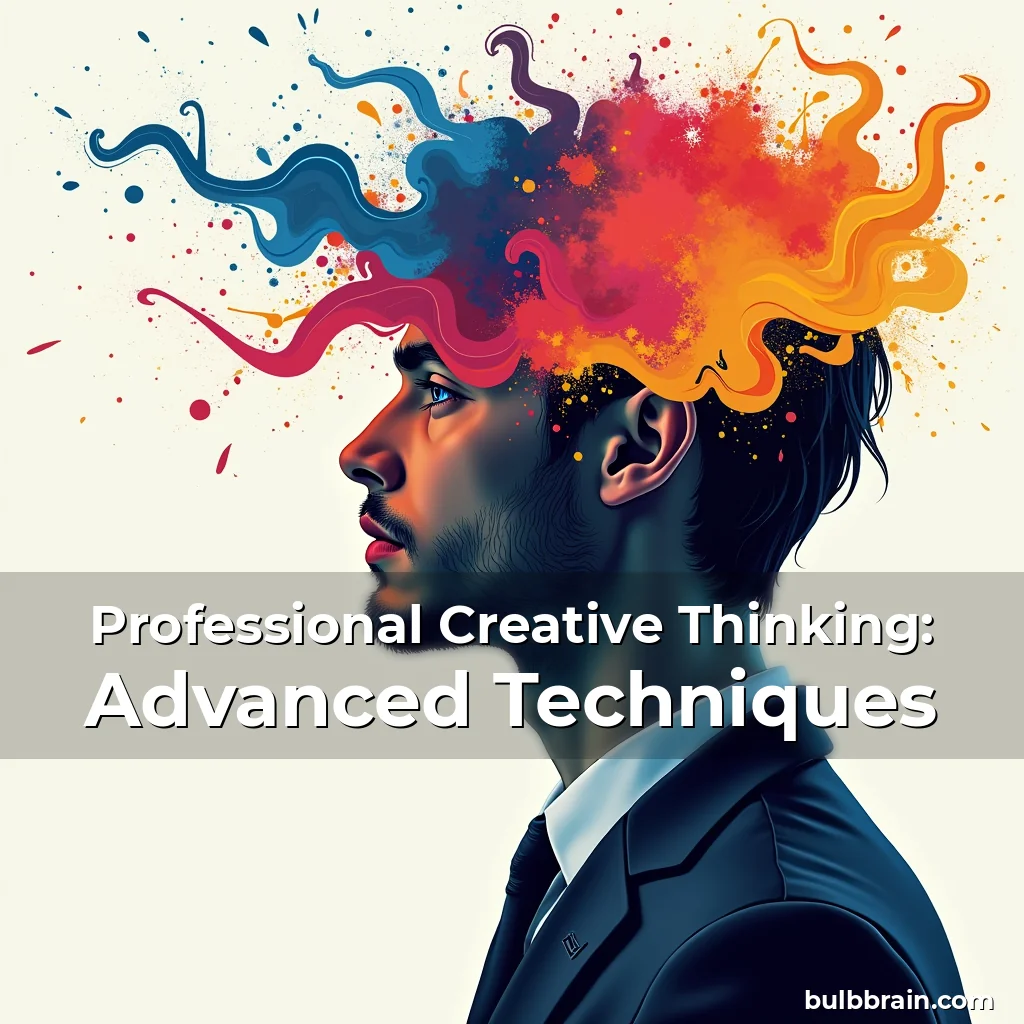
The Art of Unleashing Your Mind’s Full Potential: Mastering Creative Problem-Solving
Creative thinking is an essential skill that transcends traditional problem-solving methods by encouraging individuals to explore unconventional solutions. This ability to think beyond conventional boundaries can lead to groundbreaking innovations across various domains such as technology, business, and personal development.
In today’s rapidly evolving world, where challenges are increasingly complex and multifaceted, creative thinking has become indispensable. It empowers individuals to navigate uncertainty, adapt to change, and discover novel approaches that others might overlook.
Understanding the Cognitive Foundations of Creativity
Creativity begins within our cognitive architecture, shaped by both innate abilities and learned skills. The brain’s prefrontal cortex plays a crucial role in generating new ideas while balancing them against logical constraints.
Divergent thinking, which involves exploring many possible solutions simultaneously, contrasts sharply with convergent thinking focused on finding single correct answers. Understanding these dual processes helps unlock greater creative potential.
Neuroscientific research reveals:
- The right hemisphere of the brain specializes in non-linear thought patterns associated with creativity.
- Engaging in artistic activities stimulates neural pathways linked to innovation and imagination.
- Regular mental exercises enhance synaptic plasticity necessary for flexible thinking.
Mental flexibility is another key component of creative cognition. Being open-minded allows individuals to consider perspectives they wouldn’t normally entertain, leading to unexpected breakthroughs.
Emotional intelligence significantly influences creative output. Individuals who understand their emotions better tend to generate richer, more nuanced ideas when faced with challenging situations.
Cultivating a Creative Mindset Through Daily Practice
Developing a consistent routine dedicated to creative exploration builds long-term cognitive resilience. Activities like journaling or sketching help train the mind to notice connections between seemingly unrelated concepts.
Environment plays a critical role in nurturing creativity. Surrounding oneself with diverse stimuli—books from different genres, art installations, or even foreign music—expands perceptual awareness and sparks fresh associations.
Scheduled brainstorming sessions using techniques like mind mapping provide structured yet free-form ways to organize thoughts without premature judgment.
Setting aside time each day for unstructured reflection allows subconscious processing to contribute to conscious problem-solving efforts later in the day.
Avoiding rigid schedules enhances spontaneity, which often leads to innovative solutions emerging during moments of relaxed contemplation rather than intense concentration periods.
Leveraging Constraints as Catalysts for Innovation
Limitations frequently serve as powerful motivators for creative expression. When resources are scarce, minds naturally seek alternative solutions through lateral thinking strategies.
Constraint-based creativity examples include:
- Designers creating functional products using only recycled materials.
- Entrepreneurs launching businesses with minimal capital investment.
- Scientists developing medical devices under strict ethical guidelines.
Imposing artificial limitations forces the brain out of habitual response patterns, activating deeper layers of imaginative capacity previously unused.
Companies often use design sprints with limited timelines to foster urgency-driven innovation among teams working toward common goals.
This approach mirrors natural evolutionary pressures where survival necessitated creative adaptations rather than gradual improvements over generations.
Fostering Collaborative Creativity Across Diverse Teams
Collective genius emerges when diverse groups combine individual strengths towards shared objectives. Cross-disciplinary collaboration introduces varied perspectives that challenge existing assumptions.
Establishing psychological safety within teams ensures members feel comfortable sharing unconventional ideas without fear of criticism or rejection.
Structured protocols like design thinking frameworks provide clear stages for idea generation, prototyping, and iterative refinement within collaborative settings.
Technology enables remote collaboration through virtual whiteboards and real-time document editing tools that transcend geographical barriers.
Leaders play pivotal roles in cultivating environments where constructive feedback becomes fuel rather than hindrance for creative progress.
Harnessing Technology to Amplify Human Ingenuity
Modern software applications now offer sophisticated tools designed specifically to enhance human creativity. AI-powered ideation platforms assist in expanding concept possibilities beyond what any single person could achieve alone.
Virtual reality environments allow designers to prototype immersive experiences before physical construction begins, reducing material waste and accelerating development cycles.
Data analytics tools identify hidden patterns in consumer behavior that inform product development decisions grounded in empirical evidence rather than guesswork.
Cloud computing facilitates seamless teamwork by providing centralized repositories accessible from anywhere at anytime, ensuring continuity across distributed project teams.
Educational institutions increasingly integrate digital literacy programs aimed at preparing future innovators to leverage technological advancements effectively.
Navigating Obstacles That Hinder Creative Processes
Self-doubt remains one of the most significant internal barriers preventing people from fully expressing their creative capacities. Overcoming imposter syndrome requires intentional self-affirmation practices.
Time scarcity creates pressure that stifles spontaneous ideation. Implementing time blocking techniques helps allocate specific windows exclusively reserved for creative work without interruptions.
Common external obstacles include:
- Bureaucratic red tape slowing down implementation of novel ideas.
- Lack of institutional support discouraging risk-taking behaviors.
- Poor communication channels inhibiting knowledge transfer between departments.
Creating buffer zones around creative projects shields them from competing priorities and allows uninterrupted focus required for deep dives into complex problems.
Building supportive networks comprising mentors, peers, and industry experts provides crucial guidance when facing particularly daunting challenges along the creative journey.
Measuring Progress Toward Greater Creative Mastery
Tracking measurable outcomes provides tangible indicators of improvement in creative capabilities. Keeping detailed records of generated ideas helps visualize growth trajectories over time.
Assessing solution quality based on criteria like originality, feasibility, and impact offers objective benchmarks for evaluating creative performance.
Feedback loops involving peer reviews and expert evaluations refine understanding of what constitutes effective creative output within specific contexts.
Reflective journals documenting daily creative experiences aid in identifying recurring themes or persistent roadblocks requiring targeted interventions.
Comparative analysis against historical case studies illustrates how contemporary approaches compare with past achievements in similar fields of inquiry.
Conclusion
Creative thinking represents much more than occasional bursts of inspiration—it is a disciplined practice capable of transforming ordinary individuals into extraordinary problem-solvers.
To truly harness your creative power, commit yourself daily to exploring new angles, embracing constraints, collaborating widely, leveraging modern technologies wisely, and continuously refining your approach through deliberate practice and honest assessment.

news is a contributor at BulbBrain. We are committed to providing well-researched, accurate, and valuable content to our readers.
You May Also Like
About news
Passionate about learning, cognitive science, and helping people unlock their full potential.