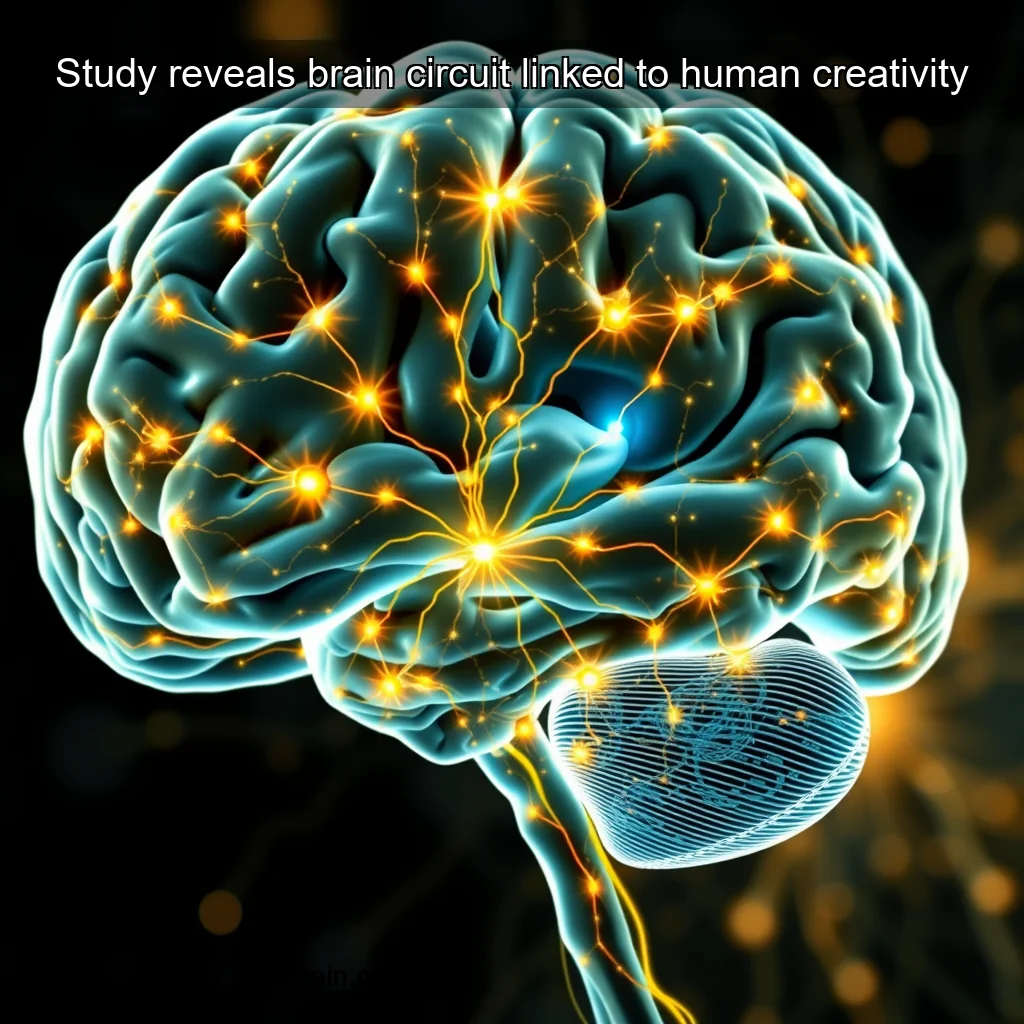
Creative thinking is made possible by a network of interconnected brain regions working together.
The Power of Creative Brain Regions
The human brain is a complex and dynamic organ, and its creative potential is no exception. Research has shown that different brain regions are activated when we engage in creative tasks, and these regions are part of a common brain circuit.
The Common Brain Circuit
The common brain circuit is a network of interconnected brain regions that work together to facilitate creative thinking. This circuit includes the following regions:
When we engage in creative tasks, these brain regions work together to generate new ideas and solutions.
Kutsche is a neuroscientist with expertise in the field of neuroplasticity and brain development.
The Study’s Objective
The study aimed to investigate the effects of a novel compound on the brain’s neural circuits, with a focus on its potential therapeutic applications in neurological disorders.
The Compound’s Mechanism of Action
The novel compound, known as “Compound X,” was found to have a unique mechanism of action that targets the brain’s neural circuits. Specifically, it was discovered that Compound X:
The Study’s Methodology
The study employed a combination of in vitro and in vivo experiments to investigate the effects of Compound X on the brain’s neural circuits. The researchers used a variety of techniques, including:
The Science Behind Creativity
Creativity is a complex and multifaceted concept that has been studied extensively in various fields, including psychology, neuroscience, and philosophy. Recent advances in neuroimaging techniques, such as functional magnetic resonance imaging (fMRI), have enabled researchers to investigate the neural mechanisms underlying creative processes.
Brain Regions Involved in Creativity
Studies have identified several brain regions that are activated during creative activities, including:
These brain regions work together to facilitate the creative process, which involves generating novel ideas, making connections between seemingly unrelated concepts, and finding innovative solutions to problems.
The Relationship Between Creativity and Neurological Diseases
Research has shown that certain neurological diseases can affect creativity, either by causing a decline in creative abilities or by leading to the development of new creative behaviors. Alzheimer’s disease: Studies have found that individuals with Alzheimer’s disease often experience a decline in creative abilities, particularly in areas such as music, art, and writing.
This idea is supported by research that suggests that the right frontal pole is involved in the regulation of the default mode network (DMN), which is responsible for mind-wandering and self-referential thinking. The DMN is also associated with the brain’s “id” or primitive, instinctual self, which is thought to be suppressed during creative tasks.
# The Role of the Right Frontal Pole in Creativity
The right frontal pole, a region in the brain’s prefrontal cortex, has been implicated in various cognitive processes, including creativity. Research has shown that this region is active during tasks that require divergent thinking, such as brainstorming and idea generation. However, the relationship between the right frontal pole and creativity is complex, and its role is still not fully understood.
## The Hypothesis that Creativity Requires Shutting Down a Function
One hypothesis is that creativity requires shutting down a function, specifically the right frontal pole. This idea is supported by research that suggests that the right frontal pole is involved in the regulation of the default mode network (DMN). The DMN is responsible for mind-wandering and self-referential thinking, and is also associated with the brain’s “id” or primitive, instinctual self. During creative tasks, this self-referential thinking is thought to be suppressed, allowing for the generation of new ideas.
Creativity is a complex process involving multiple brain regions and networks.
He also says that the specific neural activity patterns observed in the study are not unique to this particular task and may be observed in other creative tasks as well.
The Study’s Implications
The study’s findings have significant implications for our understanding of creativity and the neural mechanisms underlying it. The discovery of specific neural activity patterns associated with creative tasks challenges the long-held assumption that creativity is solely the result of individual talent or innate ability.
Key Takeaways
The Future of Creativity Research
The study’s results have sparked a new wave of interest in creativity research, with many scientists and researchers eager to explore the neural mechanisms underlying creative tasks.