
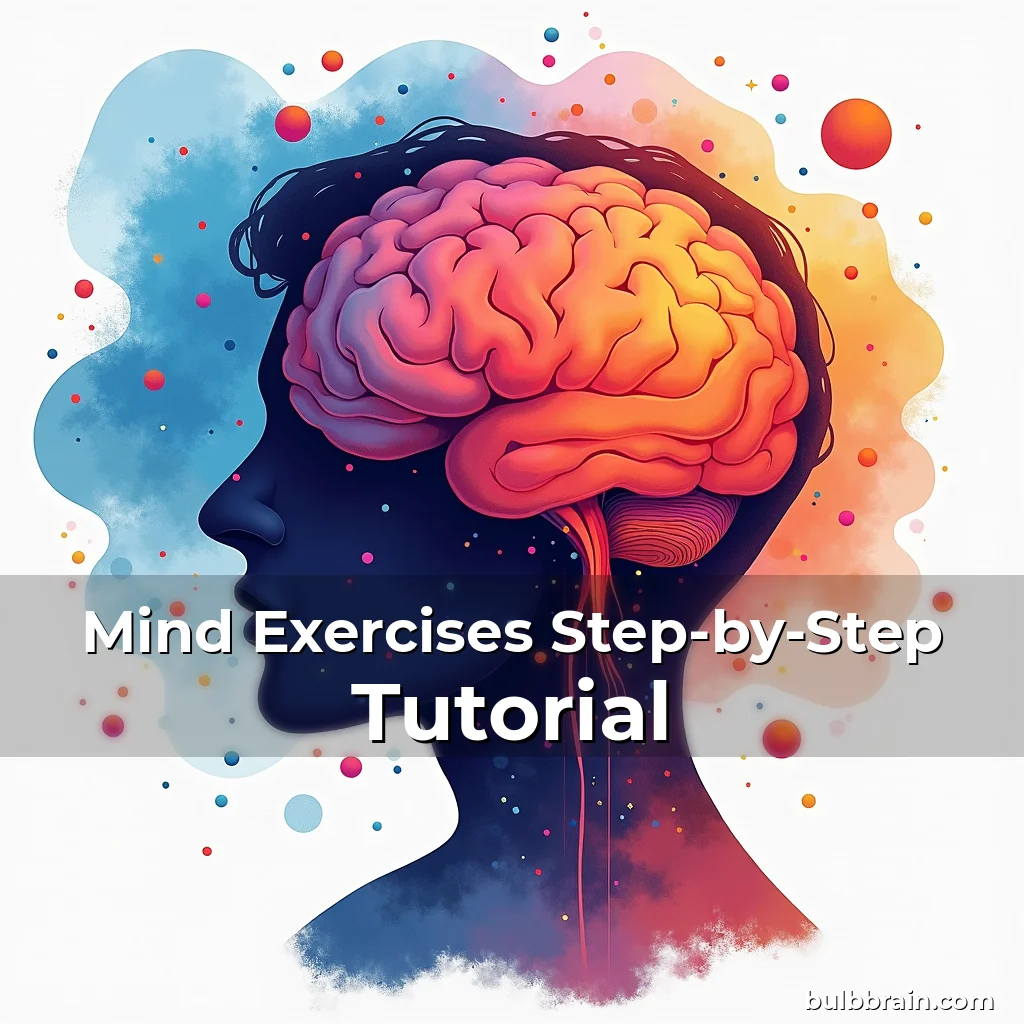
Mind Exercises Step-by-Step Tutorial
The human mind is an incredible instrument capable of extraordinary feats when properly trained. In today’s fast-paced world, mental clarity, focus, and emotional resilience are becoming essential skills that determine personal and professional success.
This step-by-step tutorial provides practical techniques to enhance cognitive function through structured mental exercises. Whether you’re looking to boost memory retention, increase concentration spans, or develop creative problem-solving abilities, these methods will help you achieve your goals systematically.
The Science Behind Mental Training
Neuroscience has revealed fascinating insights about how our brains can change and adapt throughout life. This process, known as neuroplasticity, allows neurons to form new connections and pathways in response to experiences and learning activities.
Regular mental stimulation strengthens neural networks associated with memory, attention, and executive functions. Research shows that consistent practice can lead to measurable improvements in brain volume and connectivity over time.
Studies from Harvard Medical School demonstrate:
- Memory recall improves by up to 25% after six months of regular mental training
- Cognitive flexibility increases significantly within eight weeks of daily mental challenges
- Emotional regulation becomes more efficient through mindfulness practices
These findings underscore the importance of incorporating mental exercises into our daily routines. By understanding how the brain responds to different types of stimuli, we can tailor our practice sessions to maximize their effectiveness.
Foundational Mind Exercises
To build a strong foundation for mental growth, start with basic exercises that train core cognitive functions. These foundational techniques serve as building blocks for more advanced mental workouts later on.
One effective starting point is focused breathing exercises. Simple diaphragmatic breathing patterns activate the parasympathetic nervous system, promoting relaxation while enhancing mental clarity and alertness.
Another fundamental exercise involves memory reinforcement games. Playing simple card matching games or using digital apps designed for memory improvement helps strengthen short-term memory capabilities.
Tip: Begin each session with five minutes of deep breathing to establish a calm mental state before proceeding to other exercises.
Progressive muscle relaxation combined with visualization techniques forms another powerful base exercise. This method reduces stress levels while improving overall mental stamina through controlled tension release.
Advanced Cognitive Enhancement Techniques
Once comfortable with basic mental exercises, practitioners can explore more complex techniques to further develop cognitive abilities. These advanced methods target higher-order thinking processes such as analytical reasoning and critical thinking skills.
Solving intricate puzzles like Sudoku or escape room scenarios stimulates pattern recognition and logical deduction capacities. These challenges require sustained mental effort and strategic thinking to succeed.
Engaging in abstract thinking exercises helps expand creativity and innovation potential. Activities involving concept mapping, lateral thinking problems, or philosophical debates encourage unconventional thought patterns.
Reading comprehension drills with challenging texts also contribute to enhanced cognitive processing speed. Regular exposure to complex material trains the brain to extract meaning quickly and accurately from dense information sources.
Strategies for Memory Improvement
Enhancing memory capacity requires targeted strategies that work with natural memory systems rather than against them. Understanding how memory works scientifically enables us to optimize our study habits and information retention techniques.
The spacing effect principle suggests that distributing review sessions across time intervals leads to better long-term retention compared to cramming information at once. This technique aligns well with modern neuroscience research on memory consolidation.
Elaborative encoding techniques involve connecting new information to existing knowledge structures. Creating vivid mental images, associating facts with personal experiences, and forming conceptual links all contribute to stronger memory traces.
Practical application example: When memorizing historical dates, imagine creating a story where those events happen sequentially in your own life timeline.
Chunking information into manageable units simplifies data storage and retrieval processes. Breaking down lengthy sequences into smaller meaningful groups enhances both short-term and working memory performance.
Attention and Focus Development
Developing laser-like focus requires intentional practice targeting selective attention mechanisms. Modern distractions demand conscious efforts to cultivate undivided attention during crucial tasks.
Implementing Pomodoro Technique variations helps structure attention periods effectively. Using timed intervals with scheduled breaks creates optimal conditions for maintaining concentration without burnout.
Environmental modifications play a significant role in sustaining attention spans. Eliminating visual clutter, reducing auditory interruptions, and organizing workspace ergonomically all contribute to improved focus quality.
Mindfulness meditation specifically targets attention control centers in the brain. Regular practice builds mental discipline necessary to maintain focus despite external disturbances or internal thoughts.
Innovative Digital Tools for Mental Workout
Technology offers numerous applications that facilitate mental exercises in convenient formats accessible anytime, anywhere. Mobile apps and online platforms provide interactive ways to engage in cognitive training programs tailored to individual needs.
Lumosity and Elevate offer gamified experiences that make mental workout enjoyable while tracking progress over time. These platforms incorporate adaptive difficulty settings based on user performance metrics.
Brain fitness devices like Cogmed or Fit Brains use personalized algorithms to design customized training regimens. They often feature real-time feedback mechanisms showing immediate results of mental exertion.
Virtual reality environments introduce novel approaches to mental stimulation by immersing users in simulated scenarios requiring quick decision-making and spatial awareness development.
Online communities dedicated to cognitive enhancement provide additional support through shared resources, challenge groups, and peer motivation networks.
Creative Problem-Solving Practices
Fostering creative problem-solving abilities demands deliberate engagement with diverse perspectives and non-traditional solutions. Cultivating divergent thinking processes expands possibilities beyond conventional approaches.
Design thinking methodologies emphasize empathetic understanding followed by ideation phases that generate multiple solution options simultaneously. This approach encourages innovative thinking patterns applicable across various domains.
Brainteasers and riddles stimulate flexible thinking by presenting seemingly unsolvable problems requiring alternative interpretations or out-of-the-box reasoning paths.
Scenario-based simulations allow practicing responses to unpredictable situations, developing adaptability and improvisation skills under pressure conditions.
Cross-disciplinary learning experiences promote connection between disparate fields, sparking unexpected insights useful for tackling complex issues from fresh angles.
Integrating Mind Exercises Into Daily Life
Mental training shouldn’t be confined to formal exercise sessions alone. Incorporating mindful practices into everyday routines makes cognitive enhancement sustainable over the long term.
Commute times present excellent opportunities for mental engagement. Listening to educational podcasts, solving math problems mentally, or reciting vocabulary lists transform passive travel into active learning moments.
Meal preparation can become a meditative experience by focusing entirely on sensory elements – observing colors, smelling ingredients, feeling textures, and tasting flavors attentively.
Social interactions benefit from conscious listening practices. Paying full attention to conversations, asking clarifying questions, and summarizing key points improve communication skills while exercising cognitive faculties.
Even routine chores like folding laundry or doing dishes can turn into mindfulness exercises by performing them slowly with complete presence and awareness.
Tracking Progress and Adjusting Methods
Evaluating progress ensures that mental exercises remain effective and relevant to individual needs. Establishing clear benchmarks helps identify areas needing improvement or adjustment in current routines.
Maintaining a mental fitness journal records daily observations about energy levels, focus duration, and memory accuracy. Tracking improvements quantitatively supports objective assessment of developmental gains.
Periodic re-evaluation every four weeks allows recalibrating training intensity according to changing requirements and emerging challenges. Adapting methods keeps the practice dynamic and responsive to evolving circumstances.
Seeking feedback from trusted peers or professionals provides outside perspective on progress made. Their observations might reveal subtleties unnoticed during self-assessment processes.
When plateauing occurs, experimenting with new exercises maintains continued growth. Introducing unfamiliar mental challenges prevents stagnation by stimulating different neural pathways.
Conclusion
Consistent mental training transforms raw cognitive ability into refined intellectual power. The journey toward sharper minds involves embracing both traditional wisdom and contemporary scientific discoveries.
By integrating these mind exercises into daily routines, individuals can unlock unprecedented levels of mental acuity, emotional intelligence, and creative potential. Remember, the path to a stronger mind begins with small but committed steps towards continuous mental growth.

news is a contributor at BulbBrain. We are committed to providing well-researched, accurate, and valuable content to our readers.
You May Also Like


About news
Passionate about learning, cognitive science, and helping people unlock their full potential.