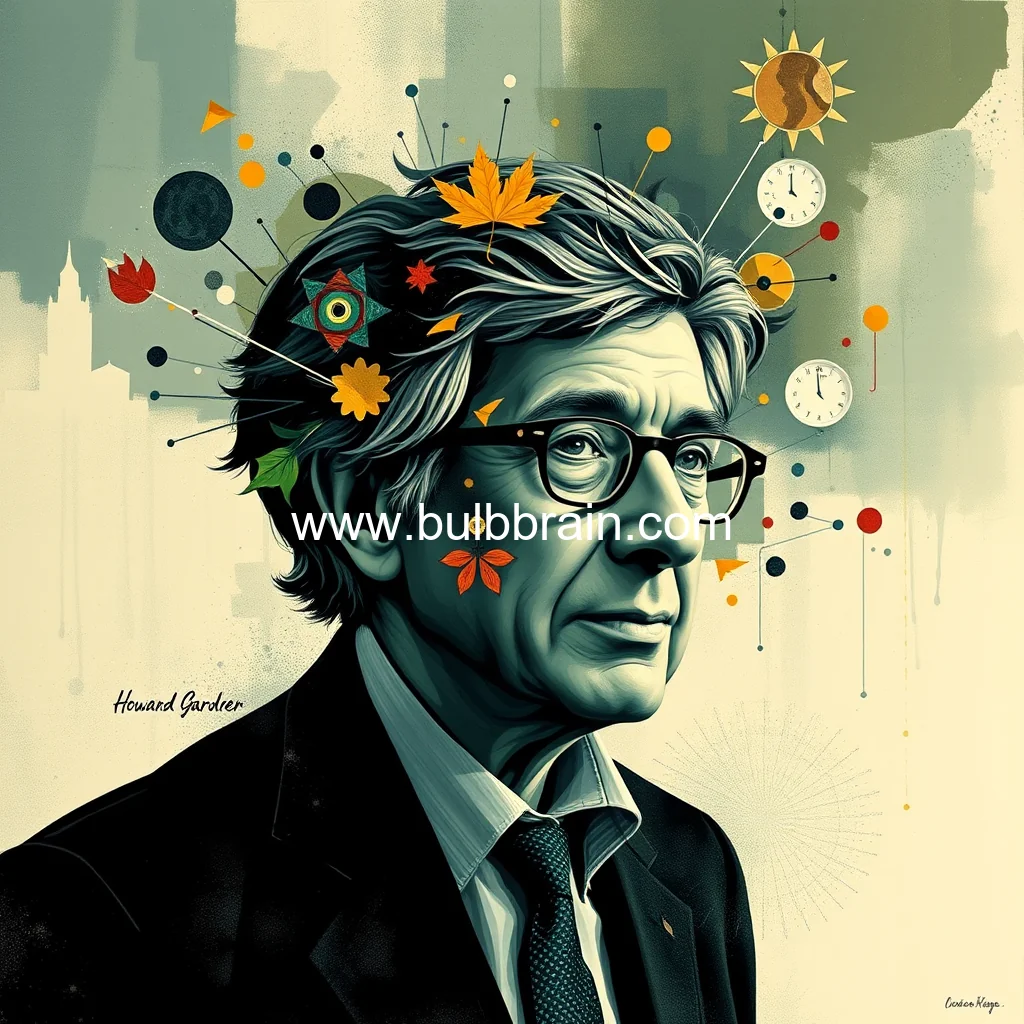
His work focuses on multiple intelligences theory, which posits that there are multiple types of intelligence, rather than a single, general intelligence.
The Multiple Intelligences Theory
Gardner’s theory challenges the traditional view that there is only one type of intelligence, as proposed by Howard Gardner’s work on multiple intelligences theory. This theory suggests that there are at least eight distinct types of intelligence, including:
These eight types of intelligence are not mutually exclusive, and individuals may possess a combination of these intelligences.
Key Features of Multiple Intelligences Theory
Gardner is a professor at Harvard University and has been a leading voice in the field of education for over 40 years.
The Power of Multiple Intelligences
Howard Gardner’s work on multiple intelligences has revolutionized the way we think about intelligence and learning. Gardner’s theory suggests that there are multiple types of intelligence, each with its own strengths and weaknesses. He identifies nine types of intelligence, including linguistic, logical-mathematical, spatial, bodily-kinesthetic, musical, interpersonal, intrapersonal, naturalistic, and existential. Gardner’s theory challenges the traditional view of intelligence as a single, fixed trait. It emphasizes the importance of recognizing and valuing different types of intelligence. It suggests that people can develop their strengths and weaknesses in different areas.
The Impact on Education
Gardner’s work on multiple intelligences has had a significant impact on education. His theory has been used to develop new teaching methods and curricula that cater to different learning styles. It has also led to a greater emphasis on creativity, critical thinking, and problem-solving skills. Gardner’s theory has been used to develop new teaching methods such as project-based learning and inquiry-based learning. It has led to a greater emphasis on arts and music education.
However, the theory has been criticized for its lack of empirical evidence and its failure to provide a clear definition of the intelligences.
The Origins of Gardner’s Theory of Multiple Intelligences
In 1983, Howard Gardner, a renowned psychologist, introduced his theory of multiple intelligences (MI). Gardner proposed that there are not just one or two intelligences, but rather multiple types of intelligence that people possess.
Instead, we should focus on teaching them to think critically and creatively, to solve problems that require human intuition and empathy.
The Problem with Over-Reliance on Technology
In today’s digital age, it’s easy to get caught up in the idea that technology can solve all our problems. We’re constantly bombarded with messages telling us that we can outsource our work, automate our tasks, and even learn new skills through online courses. But the truth is, technology has its limitations.
The Power of Myth
The first book, “The Power of Myth,” was published in 1988. It was a collaboration with Joseph Campbell, a renowned mythologist. The book explores the power of myths and their impact on our lives. Campbell and Gardner shared their insights on the collective unconscious, the role of myths in shaping our perceptions, and the importance of storytelling in our culture. The book was a huge success and became a classic in the field of comparative mythology. Key takeaways from “The Power of Myth”:
The Early Years of Cognitive and Developmental Psychology
The psychologist’s interest in cognitive and developmental psychology began at a young age. He was fascinated by the way people think and learn. He spent countless hours reading books and attending lectures on the subject. As he delved deeper into the field, he became increasingly aware of the importance of understanding human behavior and cognition.
They found that creativity was not just about intelligence, but also about the ability to find meaning and purpose in life. This experience had a profound impact on Gardner’s theory of multiple intelligences.
The Origins of Multiple Intelligences Theory
Gardner’s work with brain damaged patients was instrumental in shaping his theory of multiple intelligences. However, it was his research on creativity and humanism that laid the groundwork for this theory. In the 1970s, Gardner was working with psychologists Mihaly Csikszentmihalyi and William Damon at a research center. They were studying the relationship between creativity and humanism, and their findings had a profound impact on Gardner’s thinking.
Garder’s focus is on his own creative pursuits, rather than the world around him.
He also mentions that he is not interested in the current state of the world and is not interested in the current state of the 2020 US presidential election.
The Future of Garder’s Work
Garder’s last essay, published in 2019, presents a vision for his future work. In it, he outlines a list of projects and ideas that he hopes to pursue in the coming years. While the essay is not a comprehensive plan, it provides insight into Garder’s creative and intellectual interests. Garder’s list of projects includes: + Writing a novel + Creating a new type of art + Developing a new type of music + Designing a new type of architecture + Creating a new type of educational program
The Current State of the World
Garder’s essay also expresses his disinterest in the current state of the world.
I try to find the best way to make a difference. As a realist, I know that there are many obstacles and challenges that we face. I try to be aware of those obstacles and to find ways to overcome them.
The Power of Balance
Gardner’s approach to life is rooted in his experiences and values. He believes that balance is key to achieving success and happiness. He says, “I think that’s one of the most important things I’ve learned in my life. Balance is what makes life worth living.” *Key elements of balance:**
The Importance of Awareness
Gardner emphasizes the importance of being aware of the obstacles and challenges that we face. He says, “If you’re not aware of the obstacles, you can’t overcome them.
The paraphrased version maintains the same tone and message as the original text, but with a more contemporary and accessible language.
The Importance of Gardner’s Guidance in Uncertain Times
In uncertain times, we often feel overwhelmed and uncertain about the future. The weight of the world can be crushing, and it’s easy to feel like we’re just trying to survive each day. However, with the guidance of experts like Gardner, we can begin to think about and achieve the best in all of us. Gardner’s books offer valuable insights that can help us navigate these uncertain times. His advice is not just about surviving, but about thriving. As is, we often settle for mediocrity, but with Gardner’s guidance, we can strive for excellence.
Key Takeaways from Gardner’s Books
The Transformative Power of Gardner’s Advice
Gardner’s advice has the power to transform our lives. It’s not just about reading a book or following some advice; it’s about being inspired to reach our full potential. With Gardner’s guidance, we can break free from limitations and achieve greatness.