The Art of Creative Thinking: Unlocking Innovation Through Diverse Perspectives
In an age where innovation drives progress, creative thinking has emerged as a vital skill that transcends industries and professions. From solving complex problems to generating groundbreaking ideas, creativity is not just reserved for artists and inventors—it’s a cognitive process accessible to everyone who dares to think differently.
This article delves into the multifaceted nature of creative thinking, exploring its origins, applications, and techniques to help you harness your innate ability to innovate. Whether you’re an entrepreneur, educator, or simply curious about unlocking human potential, these insights will empower you to approach challenges with fresh perspectives.
Understanding the Foundations of Creative Thinking
Creative thinking begins with understanding what it truly means to think creatively. Unlike conventional problem-solving methods that rely on established patterns, creative thinking involves approaching issues from new angles by challenging assumptions and embracing unconventional solutions.
At its core, creative thinking requires divergent thinking—a mental process that generates numerous possible solutions rather than converging on a single answer. This type of thinking encourages exploration and experimentation without immediate judgment of ideas.
The concept was popularized by psychologist J.P. Guilford in the mid-20th century, who distinguished between convergent and divergent thinking styles. His work laid the groundwork for modern approaches to fostering creativity in educational settings and workplaces alike.
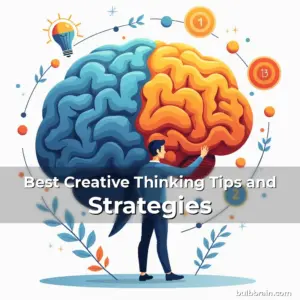
Modern neuroscience research supports the idea that creative thinking engages both hemispheres of the brain simultaneously. While traditionally associated with right-brain dominance, recent studies show that creativity emerges from complex neural networks across the entire cortex.
Unlocking Your Creative Potential Through Daily Practices
Harnessing creative energy doesn’t require grand gestures or special conditions; it can be cultivated through consistent daily habits. Simple practices like keeping an idea journal or taking brief walks outdoors have been shown to enhance creative insight and originality.
Research conducted at Stanford University revealed that individuals who maintained a regular habit of recording observations experienced a significant increase in creative productivity over time. These journals serve as repositories for spontaneous thoughts that might otherwise be forgotten.
Mindfulness meditation also plays a crucial role in enhancing creative capacity. By training the mind to stay present and reduce mental clutter, mindfulness creates space for novel connections between seemingly unrelated concepts.
Another effective technique is deliberate practice of analogical thinking—drawing parallels between different domains. For instance, comparing business strategies to ecological systems can lead to innovative organizational structures.
- Daily Journaling: Capturing random ideas helps prevent them from fading away while reinforcing neural pathways associated with creative thought.
- Nature Immersion: Exposure to natural environments enhances cognitive flexibility, allowing for greater adaptability when tackling complex tasks.
- Constraint-Based Challenges: Limitations often spark unexpected breakthroughs by forcing the brain out of habitual thought patterns.
Fostering Creativity in Professional Settings
Organizations seeking sustained growth recognize the importance of cultivating a culture that values creative input. This involves creating psychological safety for employees to share unconventional ideas without fear of criticism or retribution.
Companies like Google and IDEO have implemented flexible workspaces designed to stimulate interaction and collaboration among diverse teams. These environments promote serendipitous conversations that frequently lead to groundbreaking innovations.
Leaders play a pivotal role in nurturing creativity by modeling open-mindedness and rewarding risk-taking behavior. When managers demonstrate willingness to explore untested ideas, it sets a powerful example for their teams.
Implementing structured brainstorming sessions using techniques like SCAMPER (Substitute, Combine, Adapt, Modify, Put to another use, Eliminate, Reverse) ensures that creative processes are systematically guided toward meaningful outcomes.
The Neuroscience Behind Creative Insight
Recent advancements in neuroimaging technology have provided fascinating insights into how the brain facilitates creative thinking. Studies using fMRI scans reveal distinct activation patterns during moments of creative insight known as ‘eureka’ experiences.
These epiphany-like realizations occur when previously disconnected information suddenly becomes linked in novel ways. Neuroscientists observe increased activity in regions responsible for associative thinking and decreased engagement in areas focused on critical evaluation.
A study published in Neuron magazine demonstrated that successful creative thinkers exhibit enhanced connectivity between the default mode network and executive control networks. This synergy allows for both free association and focused analysis essential for developing viable ideas.
Moreover, sleep deprivation experiments have shown that lack of adequate rest impairs creative performance, emphasizing the importance of maintaining good physical health alongside mental exertion.
Creative Problem Solving Techniques Across Industries
Variations of design thinking methodologies are being adopted globally across sectors ranging from healthcare to engineering. In medical fields, these approaches enable clinicians to develop patient-centered care models that prioritize individual needs over standardized protocols.
Educational institutions utilize creative problem-solving frameworks to prepare students for real-world challenges. Schools implementing project-based learning report improved student engagement and higher retention rates of conceptual knowledge.
Engineering firms apply systems thinking principles to address infrastructure challenges by considering environmental impact assessments alongside technical specifications. This holistic perspective leads to more sustainable construction solutions.
Financial services companies employ scenario planning exercises to anticipate market shifts and create contingency strategies before crises emerge. This proactive mindset reduces vulnerability during economic downturns.
Overcoming Common Barriers to Creativity
Despite its many benefits, creative thinking faces several obstacles that hinder its full expression. One common barrier is rigid adherence to traditional methods which stifles experimental approaches to problem resolution.
Perfectionism often acts as another inhibitor, causing individuals to delay sharing half-formed ideas due to fear of inadequacy. Cultivating a mindset that embraces imperfection fosters continuous improvement through iterative refinement.
Social pressures within professional circles may discourage non-conformist viewpoints, particularly in hierarchical organizations resistant to change. Establishing peer support groups provides safe spaces for expressing unconventional thoughts.
Lack of motivation stemming from burnout presents yet another challenge. Integrating creative activities into routine tasks prevents monotony and maintains enthusiasm for innovation initiatives.
- Redefining Failure: Reframing setbacks as opportunities for learning reduces anxiety around presenting incomplete ideas.
- Cognitive Flexibility Training: Engaging in mentally stimulating games improves the brain’s ability to shift between different modes of thinking.
- Time Management Strategies: Allocating dedicated periods for creative reflection prevents burnout and sustains momentum.
Case Studies Demonstrating Successful Creative Implementation
Pioneering examples illustrate how creative thinking transforms theoretical concepts into practical applications. LEGO Group revolutionized education by developing Mindstorms kits that teach programming through hands-on building experiences.
Apple Inc.’s minimalist design philosophy exemplifies how simplicity born from deep creative vision captures global markets. Their product development team consistently prioritizes intuitive user interfaces over feature overload.
Patagonia’s commitment to sustainability demonstrates creative application in corporate social responsibility. The company repurposes old clothing items into new products, turning waste management into a profitable venture.
Disney Imagineering showcases how imaginative world-building translates into immersive entertainment experiences. Theme park designers blend storytelling elements with technological innovations to create unforgettable visitor journeys.
The Future of Creative Thinking in a Digital Age
As artificial intelligence advances rapidly, questions arise regarding humanity’s evolving relationship with creative cognition. While machines excel at pattern recognition and data processing, they still lack true artistic intuition inherent to human experience.
Future trends suggest increasing integration of AI tools that augment rather than replace human creativity. Collaborative platforms combining algorithmic suggestions with organic ideation promise to expand the boundaries of possibility.
Education systems worldwide face growing pressure to integrate digital literacy with creative competencies. Emerging curricula emphasize interdisciplinary projects that bridge STEM subjects with arts disciplines.
Virtual reality technologies offer unprecedented opportunities for spatial thinking and experiential learning. Architects and urban planners now simulate cityscapes digitally to test creative designs before implementation.
Conclusion
Creative thinking remains one of the most powerful assets available to individuals and organizations alike. Its value extends beyond mere idea generation to encompass problem-solving capabilities and adaptive resilience in unpredictable situations.
To cultivate lasting creativity, commit yourself to ongoing personal development by incorporating diverse stimuli, practicing mindful observation, and remaining receptive to emerging possibilities. Remember that every great invention began with someone daring enough to question existing norms.
“`html
“`
<|End of response|>

news is a contributor at BulbBrain. We are committed to providing well-researched, accurate, and valuable content to our readers.