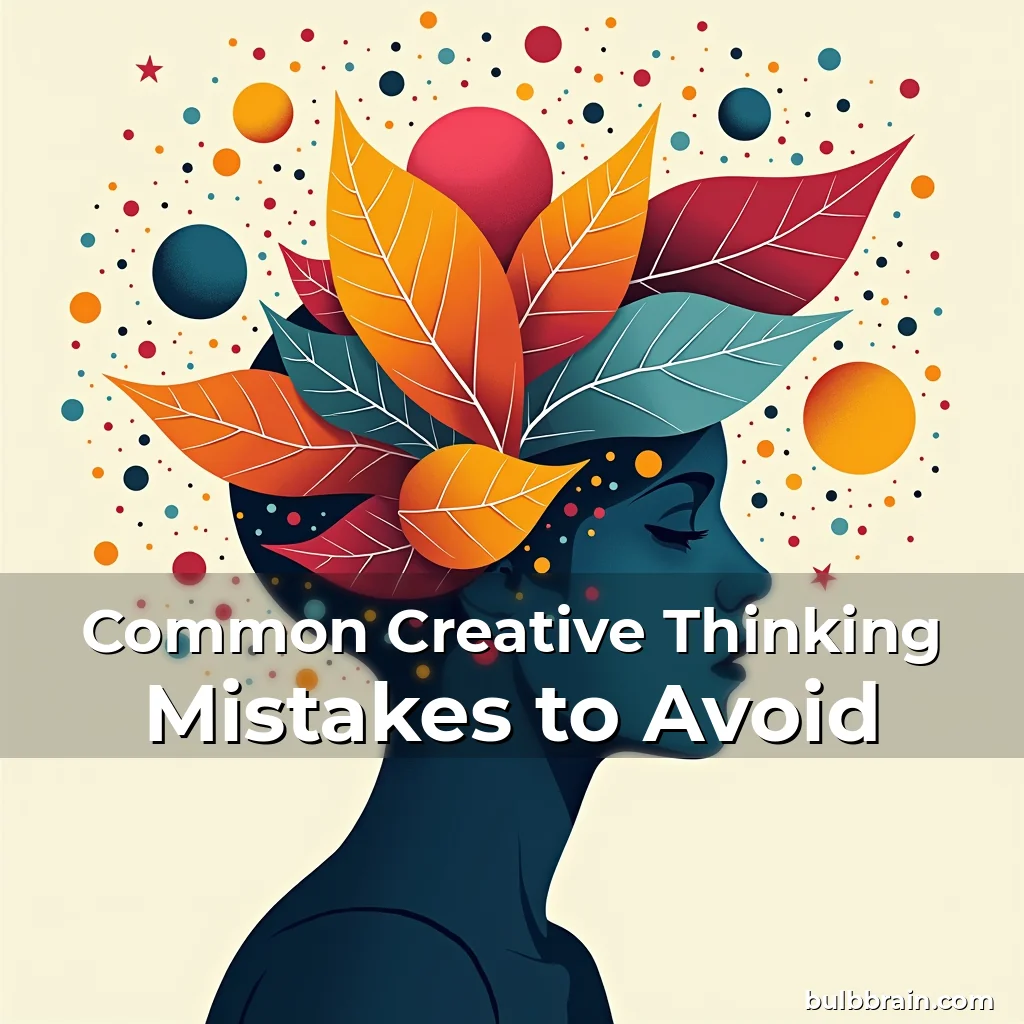
Common Creative Thinking Mistakes to Avoid
Creative thinking is often seen as an innate talent reserved for artists, inventors, and visionaries. However, creativity is a skill that can be developed by anyone willing to challenge conventional approaches.
The path to innovation requires awareness of common pitfalls that hinder creative progress. By recognizing these mistakes, you unlock new ways to think, solve problems, and generate original ideas.
Rushing Through the Ideation Process
A common mistake is treating brainstorming sessions as quick tasks rather than deep exploration opportunities. This rushed approach prevents individuals from fully exploring possibilities.
When time constraints force premature judgment, it stifles unconventional solutions. Quality ideas require space to emerge organically through thoughtful consideration.
Research shows that allowing 30 minutes for free association generates significantly better results than five-minute bursts. Patience becomes essential during ideation phases.
Establishing clear boundaries around brainstorming time helps maintain momentum without sacrificing depth. A structured yet flexible framework supports effective idea generation.
Overlooking Divergent Thinking Techniques
Divergent thinking involves generating many possible solutions before narrowing choices. Neglecting this phase leads to limited perspectives and missed opportunities.
People often jump straight to converging thoughts instead of first expanding their mental horizons. This shortcut undermines potential breakthroughs.
- Brainstorming: Quantity over quality initially encourages risk-taking without fear of criticism.
- Free Association: Connecting unrelated concepts sparks unexpected connections between seemingly disparate elements.
Sometimes, lateral thinking exercises help break habitual patterns. These techniques open doors to novel problem-solving strategies.
Combining different divergent methods creates synergistic effects. Experimentation with various approaches enhances overall creativity levels.
Fear of Judgment Hindering Originality
Anxiety about evaluation causes people to self-censor their wildest ideas. The fear of being judged limits the range of imaginative possibilities explored.
This psychological barrier prevents full expression of innovative thoughts. Individuals may unconsciously conform to perceived expectations instead of pushing boundaries.
Creating safe environments where experimentation is encouraged reduces inhibition factors. Psychological safety becomes crucial for unleashing true creative potential.
Encouraging a mindset that values curiosity over correctness transforms how ideas are approached. Embracing uncertainty fosters greater innovation capacity.
Relying Too Heavily on Past Solutions
Mental shortcuts based on previous experiences create cognitive biases. Overreliance on familiar answers restricts discovery of fresh alternatives.
Comfort zones formed through repeated successful outcomes discourage taking risks. Innovation thrives when we step beyond established comfort areas.
Varying problem-solving contexts disrupts routine thought processes. Introducing unfamiliar variables challenges assumptions and expands perspective ranges.
Actively seeking diverse viewpoints introduces new dimensions to complex issues. Cross-pollination of ideas across disciplines fuels groundbreaking innovations.
Neglecting the Importance of Incubation Periods
Ideas sometimes need rest periods to develop naturally. Forcing immediate conclusions can prevent subconscious processing from occurring.
Stepping away allows unconscious mind to reorganize information creatively. This incubation process often leads to surprising revelations later.
Studies indicate that sleep deprivation impairs creative performance while adequate rest improves problem-solving abilities. Physical well-being impacts cognitive flexibility.
Intentionally scheduling downtime after intense creative work enhances subsequent productivity. Balancing activity with relaxation optimizes overall output quality.
Ignoring the Role of Constraints in Creativity
Constraints might seem limiting but actually stimulate ingenuity. Limitations push thinkers toward resourcefulness and alternative pathways.
Designers frequently utilize constraint-based thinking to achieve elegant solutions within defined parameters. Boundaries can spark remarkable innovations.
Limiting materials, time frames, or budgets forces prioritization of essential features. These restrictions cultivate deeper understanding of core requirements.
Embracing limitations as creative catalysts transforms obstacles into opportunities. Restrictive conditions become springboards for inventive thinking.
Lack of Iterative Refinement Processes
Many overlook refining initial ideas through iterative improvements. Rushed execution prevents optimization of promising concepts.
Continuous testing and modification enhance feasibility and effectiveness. Perfectionism at early stages hinders practical implementation.
Pilot projects allow real-world feedback shaping final versions. Learning from failures becomes integral to development cycles.
Iteration enables incremental enhancements leading to stronger end products. Willingness to revise continually ensures optimal solutions.
Underestimating Collaborative Synergy
Individual brilliance pales compared to collective intelligence. Group dynamics amplify creative outputs exponentially.
Diverse teams bring varied perspectives enriching solution landscapes. Shared knowledge accelerates breakthrough discoveries.
Collaboration exposes blind spots and validates assumptions through peer review. Constructive debate sharpens concept clarity and viability.
Inclusive decision-making fosters ownership and commitment among participants. Collective effort produces higher-quality outcomes than solo endeavors.
Disregarding Emotional Intelligence Components
Emotional awareness influences creative perception and interpretation. Ignoring emotional cues narrows conceptual frameworks unnecessarily.
Empathy facilitates deeper connection with target audiences. Understanding emotions informs more impactful storytelling techniques.
Self-awareness reveals personal biases affecting objectivity assessments. Managing emotional responses maintains balanced critical evaluations.
Regulating emotions sustains motivation through challenging creative journeys. Resilience against frustration preserves long-term engagement.
Failure to Document Thought Processes
Keeping records of creative explorations provides valuable reference points. Forgotten insights resurface through organized documentation systems.
Journals capture fleeting inspirations that might otherwise vanish permanently. Visual mapping tools reveal hidden relationships between ideas.
Tracking progress highlights patterns showing which approaches yield best results. Analysis of past attempts guides future creative directions effectively.
Documentation serves dual purposes as both memory aid and analytical tool. It strengthens reflective practices enhancing continuous improvement efforts.
Concluding Thoughts on Creative Development
Creative thinking is not merely about having good ideas but cultivating an environment conducive to innovation. Awareness of common missteps opens avenues for growth.
By consciously avoiding these pitfalls, individuals empower themselves to think differently. Adopting mindful creative habits transforms potential into tangible achievements.
Ultimately, embracing imperfections and learning from setbacks propels continuous evolution. Progress lies in persistent refinement rather than instant perfection.
Remember that every great innovator has faced similar challenges along their journey. Persistence combined with strategic avoidance of errors defines exceptional creative minds.

news is a contributor at BulbBrain. We are committed to providing well-researched, accurate, and valuable content to our readers.